

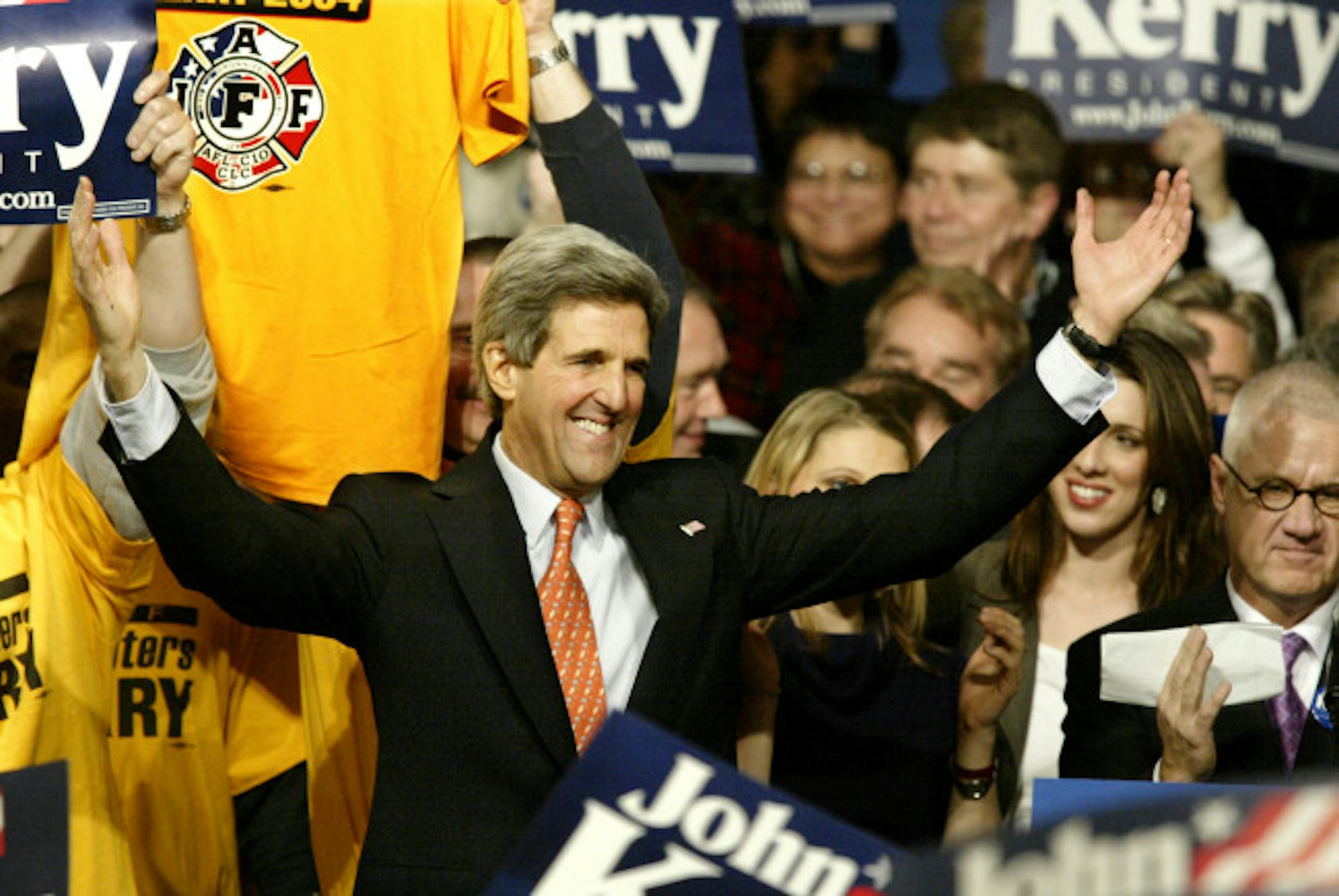
President George W. Bush became an object of scorn and near-pity eight years ago for some voters watching his first debate with Democratic challenger John F. Kerry.
Sitting amid a group of 100 swing voters who assembled to watch the debate at a college auditorium in Pennsylvania, I heard some laugh. Others shook their heads in dismay, as the president smirked or stammered and groped for words - particularly as he tried to defend the troublesome war in Iraq.
The crowd had been given portable dial-rating devices to instantly register their feelings about the two presidential contenders. On almost every question, the crowd dialed the more articulate and decisive Kerry as "very good" or close to it. They rated Bush around average, sometimes lower.
That president seemed not completely unlike the one who debated Republican Mitt Romney on Wednesday night. Though far more articulate than President Bush of 2004, President Obama of 2012 seemed a bit irked by the debate proceedings and not particularly enjoying defending himself against someone who he probably believes has no clue about the real trials and tribulations of the Oval Office.
That late September night spent with a focus group at Muhlenberg College, a small liberal arts school in Pennsylvania's Lehigh Valley, delivered two important lessons:
(1) Presidential challengers can be elevated substantially by debates. Kerry would jump up in the polls in the days after that and in subsequent debate showdowns with Bush, in which he also performed strongly.
(2) Debates shape a race but seldom decide it. Kerry never overtook Bush. The U.S. senator from Massachusetts lost Ohio by about 90,000 votes and lost the presidency.
Several commentators mentioned the 2004 debates prominently Wednesday night after challenger Romney - another politician from Massachusetts - seemed to score a decisive victory over Obama in the first of three debates between the two men.


