

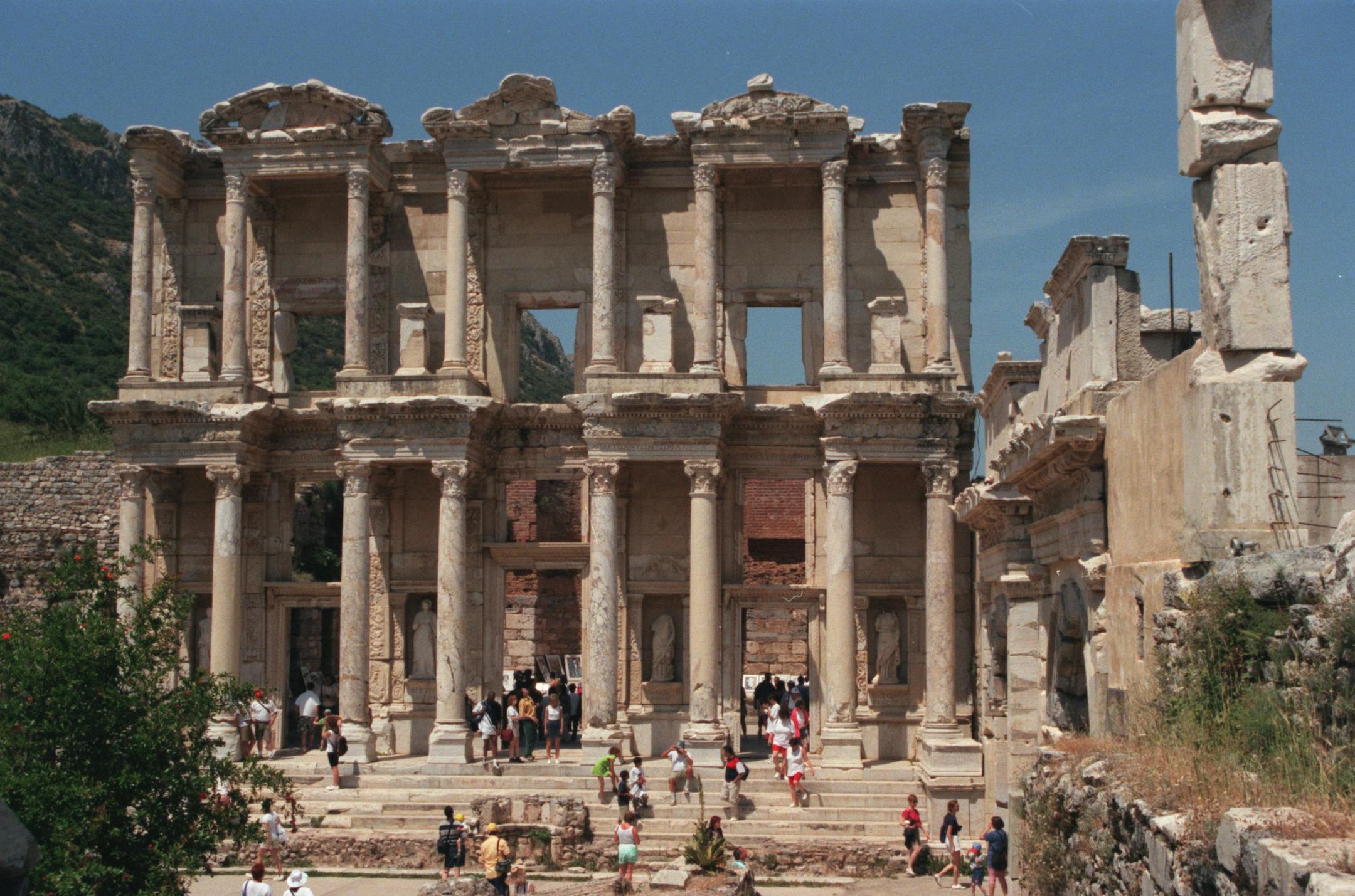
The Pax Romana was a period of relative peace and stability throughout the Greater Mediterranean. But history is a matter of convulsions. In 200 A.D., the Roman Empire still thrived in the shadow of the recently deceased emperor and pagan philosopher Marcus Aurelius — at a time when, according to Princeton historian Peter Brown, "a charmed circle of unquestioning conservatives" gave order to the world.
Over the next 500 years, however, everything changed.
By 700 A.D., the Roman Empire had vanished, Europe had become Christian, and the Near East and most of North Africa had become Muslim. Poor, uneducated and extremist Christian heretics and sectarians had dispersed around the Mediterranean basin, burning and terrorizing synagogues and pagan temples, before they themselves were overtaken in North Africa by Arab armies proselytizing a new, more austere religion. Meanwhile, Gothic tribes ravaged Europe.
Brown, in the course of a lifetime of scholarly work, gave a name to this pungent epoch in which the world gradually turned upside down: Late Antiquity.
Late Antiquity was dominated by vast civilizational changes, though many were not marked at the time. Late Antiquity appears full of drama only because we know its beginning and end. But on any given day during that half-millennium, the Mediterranean world might not have seemed dramatic at all, and few could have said in what direction events were moving.
The historical clock moves a great deal faster today. Thousands upon thousands of words have been written on the Arab Spring, the military rise of China, the tumult in the European Union, a nuclear Iran, and the chipping away of America's post-Cold War hegemony.
But can we really discern any better than the denizens of Late Antiquity in what direction events are moving?
The erosion of America's role as an organizing power has disoriented elites in Washington and New York whose own professional well-being is connected with America's involvement abroad. And few developments have been more evocative regarding the sentiment of splendid isolation creeping once again through the American citizenry than Syria.


