

“Bits & pieces put together to present a semblance of a whole.”
Those words adorned the Walker Art Center’s east wall for several years, part of a piece of conceptual art by Lawrence Weiner. I found myself recalling them while sitting in St. Paul’s Ordway Concert Hall, enjoying Friday’s midday St. Paul Chamber Orchestra concert.
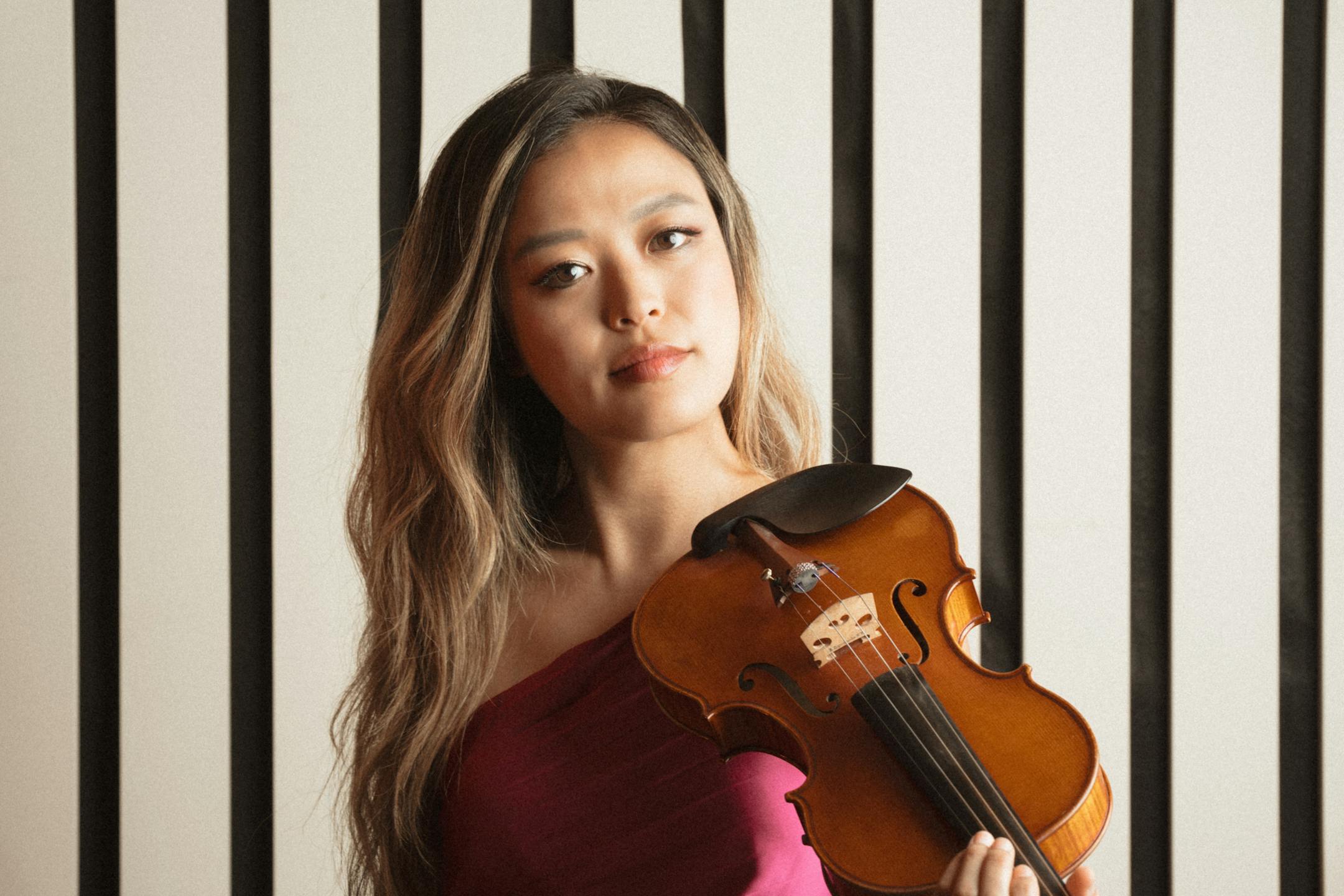
The reasons were twofold. First of all, the SPCO was demonstrating once again that it’s the sum of some extremely talented parts. It’s an ensemble made up of outstanding musicians, something that comes through loud and clear whenever one of them steps out and seizes a solo opportunity. This weekend, that soloist is violinist Eunice Kim, who’s showing off her scintillating skills on Camille Saint-Saëns’ Third Violin Concerto, a robustly romantic combination of lovely lyricism and dramatic dexterity of both fingers and bow.
But that “bits and pieces” description could also be applied to how Beethoven assembled a symphony, a formula he established on his first one, which makes up the second half of this weekend’s concerts. With its invigorating interpretation full of aggressive attacks, the SPCO served a welcome reminder that the composer was a master of the musical mosaic, taking the most minimal of fragments and making masterpieces out of them.
Add a frolicsome set of dances for 10 winds by 20th-century French composer Jean Françaix and you have yet another excellent example of how this orchestra can take varied repertoire and make it all feel as if it fits together perfectly, not least because it’s all played with passion and consummate musicianship.
This musical feast begins with dessert, for Françaix’s Seven Dances after the Ballet, “Les malheurs de Sophie” (or “The Misfortunes of Sophie”), is a sweet and frothy collection of short pieces inspired by a popular French children’s book. Eight woodwinds and two French horns make a joyful romp of this infectiously playful work.
But the concert’s centerpiece is Saint-Saëns’ Third Violin Concerto, which he composed for one of the virtuosos of his age, Pablo de Sarasate. Hence, it’s no surprise that it’s filled with fiery passages that allow a soloist to wow an audience, something that Kim did throughout her performance. Working with a smaller orchestra than customary for such a quintessential romantic-era violin concerto, Kim was able to draw out both the subtle and the intricate within her lines.
The first and final movements were bursting with pyrotechnics from the soloist, but the slow second movement proved equally captivating, a lilting lullaby at its most compelling during a high, clear and quiet solo section after the orchestra dropped away.


