

The typical classical concert can be a bit like a variety pack culled from multiple cultures and centuries, but there’s something particularly rewarding about taking a deep dive into the voice and vision of one composer.
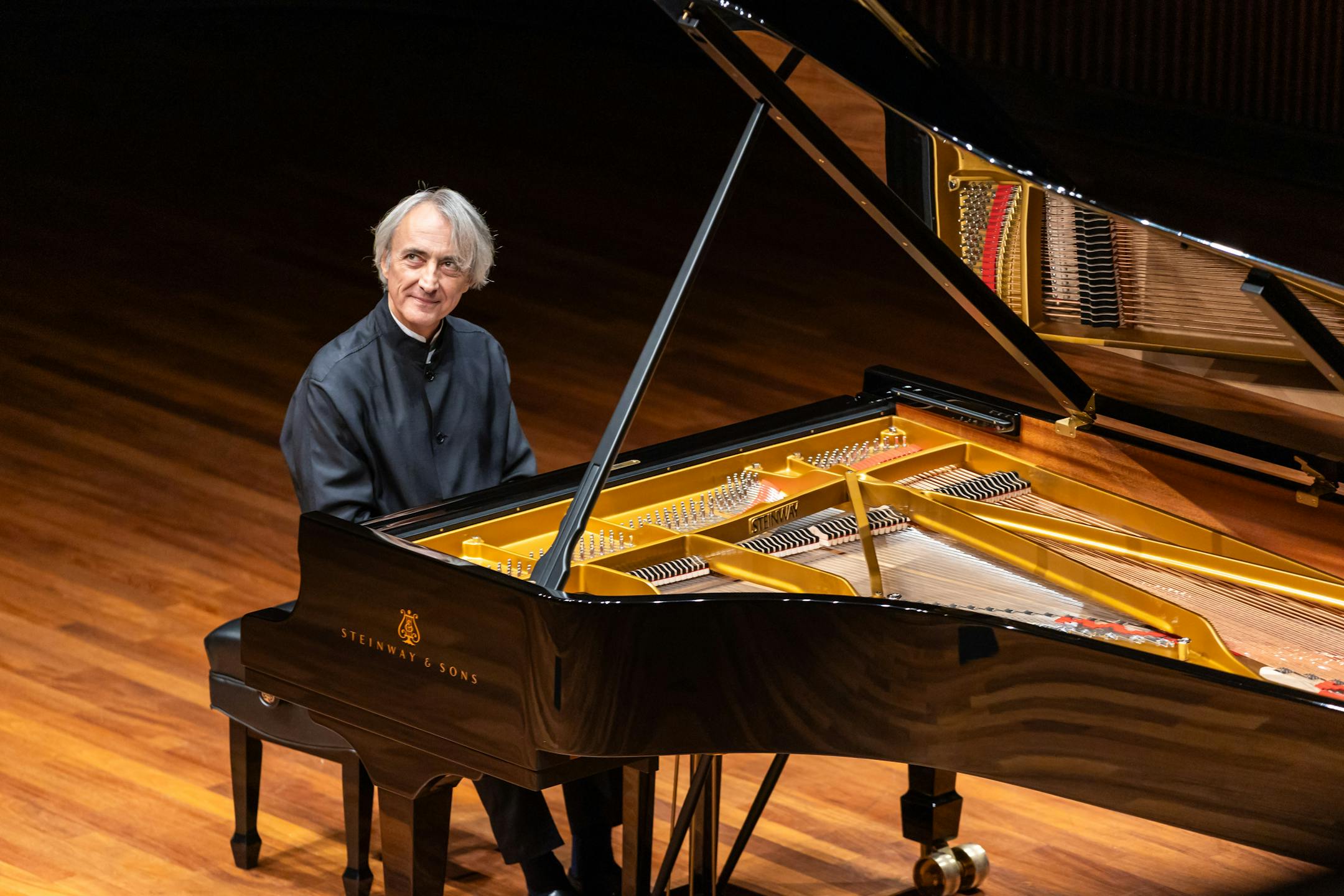
French pianist Jean-Efflam Bavouzet recently has been focusing his recordings and recitals upon the solo piano works of his countryman, Maurice Ravel, one of the most important and innovative composers of the first third of the 20th century. On Tuesday evening, the Schubert Club presented the first half of Bavouzet’s two-recital survey of Ravel’s complete solo piano works, the sonic journey concluding at St. Paul’s Ordway Concert Hall on Wednesday morning.
Presenting the pieces in roughly chronological order, Bavouzet spent Tuesday night shining a bright and insightful light upon the beauty and turbulence that courses through Ravel’s music, making for a deeply involving and exciting recital.
While most of Tuesday’s music was written before 1906, some of the pieces came to full flower in later versions. Ravel became a master orchestrator — arguably one of the most gifted in classical music history — and his “Pavane for a Dead Princess” is more famous in that form, as are the epic eruptions of “La valse” that closed the concert. (In fact, it closes this week’s Minnesota Orchestra concerts.)
From the start, Bavouzet eschewed the reserve that some pianists bring to these works, his attacks emphatic on the opening “Sérénade grotesque” and a buoyant spirit permeating the “Menuet antique” that later became part of Ravel’s “Le Tombeau de Couperin,” the final work on Wednesday’s concert.
The pianist lent those works a crispness that suggested a backward glance toward Mozart and Haydn. But those expecting more of the fluid and florid sound that inspired some critics to dub the music of Ravel (and his older contemporary, Claude Debussy) “impressionism” found it in a beautifully wistful interpretation of the “Pavane for a Dead Princess” and a transporting take on “Jeux d’eau,” a piece unmistakably evocative of dancing waters. Bavouzet brought every flowing rivulet and sonic splash to life with extraordinary grace and a subtle touch.
Equally involving was a performance of Ravel’s “Sonatine” in which the beauty gave way to a deeply involving urgency, the pace and anxiety both accelerating in the opening movement before finding a calm bridge to a buoyantly dancing finale. As with the works that preceded it, the pianist emphasized an outgoing expressiveness, something that held true through the many moods of “Miroirs,” a captivating series of musical portraits of friends and fellow artists, made most memorable by the spare and weighty darkness of “Une barque sur l’océan” and the flamboyant flamenco flourishes of “Alborada del gracioso.”
Although Bavouzet stepped out of the chronology to close the concert with 1920’s “La valse,” it was clear that it was playing the role of showstopping finale, for it’s a notoriously difficult and breathtakingly explosive piece that can sound like a carousel careening out of control.


