

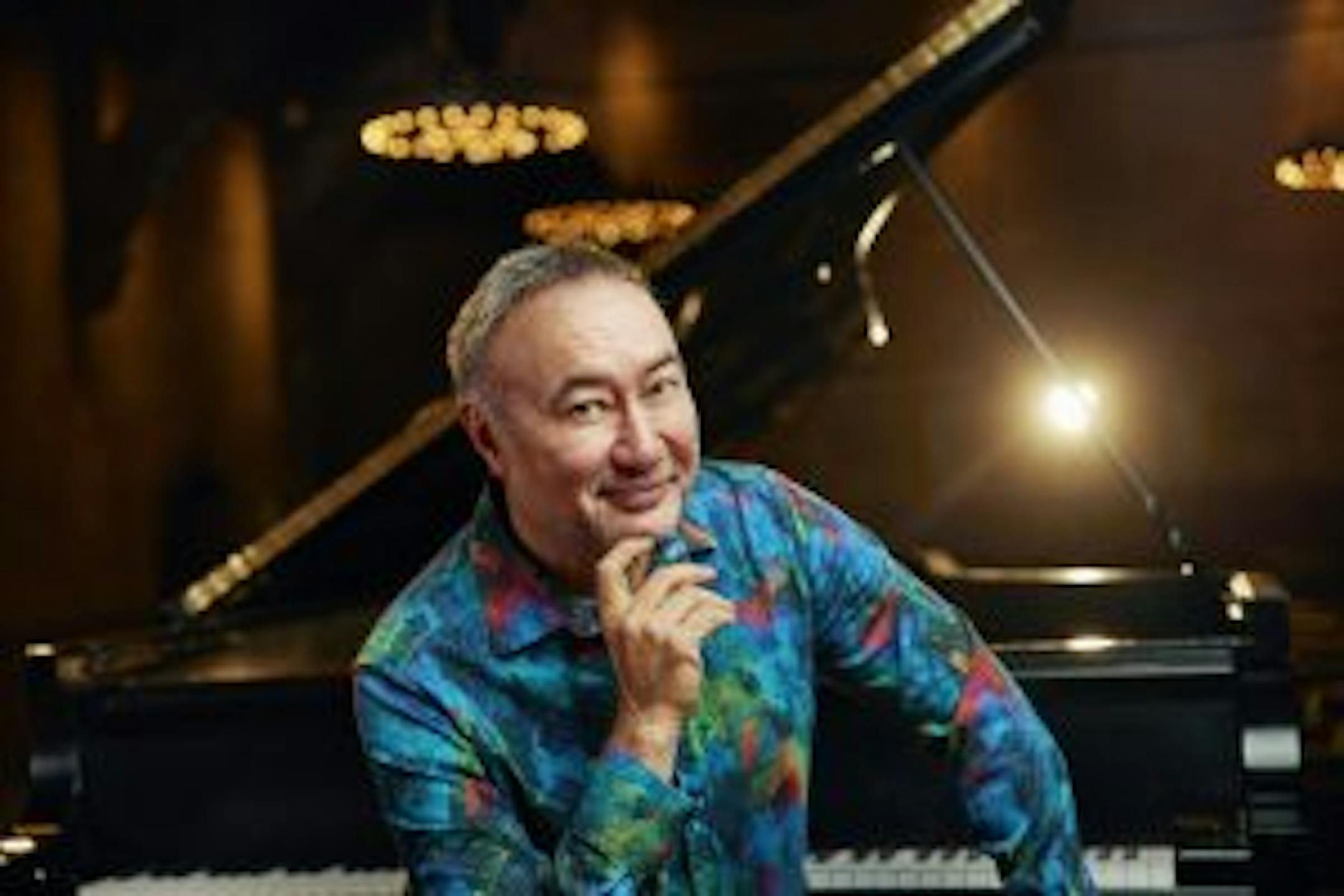
I’m going to miss Jon Kimura Parker.
As the pianist’s six-year tenure as the Minnesota Orchestra’s creative partner for Summer at Orchestra Hall draws to a close, I feel grateful for having experienced his expert performances of concertos and chamber music and for his having revived the orchestra’s old summer tradition of multi-piano confabs, the Grand Piano Spectacular.
But, perhaps most of all, I’m thankful that he was the sparkplug of joy, energy and enthusiasm that the organization needed as it climbed out of the darkness of the pandemic, which scotched most of the programming of his first two summers as curator and host. Originally signed for three years, he renewed his contract for three more and has helped bring back the kind of festive feel that permeated the Sommerfest years of the 1980s and ‘90s.
Romanticism is the theme of Parker’s final summer here, the concerts brimming with effusively expressive 19th-century works. On Friday evening, he soloed on one of the works that defined the Romantic piano concerto, Robert Schumann’s lone contribution to the form, and will close the festival next week with a work that might be the era’s emotive apotheosis, Edvard Grieg’s Piano Concerto.
What Parker offered in collaboration with conductor Jonathan Taylor Rush and the orchestra Friday was a Schumann concerto that eschewed the flamboyant in favor of a contemplative feel. Almost every solo section found the pianist slowing the tempo considerably, as if each note were a carefully chosen word to add to the musical conversation. Even when the piece reached its dancing, celebratory summit, Parker brought some restraint to his exchanges with the orchestra.
It was the centerpiece of an enjoyable Romantic variety pack that began with the work that arguably invented the orchestral “tone poem,” Felix Mendelssohn’s “Calm Sea and Prosperous Voyage,” and concluded with a sweeping, full-voiced take on a suite of music from Peter Tchaikovsky’s ballet, “Swan Lake.” The concert served as a reminder that Romanticism is one of this orchestra’s strong suits, as it ably traversed the terrain between the movement’s early years rooted in the forms of the classical period and its urgently cathartic peak.
Stepping in to lead the concert on short notice was American conductor Rush, who’s established an impressive rapport with the orchestra on past visits — particularly on its performance and recording of Carlos Simon’s gripping “brea(d)th” — and continued the chemistry while steering the Mendelssohn piece from darkness toward a bright, exciting conclusion.
The Schumann Piano Concerto found Parker making certain not to overstate the piece’s inherent drama, his first-movement cadenza delivered without a drop of schmaltz and the beautiful slow movement featuring his engaging interplay with the heart-swelling sound of the cellos. And the finale was admirably direct and earthy, seemingly aspiring toward transcendence, but grounded in reality. The performance inspired a transporting encore: A movement from Schumann’s “Scenes From Childhood.”


