

During my first conversation with Thomas Søndergård on the day he was named Minnesota Orchestra music director in 2022, he spoke of how he wanted to introduce audiences to new music. Judging from this weekend’s program, he’s serious about that.
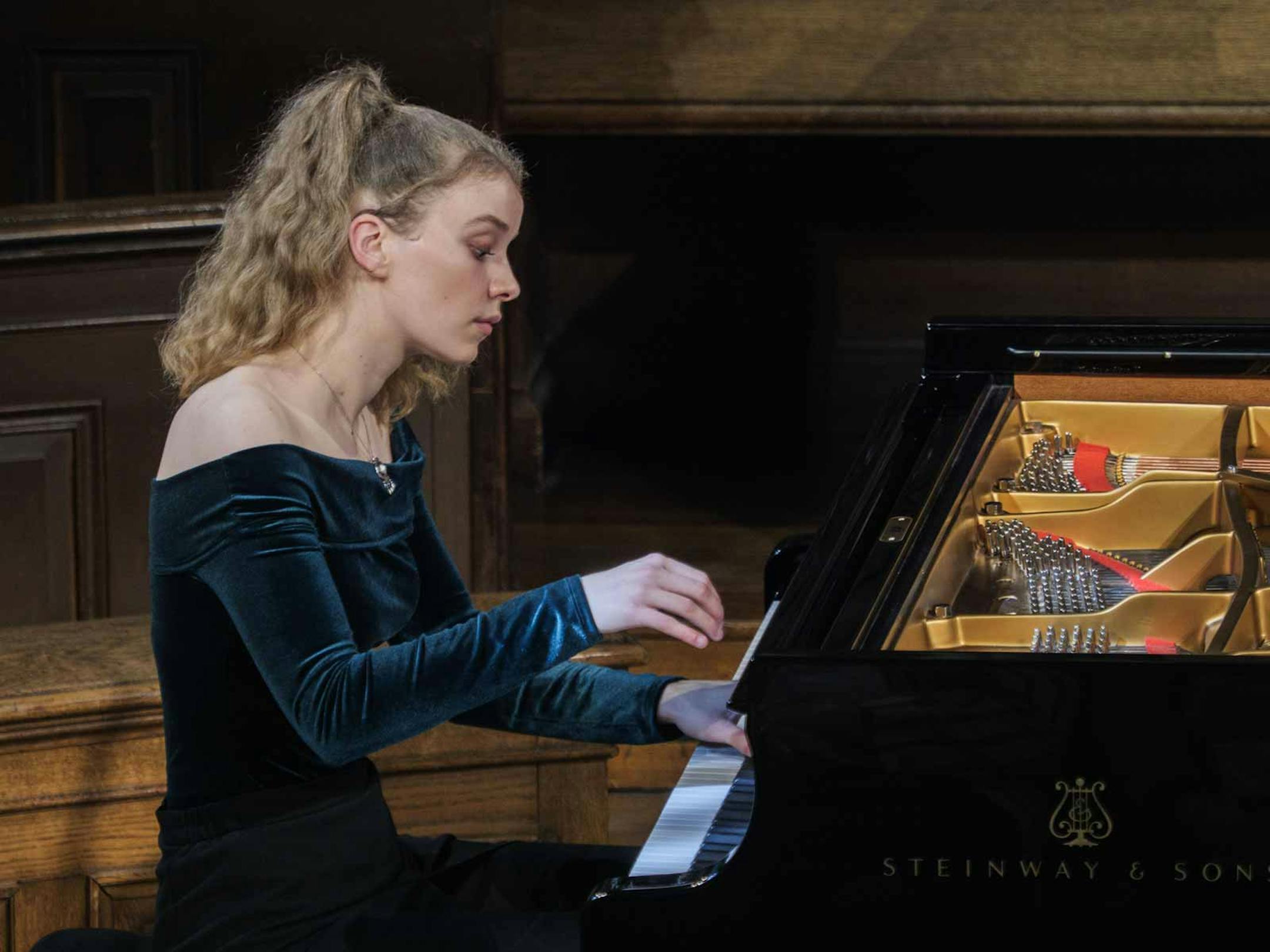
While the orchestra’s annual Donor Appreciation Week could feature familiar musical comfort food, the centerpiece of the concerts is instead a fresh piano concerto from the pen of English composer Anna Clyne. OK, she’s not really calling it a concerto, but rather “Atlas,” taking its title from an expansive memoir in images by German artist Gerhard Richter. Another German helped present its area premiere at Minneapolis’ Orchestra Hall midday Thursday, as pianist Elisabeth Brauss made her Minnesota Orchestra debut.
The work is more a showcase for orchestra than soloist, which made for a fine fit on a concert that demonstrated this ensemble’s ample versatility, as it was sandwiched between a dramatically moving interpretation of Benjamin Britten’s mournful “Sinfonia da Requiem” and arguably the most familiar of classical music works, Beethoven’s Fifth Symphony. Under the graceful direction of Englishman Andrew Manze, it proved quite the satisfying three-century variety pack. If appreciation was the theme, this gave the audience much for which to be grateful.
There was gravitas galore, never more so than in Britten’s 1941 piece, which sounds very much the product of a world at war. The rich textures of the orchestra’s low strings were on full display on the work’s intensely dark opening, giving way to a bright and brassy march and a finale that found Manze summoning up wistful swells of sound.
Despite the promise of Beethoven’s Fifth on the concert’s second half, Clyne’s 2024 work seemed the day’s main event, especially with a buzz-creating young soloist like Brauss at the piano. “Atlas” proved consistently intriguing, a pastiche of moods and styles most absorbing when at its quietest. There are echoes of Sergei Rachmaninoff scattered about, from a death-haunted theme that sounded like a cousin of the “Dies Irae” that composer inserted into multiple works to the kind of ultra-romantic tinkling atop sweeping strings he favored in slow movements.
Brauss handled this pseudo-concerto’s many mood swings with aplomb, most impressively when shifting from soft, stark simplicity to a swinging Bach-meets-Brubeck jazz interlude in the final movement. It’s a piece that doesn’t ask a pianist to deliver much in the way of flowing melodic lines until a theme inspired by Bach’s “Well-Tempered Clavier” emerges near the end. Yet the almost-capacity crowd was clearly impressed, offering a lusty ovation that inspired an encore by Beethoven, the slow movement from his Sonata No. 10.
The concert concluded with a fine Fifth Symphony from that composer, Manze often emphasizing soft, chorale-like attacks over the kind of punchy power the orchestra brought to this symphony under Osmo Vänskä’s baton. It may not have provided the kind of exuberant catharsis of those interpretations, but its beauty emerged in full flower.
The concert’s often wistful tone fit my mood, as I reflected upon last week’s passing of one of my predecessors as Star Tribune classical music critic, Larry Fuchsberg. Larry was a man of peace who served in the U.S. diplomatic corps before distinguishing himself as a wise and witty music journalist. I will miss his insightful observations.


