

It sometimes seems that it’s only a little bit harder for a woman to become president of the United States than it is for one to become music director of a major American orchestra. Only three women hold such a position, so it seems that symphony orchestras are pretty entrenched in patriarchy.
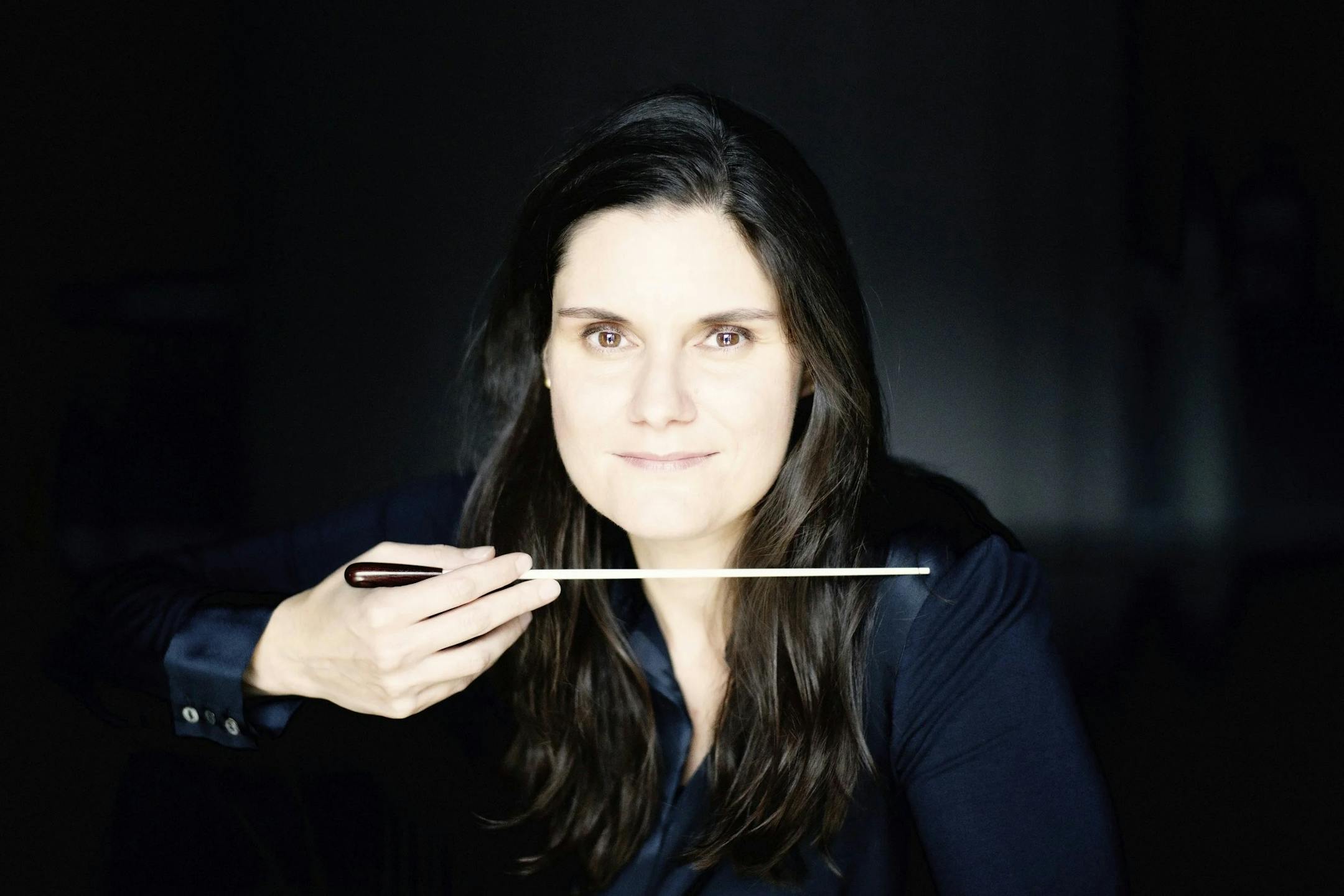
After Thursday’s midday Minnesota Orchestra concert at Minneapolis’ Orchestra Hall, I’m rooting for Bulgaria-born Delyana Lazarova to receive such an opportunity. She’s been regarded as one to watch since winning a couple of major conducting prizes and is now, at age 39, principal guest conductor of both the Utah Symphony and the BBC Scottish Symphony Orchestra.
And if the Minnesota Orchestra were to decide to add such a position to its artistic staff and hire Lazarova, I’d have no objection. On her last visit, she brought impressive energy and insightful interpretive ideas to the opening concert of 2024’s Summer at Orchestra Hall programming, and Thursday’s concert featured the most intensely bracing take on Antonín Dvořák’s Ninth Symphony (nicknamed “From the New World”) that I’ve encountered in a long while.
It was a program that showed off her versatility, as she deftly led the orchestra through the minimalist-inspired modernism of Caroline Shaw, an enthusiastic yet refined take on a Joseph Haydn work, and a Dvořák Ninth of power and passion. Throughout, Lazarova was a joy to watch, graceful and demonstrative, with each of her decisions clearly in service to the music.
Shaw is among America’s hottest composers, but “Entr’acte” predates her status as a multi-Grammy winner. Originally written for string quartet, she rearranged it for string orchestra, and it proved a fascinating listen, Lazarova smoothly negotiating its multiple shifts into unusual time signatures, sometimes looking like a wizard summoning up a spell with her evocative gestures.
While Haydn’s late-career “London” symphonies could be called his crowning achievements, he slipped another masterpiece between them in his too-seldom-performed Sinfonia Concertante in B-flat, which is akin to a concerto with soloists on four different instruments. Thursday’s performance of the piece featured exceptional playing from each of the four who stepped forth from within the orchestra.
The work’s showiest lines are given to the violin, and Yi Zhao made each of them engaging, bassoonist J. Christopher Marshall matching her on the work’s finale with his fleet and fiery phrases. When given a chance to shine, cellist Erik Wheeler and oboist Kate Wegener chimed in with delightfully well-executed solos.
So ubiquitous on classical radio is Dvořák’s “New World” Symphony that Lazarova asked the capacity crowd of 2,000-plus if any of them had never heard it and only about a dozen hands went up. But what she and the orchestra delivered was electrifying. The opening movement was bursting with crisp intensity (I heard whispered “Wows” around me after its conclusion), the Largo lovely, especially as Marni Hougham’s English horn lent its familiar theme a touch of world-weary sadness.


