
Reusse: Padres have come a long way from their early years of fan apathy

No longer second-class citizens in their own city, they are now the biggest game in town.

Columnist Icon
The Minnesota Star Tribune
August 30, 2025 at 10:31PM
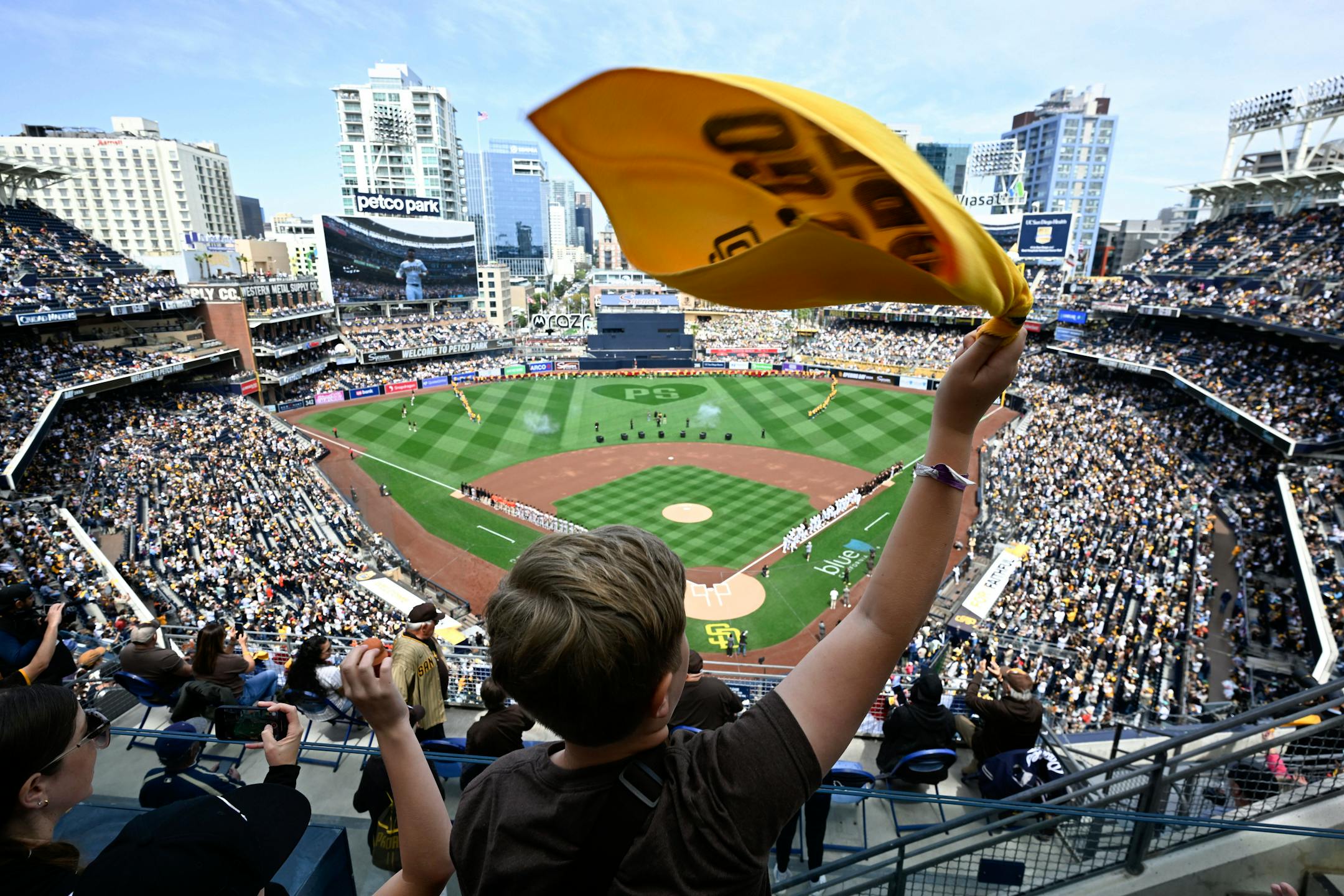
An announced 44,953 showed up at San Diego's Petco Park for the Padres' first home game in 2024. The Padres will draw more than 3.4 million fans at home this year — a far cry from their early years, when they had a hard time cracking 500,000. (Denis Poroy/The Associated Press)

The American and National Leagues were separate entities in my Twins’ beat-writing days for the St. Paul Pioneer Press in the 1970s. The National League writers were largely strangers, unless their teams were in Florida for spring training.

There were also the special events — All-Star Game, World Series — and the Pioneer Press didn’t develop a habit of covering those in person until the 1980s.

Which meant, for years, I only knew Phil Collier from the San Diego Tribune by legend, and his nickname: “Phantom Phil.”

One version of that is Collier would not be seen in the usual circle of reporters before a ballgame, and then wind up writing the story of the day. The other is that it came from co-workers in the newspaper office, where he would be seen only a handful of times a year to pick up mail.

The rest of the time, he was at a ballpark.

It was Collier who received the news from Sandy Koufax that the most dominant lefthander in modern baseball would be retiring after the 1966 season. The pain in the magic left elbow that would blow up after launching all those two-hit, 12-strikeout shutouts was becoming too intense.

Collier was on the Dodgers beat and had been told confidentially by Koufax after the 1965 World Series that the next season would be his last. Phil wrote the story and kept it in his desk at the office for a year, waiting for word from Koufax that the decision was final.

The Phantom made a couple of additions and basically said, “Print it,” for the biggest scoop of a baseball-writing life.

ADVERTISEMENT

Collier had covered mostly the Dodgers and some of the Angels for the Tribune until 1969, when San Diego and Montreal received NL expansion franchises.

Collier had been working for Jack Murphy in Fort Worth, Texas, and they went to San Diego as almost a package deal in 1951. Murphy’s work as sports editor to make San Diego a major league market was so persistent that in 1981, months after his death, the name of San Diego Stadium was changed to Jack Murphy Stadium — and it remained that way for 17 years.

Collier switched his coverage to the Padres, obviously, with the expansion in 1969. And it is stunning to look back at those early seasons: The Chargers, beloved as an AFL team and still beloved post-merger, were what mattered to the San Diego area sports fans.

When the Padres played for those first several seasons, everybody went to the beach. The official attendance for the inaugural big-league season in 1969 was 512,970. The first five seasons, the Padres didn’t reach 650,000.

Asked for an explanation for this early expansion disaster, it was twofold: “They all have been raised as Dodgers fans down here, and the Padres stink.”

Forward went Phantom Phil — still on the beat when the Padres brought in the ultimate Dodger, Steve Garvey (at age 34) in 1983 and went to the World Series in 1984, and the Murph was oft-filled.

Collier was voted in 1990 as the winner of what was then the Spink Award — giving him a place in the writers’ room at the Hall of Fame in Cooperstown, N.Y. That put him on the docket for a short speech at the induction ceremony in July 1991.

I was lucky enough to be there to cover the induction of Sir Rodney Carew, the seven-time AL batting champion — all won in his 12 seasons with the Twins, none in his seven-season swan song with the Angels.

What’s remembered from the speeches was Collier’s punchline: He mentioned the suggestions he had been receiving to fill his time if he started staying away from the ballpark and decided to take retirement.

One of those was that he could become an amateur gardener, perhaps plant and tend to a garden in the yard. In that San Diego sun, warm but not too warm, he could take pride in a patch of beautiful roses.

As I recall, the Phantom then shook his head slightly, made nods to all the Hall of Famers seated on the outdoor stage to his left and right, and motioned with his hands:

“These are my roses.”

It tied for the greatest line I’ve heard in a Hall of Fame speech — matching Harmon Killebrew’s tale of his mother complaining out there in Idaho that Harmon and his brother were ruining the grass and his dad said, “We’re not raising grass here, we’re raising boys.”

The Padres are here this weekend. And they come here contending again in the NL West, with 57 straight sellouts and headed past 3.4 million in attendance.

“It is phenomenal,” a current Padres beat writer said. “Every game is a party.”

Which got me thinking of the wry smile it would bring to the Phantom (R.I.P. 2001) that the Chargers bailed in 2017, and baseball reigns in San Diego.

Now, everyone’s roses out there are the Padres, including one of ours as a transplant, Luis Arraez.

He only hits singles? I don’t care. Bring him back this winter as a free agent, Twins. You need a first baseman (he’s OK there) and someone to cheer other than Byron Buxton.

about the writer

about the writer

Patrick Reusse

Columnist

Patrick Reusse is a sports columnist who writes three columns per week.

See Moreicon

More from Twins

See More
card image
Mike Janes

Winokur, a 6-foot-6 shortstop and center fielder, hit .226 with 17 homers, 68 RBI and 26 stolen bases in high Class A this year.

card image
card image