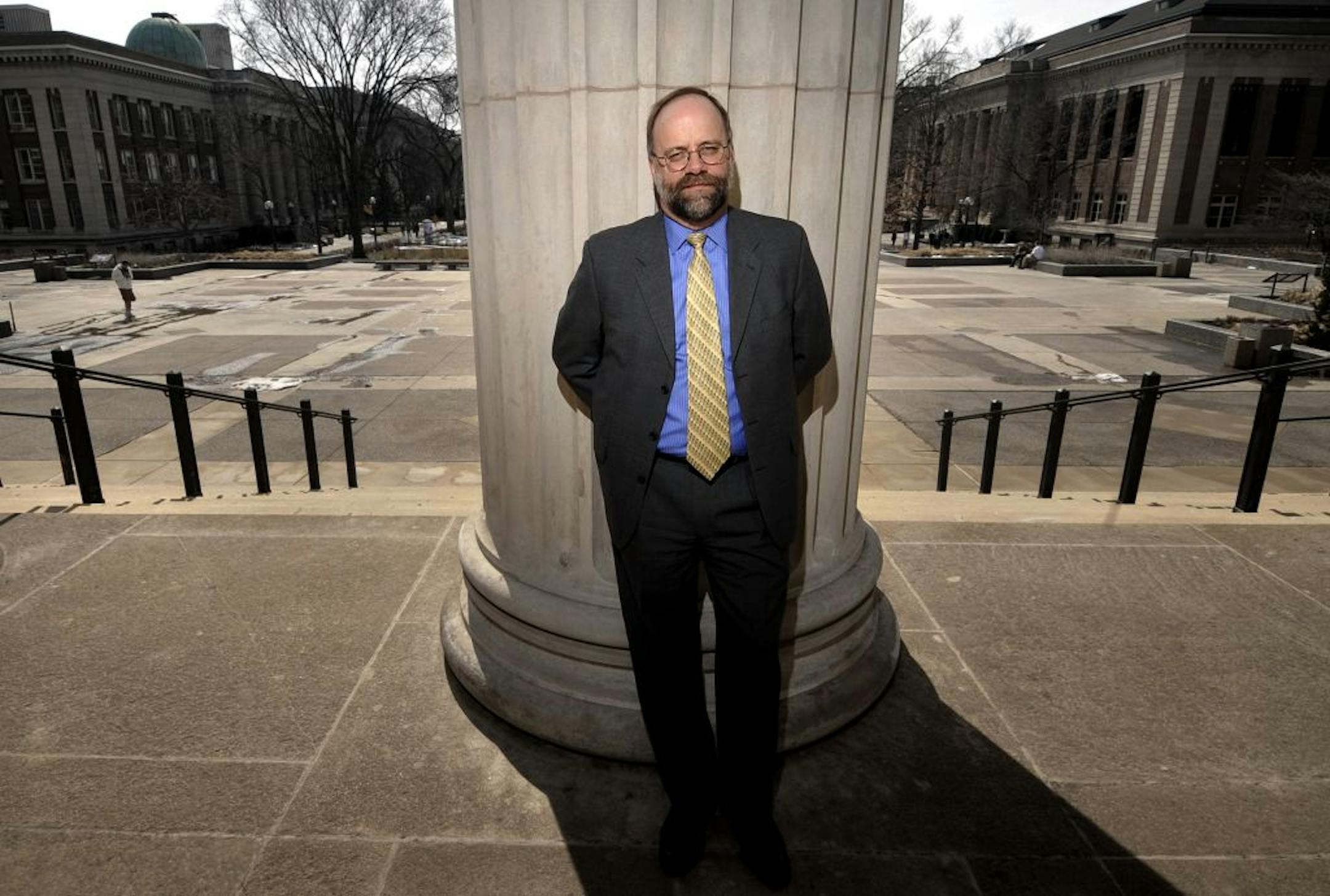
If Tim Mulcahy seems noticeably relaxed these days, that's probably because he is. Like any soon-to-be retiree, Mulcahy, 61, is looking forward to a life of travel, photography and writing after he steps down as University of Minnesota's vice president of research in December.
But more important, Mulcahy walks away from the job confident the university has pumped a steady flow of jobs and innovation into Minnesota's economy. Once an intractable sinkhole for intellectual property, the university has emerged as a credible place to launch startups and develop new technologies.
"We've run a pretty good lead lap," said Mulcahy during an interview in his office Friday.
In fiscal 2012, the university launched a school-record 12 startups compared to just two in fiscal 2008. The companies include everything from a startup that uses carbon dioxide to extract geothermal energy to a firm that developed software to reduce traffic congestion. The university bested all but a half-dozen individual research universities across the country in startup creation last year, according to a recent survey by the Association of University Technology Managers (AUTM).
The university generated $10.1 million in licensing income in fiscal 2012, not a blockbuster amount but much better than the $7.9 million in fiscal 2008. Patent filings and invention disclosures are also up.
More important, the university has earned some respect from the larger business community.
"The University of Minnesota can be a real difficult place to penetrate," said Charlie Weaver, executive director of the Minnesota Business Partnership, a group of the state's most prominent CEOs. "It has got a ways to go, but it has gotten better."
While the university enjoys good relationships with larger corporations such as Medtronic and 3M, the school could do a better job reaching out to younger companies, Weaver said.