2:45
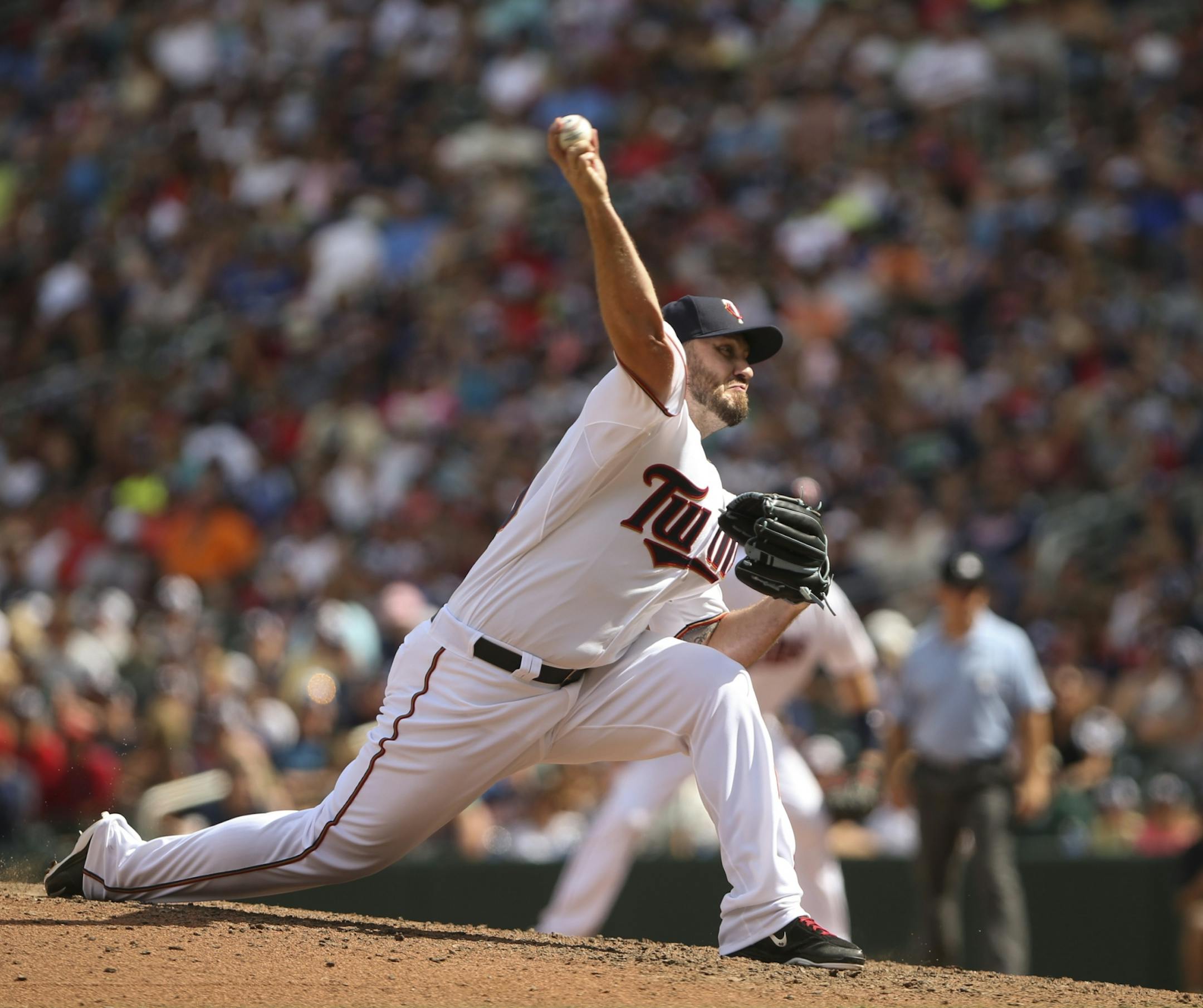
2:45CHICAGO - Kevin Jepsen won't be driving a truck on Friday, won't be selling real estate, won't be approving time cards for his employees at some small business in suburban Phoenix. He won't be doing homework for grad-school classes, nor will he be … well, is there anything else you're glad you won't be doing, Kevin?
"I don't like to think about it," Jepsen winces.
Understood. But there was a time when any of those occupations would have seemed more likely today than sitting in the Twins' bullpen at U.S. Cellular Field, waiting for the chance to retire three White Sox hitters and celebrate another save. See, somewhere around Halloween 2007, Jepsen made a difficult decision: He retired from baseball.
"I was done. I told my wife, 'I'm not playing anymore,' " Jepsen said. "The constant pain, it just wasn't worth it, not with the results I was getting. I've got a 4[-plus] ERA and I can't even get out of [Class] A ball? I mean, it's not happening."
So here's the funny part about Jepsen's career: Retiring was the best thing he ever did. Retiring saved his career. Retiring from minor league ball made him a major leaguer, an Olympic medal-winner and, lately, perhaps the most important pitcher on the Twins' roster.
That's because Jepsen, then 23 years old and three seasons removed from surgery to restitch the labrum in his pitching shoulder, an injury that had nagged him with constant soreness ever since, stopped doing shoulder exercises, quit his offseason throwing program, and shelved his regular workouts. He was considering what to do next, looking into applying to colleges, when his wife, Andrea, pointed out that, since they lived only a short drive from the Angels' minor league facility in Mesa, Ariz., he might as well report to camp, tell the Angels his plans, and what the heck, give pitching one last shot.
Jepsen sensed that the Angels weren't exactly disconsolate that he wanted to leave. They had drafted him as a starter, projecting him eventually toward the front of their rotation, but the shoulder surgery had forced him to the bullpen, with mediocre results. "To be honest, I think the only reason they were keeping me around anyway was that I had been a second-rounder [in 2002], I still had velocity, and I wasn't costing them anything" beyond the $750,000 bonus he had received when he was drafted, Jepsen said.
So there was nothing at stake for anyone, really, when Jepsen took the mound and discovered something amazing. "There was no pain. I mean, it was gone," Jepsen said, still amazed more than seven years later. Doctors theorized that his dedication to strength work, to building up the shoulder every offseason, never gave it time to heal completely. "I hadn't worked out, hadn't even picked up a ball, and I guess the pain went away. I kept waiting for it to come back and it never did. … It was pretty exciting."