

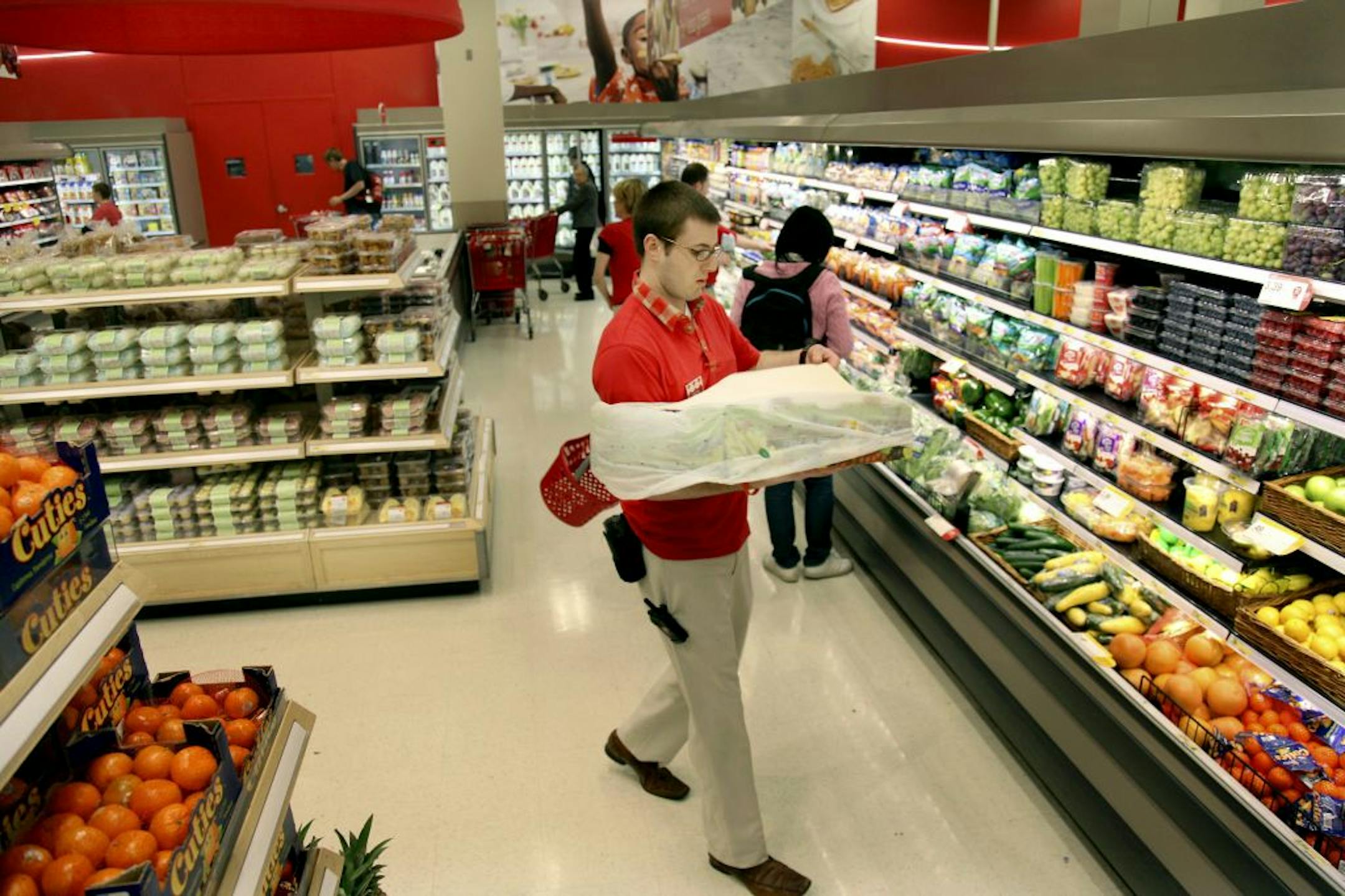
Consumers, faced with spending more to fill up their gas tanks, are growing more reluctant to fill up their shopping carts.
U.S retailers Thursday reported increases in comparable-store sales over last year, but the results fell short of analyst expectations. High fuel costs and tighter household budgets were blamed for the tepid numbers, particularly in the discount arena.
The International Council of Shopping Centers said it saw strong but uneven growth. The council said chain-store sales were up 5.4 percent.
"Overall, sales remained relatively strong in May, though there were a few pockets of weakness at some of the mid-tier retailers and among apparel retailers," said Michael Niemira, the council's chief economist and vice president of research.
Minneapolis-based retailer Target, the second-largest U.S. discounter, said same-store sales increased 2.8 percent in May, but the results were less than the 3.5 percent expected by Wall Street.
"May sales were near the low end of our expected range, driven by a much slower traffic trend in the second half of the month," said Target Chief Executive Gregg Steinhafel. "Our guests continue to shop cautiously in light of higher energy costs and inflationary pressures on household budgets."
Wisconsin-based Kohl's saw a same-store sales increase of less than 1 percent.
"Both showed weakness in the seasonal category," said Matt Arnold of Edward Jones. "There is a clear divide between the luxury sector and the lower-end retailer." Luxury retailers have had a strong run so far this year, a trend that continued into May. Sales at Saks jumped 20 percent during the month, while they rose 7.4 percent at Nordstrom.



