

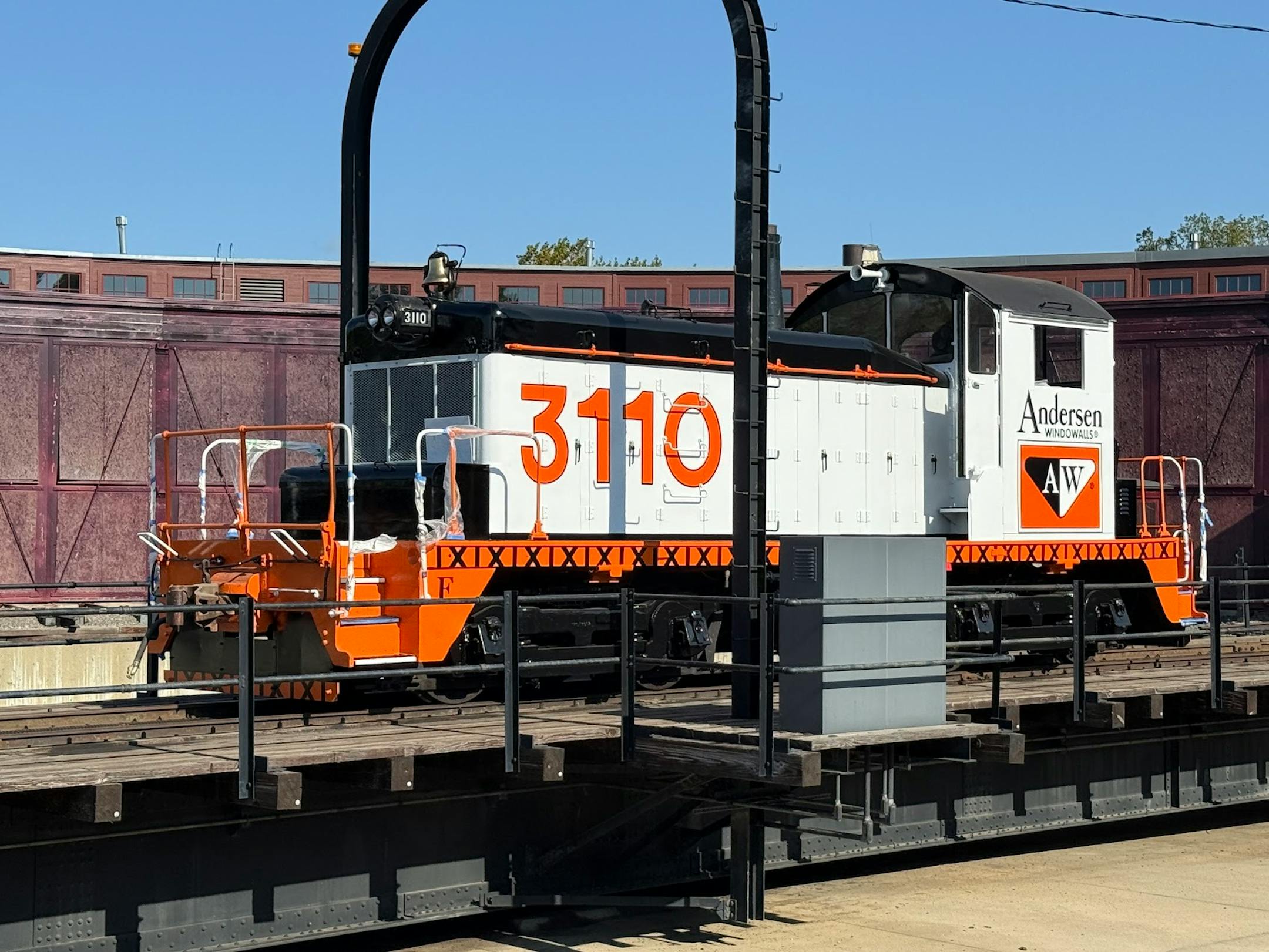
A 1949 diesel locomotive that once hauled lumber and window frames through Andersen Corp.’s Bayport factory is running again after nearly a year of painstaking volunteer restoration at the Minnesota Transportation Museum in St. Paul.
The engine — an EMD SW1, among the earliest generation of diesel-electric switchers — represents a turning point in Minnesota’s rail history. Compact and durable, it was part of a nationwide transition from steam to diesel that reshaped industrial life after World War II.
“It started with a hinge,” said Tim Nelson, one of the volunteers who led the project. “Once I took that off, I realized there was rust damage everywhere. From there, we just kept going.”
That small repair turned into an 11-month rebuild. Every Saturday, a small crew welded, sandblasted and fabricated new steel pieces by hand. Replacement parts for a 1940s locomotive don’t exist, Nelson said, so volunteers salvaged what they could and built what they couldn’t find.
“They quit making these things in the 1950s,” he said. “You just have to figure it out.”
The 44-foot locomotive, factory-numbered 110, began its life on the Wabash Railroad before coming to Minnesota decades later. At Andersen’s manufacturing campus along the St. Croix River, it spent years shuttling boxcars of raw lumber and finished products along the company’s private tracks — a vital link in a supply chain that helped make Andersen a household name.
Founded in 1903 by Danish immigrant Hans Jacob Andersen, the company grew into the country’s largest window and door manufacturer. The Bayport facility relied heavily on rail, with freight cars delivering lumber and carrying out finished window frames bound for homes across the Midwest.
When the locomotive was retired, Andersen donated it to the museum with one request — that it keep the company’s branding. Decades later, when volunteers began restoring it, that lettering already had been sandblasted away, the metal beneath dulled by rust and weathered steel.


![Shoppers made their way through a parking ramp at the Mall of America, Tuesday, November 13, 2018 in Bloomington, MN. A new camera-based parking system, currently up and running at the mall, is expected to help shoppers have an easier time finding a place to park. ] ELIZABETH FLORES ï liz.flores@startribune.com](https://arc.stimg.co/startribunemedia/QUXCIHRX6DTG5YE7PMPVXA63AI.jpg?&w=252&ar=3:2&fit=crop)
