Opinion editor’s note: Star Tribune Opinion publishes a mix of national and local commentaries online and in print each day. To contribute, click here.
•••
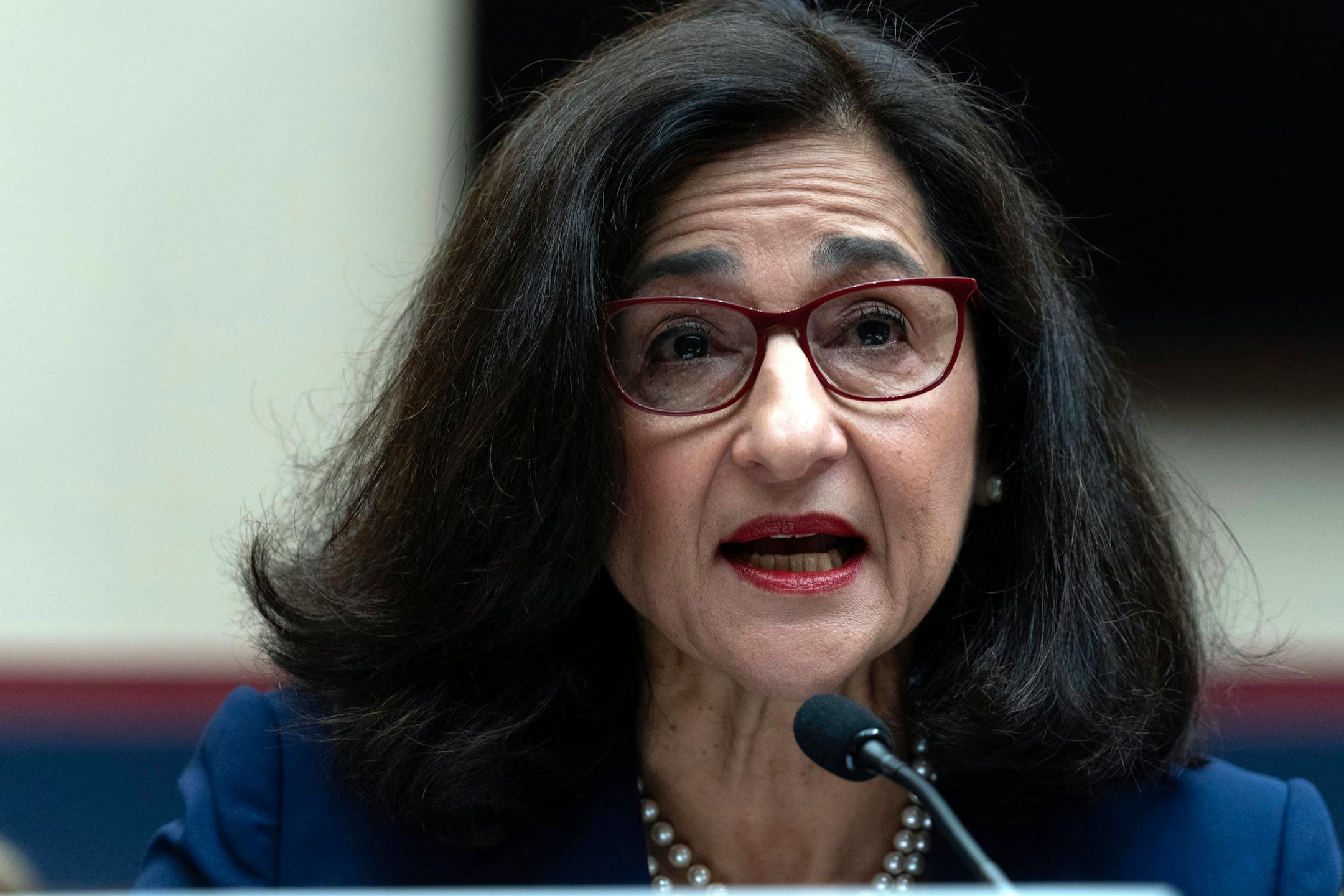
Columbia University’s exceptionally poised president, Nemat Shafik, clearly has no intention of going down like the former heads of Harvard University and the University of Pennsylvania, both driven from their jobs following disastrous appearances before a congressional committee investigating campus antisemitism.
Testifying before the same panel Wednesday, she readily agreed with Republicans’ premise that pro-Palestinian activism at Columbia is shot through with anti-Jewish bigotry, and explained how, under her leadership, Columbia is cracking down. Fifteen students, she said, had been suspended, and six more were on disciplinary probation. Visiting scholar Mohamed Abdou, who expressed support for Hamas, Hezbollah and Islamic Jihad, “will never work at Columbia again,” she said, and several other members of the faculty are under investigation. If it had been up to her, she said, the stridently anti-Zionist professor Joseph Massad would never have gotten tenure. There was some confusion at the hearing about whether Massad was still chair of an academic review committee, but if he was, Shafik pledged that he would be removed. (Columbia later confirmed that his chairmanship was scheduled to end after this semester.)
By bending over backward to be agreeable, Shafik emerged from the four-hour grilling largely unscathed. All that’s been damaged is Columbia’s guarantee of academic freedom.
Shafik appeared with two chairs of Columbia’s board of trustees, Claire Shipman and David Greenwald, and with David Schizer, a former dean of Columbia’s law school who is one of the chairs of the school’s antisemitism task force. The university, said Shipman, was taking steps to restrict student protests: “One of the excellent recommendations of our antisemitism task force is that they have said that if you are going to chant, it should only be in a certain place, so that people who don’t want to hear it are protected from having to hear it.”
But protests are by their nature intrusive; it’s hard to see the point of a demonstration that’s audible only to those who opt in. “Has there been any disciplinary action taken against students who have chanted, ‘From the river to the sea?’” Elise Stefanik, R-N.Y., who scored a major political victory with the previous hearings, asked, citing a common anti-Zionist slogan. “We have some disciplinary cases ongoing around that language,” Shafik responded.
You don’t have to like anti-Israel language or activism to be worried about congressional demands to suppress it. These hearings are highly unusual; it’s hard to think of a time since the anti-communist House Un-American Activities Committee when Congress has made such an effort to investigate disfavored ideologies in academe.