

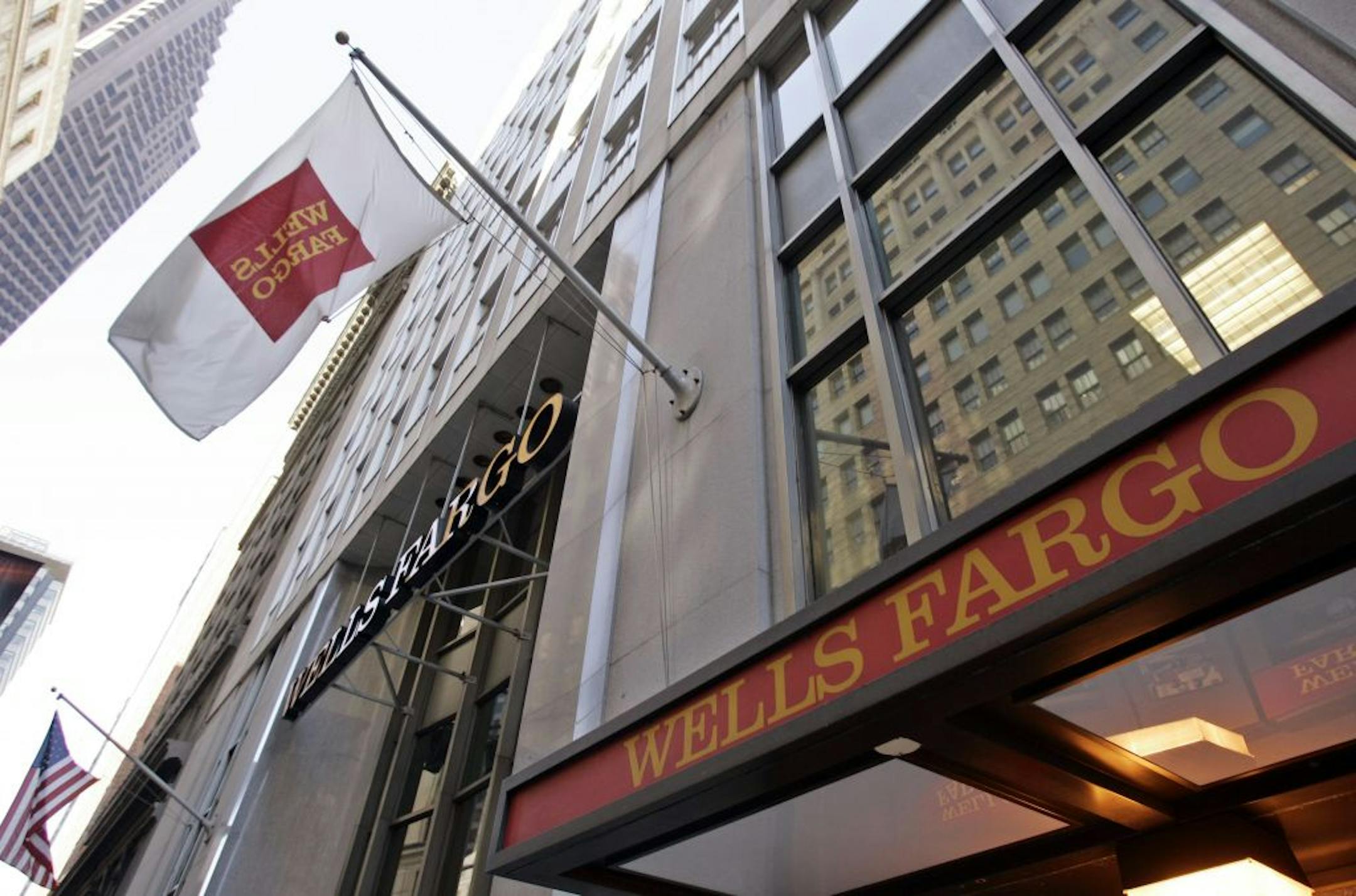
As regulators crack down on storefront and Internet payday lenders, a new report says four big banks -- including Wells Fargo and U.S. Bank -- are major players in the multibillion-dollar fast-cash industry, charging vulnerable people interest rates as high as 365 percent.
In many cases, the four banks charge even higher fees and interest rates for their emergency loans than payday lenders, according to a brief report released Monday by Minnesotans for a Fair Economy. The group names Wells Fargo Bank, Fifth Third Bank, Regions Bank and Minneapolis-based U.S. Bank.
The St. Paul-based organization claims that Wells Fargo and U.S. Bank are hiding behind their charters to avoid the sort of regulation other payday lenders face. Formed last year, the group is made up of community groups, faith groups and labor groups such as the Service Employees International Union.
"The banks are getting away with something that had drawn legal action on the payday lenders you see on the street," said Kevin Whelan, spokesman for Minnesotans for a Fair Economy. "We hope the leadership at each institution will reconsider these business practices."
Wells Fargo and U.S. Bank representatives say they don't engage in payday lending. They call the services "checking account advances" or "direct deposit advances" and offer a list of features that make them different from payday loans. The advances, for example, are only available to people who have checking accounts with the banks and make regular direct deposits into them.
San Francisco-based Wells Fargo said another key difference is that, unlike with payday lenders, it doesn't roll over or extend the advances. Instead, the amount is automatically repaid with the customer's next direct deposit, whenever that is.
Neither bank actually calculates an annual percentage rate (APR) on interest for the loans, saying they charge straightforward fees.
"It's not appropriate to calculate an APR on a flat fee that must be repaid with the next direct deposit," said U.S. Bank spokesman Tom Joyce.



