

When the "foreclosure crisis" is mentioned, thoughts immediately turn to single-family homeowners, perhaps those who took out exotic adjustable-rate mortgages or bought too much house for their means and now find themselves in danger of losing their dwellings to their lenders.
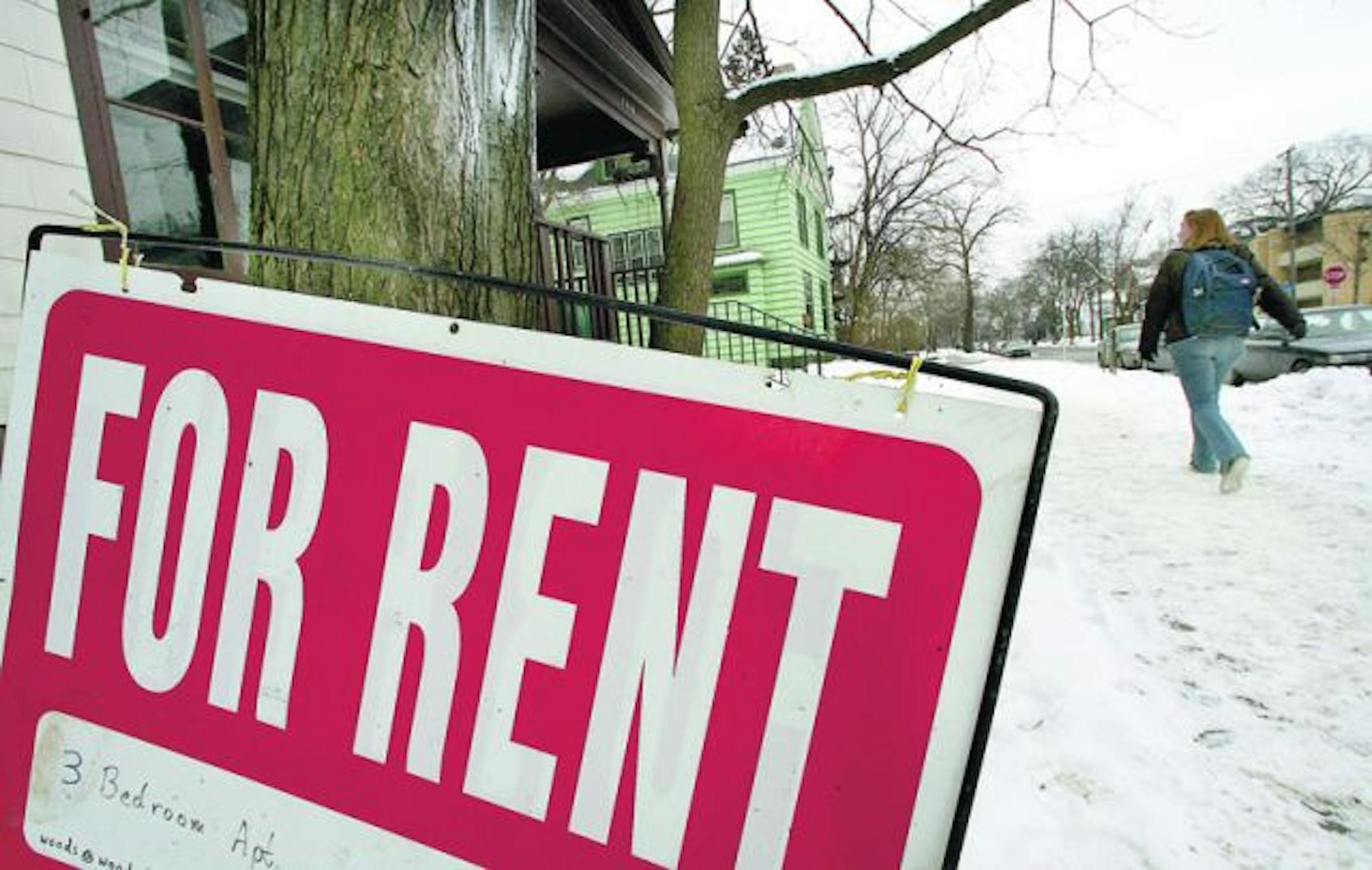
But it isn't only single-family homes that have been affected by foreclosures -- so have multifamily apartment buildings and rental homes. Happening mostly under the radar, some overextended Twin Cities landlords have been defaulting on their mortgages, resulting in blameless tenants being made homeless and forcing them to "double up" with friends or relatives in other rental units.
Meanwhile, a new study indicates that the "doubling up" phenomenon is, in turn, contributing to a surge in rental unit overcrowding and is helping to depress rents for struggling apartment owners -- thus keeping the multifamily market firmly entrenched in the doldrums.
Conventional commercial real estate wisdom has long held that what's bad for single family home sales is good for the multifamily rental market. In past years that has largely been true, but the financial meltdown that brought on the current recession and its massive job losses has changed those rules.
The foreclosure crisis in renter-occupied buildings has been pronounced in the Twin Cities. In a market dominated by small, local owners, apartment buildings and rental homes have been a higher-than-average percentage of total foreclosures.
Research by the University of Minnesota's Humphrey Institute indicated that as much as 60 percent of buildings foreclosed on in Minneapolis-St. Paul in 2006 and 2007 were renter-occupied. Part of the reason is that unlike many other cities, a substantial portion of the metro area's rental stock is composed of single-family homes owned by small landlords rather than by companies. The U.S. Department of Housing and Urban Development estimates the figure to be 20 percent.
Cathy ten Broeke, the Minneapolis/Hennepin County coordinator to end homelessness, said that foreclosures on both rental and single-family homes have led to overcrowding and doubling-up among tenants who still have homes.
"In this economy, out of necessity a lot of households simply cannot afford the housing, so they're faced with a choice of either doubling up or becoming homeless," she said. "We have seen an increase in that. I know from services providers that while there are vacancies among high- and medium-end rental units, that's not translating to the most affordable ones.



