
Remembering broadcast news legend Ron Handberg, who put WCCO-TV on the map

He launched award-winning features with Dave Moore and paired popular anchor duo Don Shelby and Pat Miles.

Special to the Star Tribune
February 5, 2026 at 7:00PM
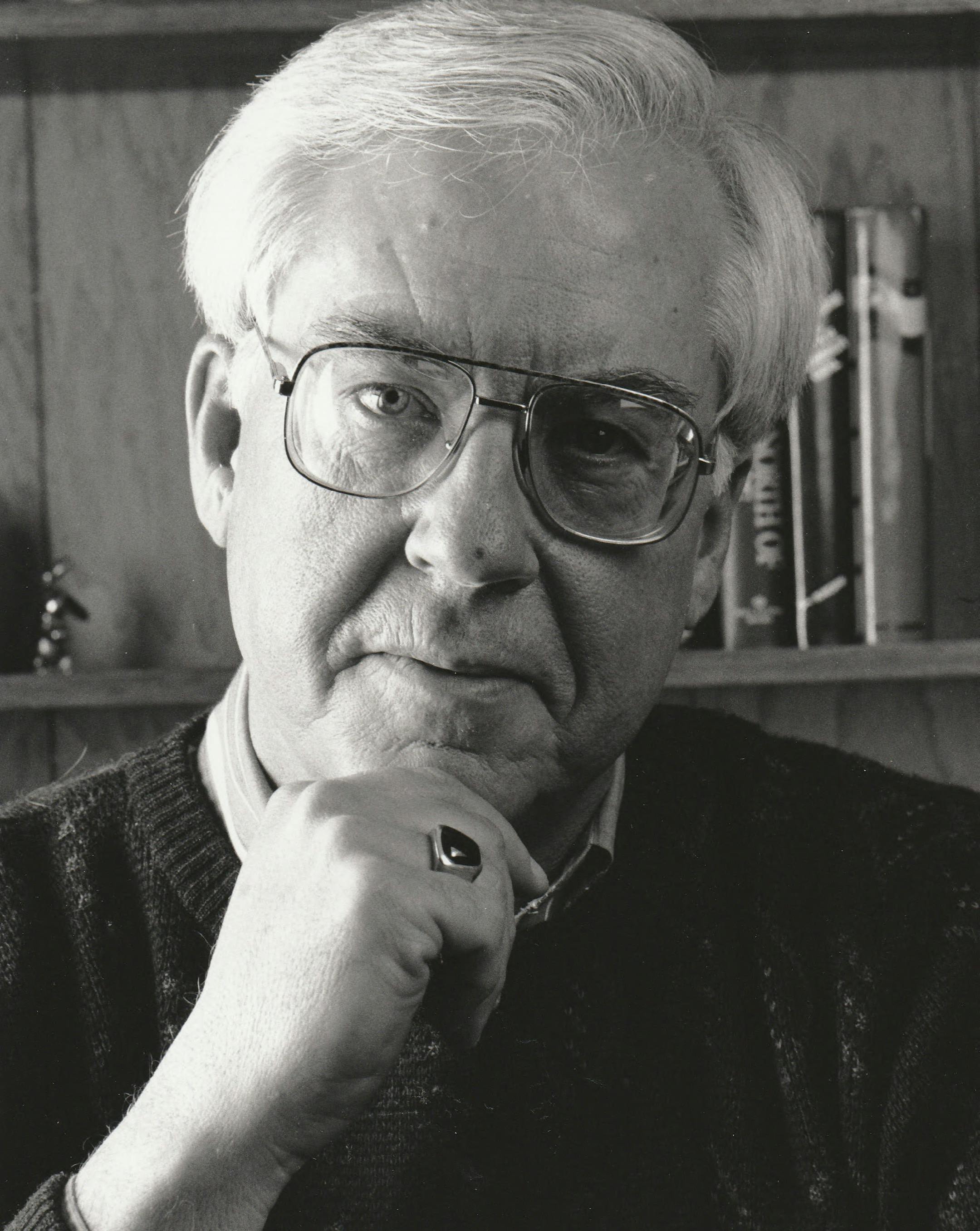
Ron Handberg, former WCCO TV general manager. (Provided by the Handberg family)

Former WCCO TV news anchor Don Shelby recalls a time in the 1980s when no fewer than 13 national correspondents from ABC, NBC and CBS could trace their start to Minnesota. And behind them all was Ron Handberg, a career journalist who worked his way up to general manager at WCCO TV.

“He hired the best storytellers in the world to get those facts out in a way that was consumable to the people,” said Shelby, who worked for Handberg for nearly 20 years and came to consider him a close friend.

Handberg, whose influence can still be felt in newsrooms today, died on Jan. 26 of pancreatic cancer. He was 87.

While he may not have been a household name, longtime viewers will no doubt recall many of the franchises Handberg had a hand in creating: Moore Report documentaries, with longtime news anchor Dave Moore, the Dimension series and the I-Team, powered by the region’s largest investigative journalism unit.

Under his leadership, WCCO TV won five national Emmy Awards, five Peabody Awards and numerous other honors, according to the Pavek Museum, a St. Louis Park-based communications gallery.

“Ron Handberg is that rare journalist who found his way to the top and never lost sight of the powerful relationship a television station can have with its community,” the Pavek Museum wrote in an article from Handberg’s 2008 induction into the Minnesota Broadcasting Hall of Fame.

Born and raised in Minneapolis, Handberg’s roots were planted in the city well before he became a local TV news reporter. He attended Robbinsdale High School, where he was co-editor of the school’s newspaper.

Handberg graduated from the University of Minnesota’s journalism school in 1961 and started as a radio reporter before moving to the television side at WCCO in 1964. By 1971, Handberg had worked his way up to news director, and then eventually general manager in 1981.

“For the 16,000 television stations in the country, only one is given an Emmy by the National Academy of Broadcasting,” Shelby said. “In a 10-year span, we received it five times under his leadership.”

Handberg hired Shelby from Houston to work in the newsroom in 1978. Quickly, Shelby found that Handberg was far more personal and compassionate than most bosses.

Shelby was battling alcoholism when he arrived at the station. Once Handberg caught on, he checked Shelby into treatment.

“He saved my life and saved my career,” Shelby said. “He got me to treatment and didn’t fire me, which he had the right to do, and then watched over me for the last 46 years.”

Although empathetic, Handberg was a newsroom perfectionist. Shelby recalled the story Handberg told him about how he and Pat Miles were chosen to co-anchor the evening news.

“He set up two television sets with two VCRs, and spent months putting the man tape in on one side and the woman tape on the other,” he said. “He finally was able to look up where he just happened to get Don Shelby and Pat Miles on the screen at the same time.”

While the newsroom under his leadership was professional, collaborative and strict, its success came from Handberg’s instinct to make meaningful connections that transcended TV.

Handberg’s newsroom gained national attention, as it was ranked No. 1 for on-air chemistry between newscasters. When asked by a CBS national consultant how their team managed to seem so friendly to each other on air, Handberg and his staff replied that they simply were friends, according to Shelby.

“We were all friends, and we loved each other,” Shelby said. “We were there at the birth of each other’s children. We were there at the death of their parents. We were together for Thanksgiving.”

Like Shelby, Dave Nimmer, former WCCO reporter, had a close connection with Handberg.

“I fished with the man for 30 years,” Nimmer said. “He had a wicked sense of humor.”

Nimmer described the work environment under Handberg’s watch as “not a playful one,” but he said it pushed people to produce their best work.

Handberg did not carry that strictness home. His daughter Deb Handberg Louwagie said she will always appreciate his gentleness as a father.

“He was very interested in what we were doing,” she said. “He was very kind.”

Louwagie vividly remembers nights as a kid, the house rumbling as her father vigorously typed on his manual typewriter, writing and rewriting scripts for next day’s broadcast.

“I was always super impressed with how fast he was on that typewriter,” Louwagie said with a laugh.

After retiring from WCCO in 1989 , Handberg wrote novels revolving around news reporters in Minnesota solving crimes and holding public officials accountable. His notable titles include 1992’s “Savage Justice” and 1999’s “Dead Silence.”

“He was a wonderful father to his children, to his grandchildren, and he was a great grandfather to everyone who ever worked for him,” Shelby said.

Handberg is survived by his wife Carol Handberg, his son Greg Handberg and his two daughters, Deb Handberg Louwagie and Mindy Rosenow.

Owen McDonnell is a University of Minnesota student interning at the Minnesota Star Tribune.

about the writer

about the writer

Owen McDonnell

Special to the Star Tribune

More from Food & Culture

See More
card image
card image