

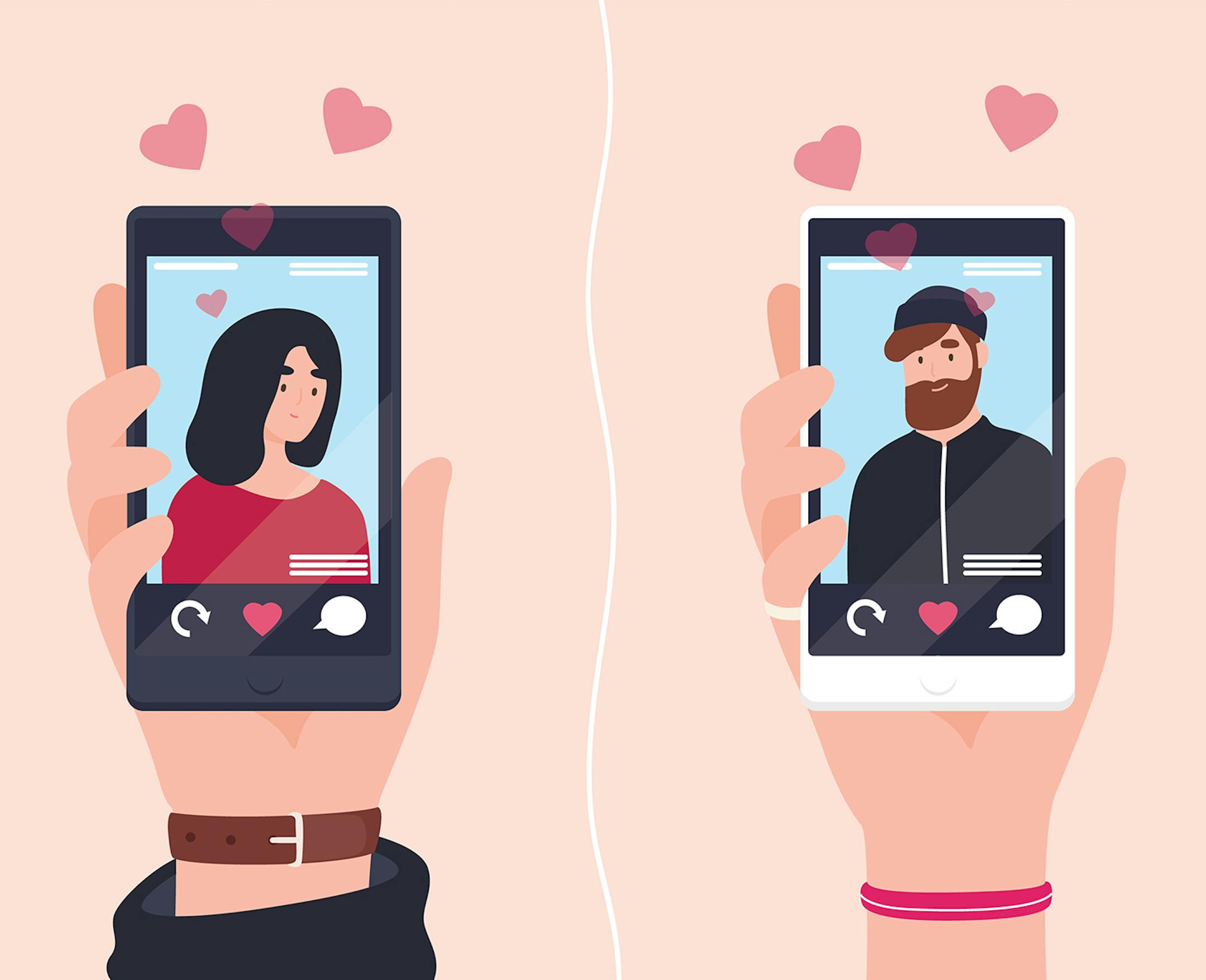
The internet has transformed the way people work and communicate. It has upended industries, from entertainment to retailing. But its most profound effect may well be on the biggest decision that most people make — choosing a mate.
In the early 1990s the notion of meeting a partner online seemed freakish, and not a little pathetic. Today, in many places, it is normal. Smartphones have put virtual bars in people's pockets, where singletons can mingle free from the constraints of social or physical geography.
Globally, at least 200 million people use digital dating services every month. In America more than a third of marriages now start with an online matchup. The internet is the second-most-popular way for Americans to meet people of the opposite sex, and is fast catching up with real-world "friend of a friend" introductions.
Digital dating is a massive social experiment, conducted on one of humanity's most intimate and vital processes. Its effects are only just starting to become visible.
Meeting a mate over the internet is fundamentally different from meeting one offline. In the physical world, partners are found in family networks or among circles of friends and colleagues. Meeting a friend of a friend is the norm. People who meet online are overwhelmingly likely to be strangers. As a result, dating digitally offers much greater choice. A bar, choir or office might have a few tens of potential partners for any one person. Online there are tens of thousands.
This greater choice — plus the fact that digital connections are made only with mutual consent — makes the digital dating market far more efficient than the offline kind. For some, that is bad news. Because of the gulf in pickiness between the sexes, a few straight men are doomed never to get any matches at all.
On Tantan, a Chinese app, men express interest in 60 percent of women they see, but women are interested in just 6 percent of men. This dynamic means that 5 percent of men never receive a match.
In offline dating, with a much smaller pool of men to fish from, straight women are more likely to couple up with men who would not get a look-in online.


