

Opinion editor's note: Star Tribune Opinion publishes a mix of national and local commentaries online and in print each day. To contribute, click here.
•••
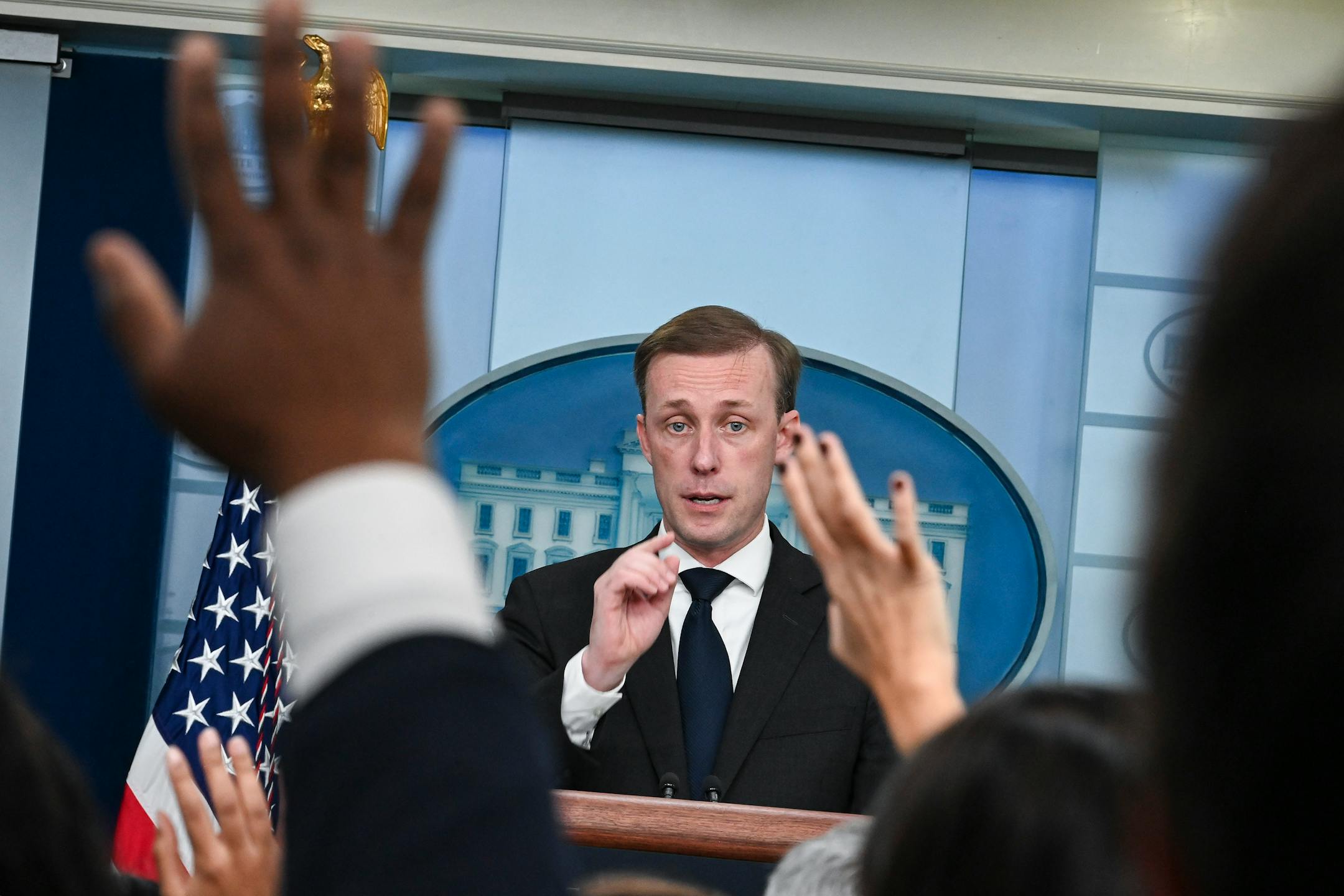
According to Thomas L. Friedman, a columnist for the New York Times who recently had a one-on-one discussion with President Joe Biden about the Middle East, Biden has sent Jake Sullivan, his national security adviser, and Brent McGurk, the White House's top Middle East policy expert, to Saudi Arabia to probe Saudi de facto ruler, Crown Prince Mohammed bin Salman, about his willingness to reach a grand U.S.-Saudi-Israeli-Palestinian understanding.
If such a comprehensive agreement is reached, concludes Friedman, it would be "bigger than the Camp David peace treaty between Egypt and Israel." Maybe so, but even Jimmy Carter's Camp David accords came at a steep price for the U.S. — to pay both countries tens of billions in aid to make a peace that was in both of their interests anyway. An even more grandiose four-way understanding that would, as Friedman hopes, "open the way for peace between Israel and the whole Muslim world," would be even more costly to U.S. security.
Even the possibility of such a blockbuster deal, however, is probably irresistible to a politician like Joe Biden, who has been immersed in the American foreign policy groupthink his entire long career. By nature, he does not mind extending the U.S. security umbrella over more and more countries — for example, admitting Finland and Sweden into NATO in the wake of the Russian invasion of Ukraine and tightening U.S. commitments in East Asia, including pledging on several occasions to defend Taiwan from any Chinese attack.
The excessively exorbitant price that Biden seems willing to pay to get an understanding that the Saudis would completely normalize relations between the world's premier Islamic state and Israel, provided that Israel kept open the possibility of a two-state solution with the Palestinians, is a NATO-level mutual security alliance in which the U.S. would make a formal pledge to run to the defense of the Saudis if attacked — most likely by Iran.
If these are the terms of deal, everybody wins — except the United States. The Saudis get a promise that even Taiwan hasn't received — a formal place under the U.S. nuclear and conventional force umbrella. Because Saudi Arabia has a special status in the Islamic world as the guardians of the holiest Muslim sites of Mecca and Medina, an Israeli rapprochement with the Saudis could bring peace with most or all Islamic countries. The Palestinians would get concessions from Israel that the fading hopes for a two-state solution would be revived.
Although peace between Israel and Saudi Arabia and a resuscitation of the dying two-state solution for the long-abused Palestinians would be wonderful for all three parties, it would be disastrous for the United States. The last thing the already grossly overextended U.S. needs is another formal security dependent. Already, the U.S. military likely will be obligated formally to defend 31 NATO countries in Europe and Japan, South Korea, Australia, New Zealand, Thailand, and the Philippines. The U.S., which accounts for about 40% of the world's military spending but only about 16% global GDP, also has informal security arrangements to worry about, such as those with Taiwan, Israel, and yes, Saudi Arabia.


