

A new state program promises to significantly lower health insurance rates next year in the individual market, but that doesn't necessarily mean consumers will see reductions in what they are paying each month for coverage.
The state Commerce Department last week released proposed rates for 2018 in the market that primarily serves people under age 65 who are self-employed or don't get coverage from an employer.
The release cheered consumers who've endured several years of double-digit premium jumps by reporting some rates might actually decline thanks to a state "reinsurance" program, which is designed to provide a financial cushion for health plans that happen to enroll people with high-cost health problems.
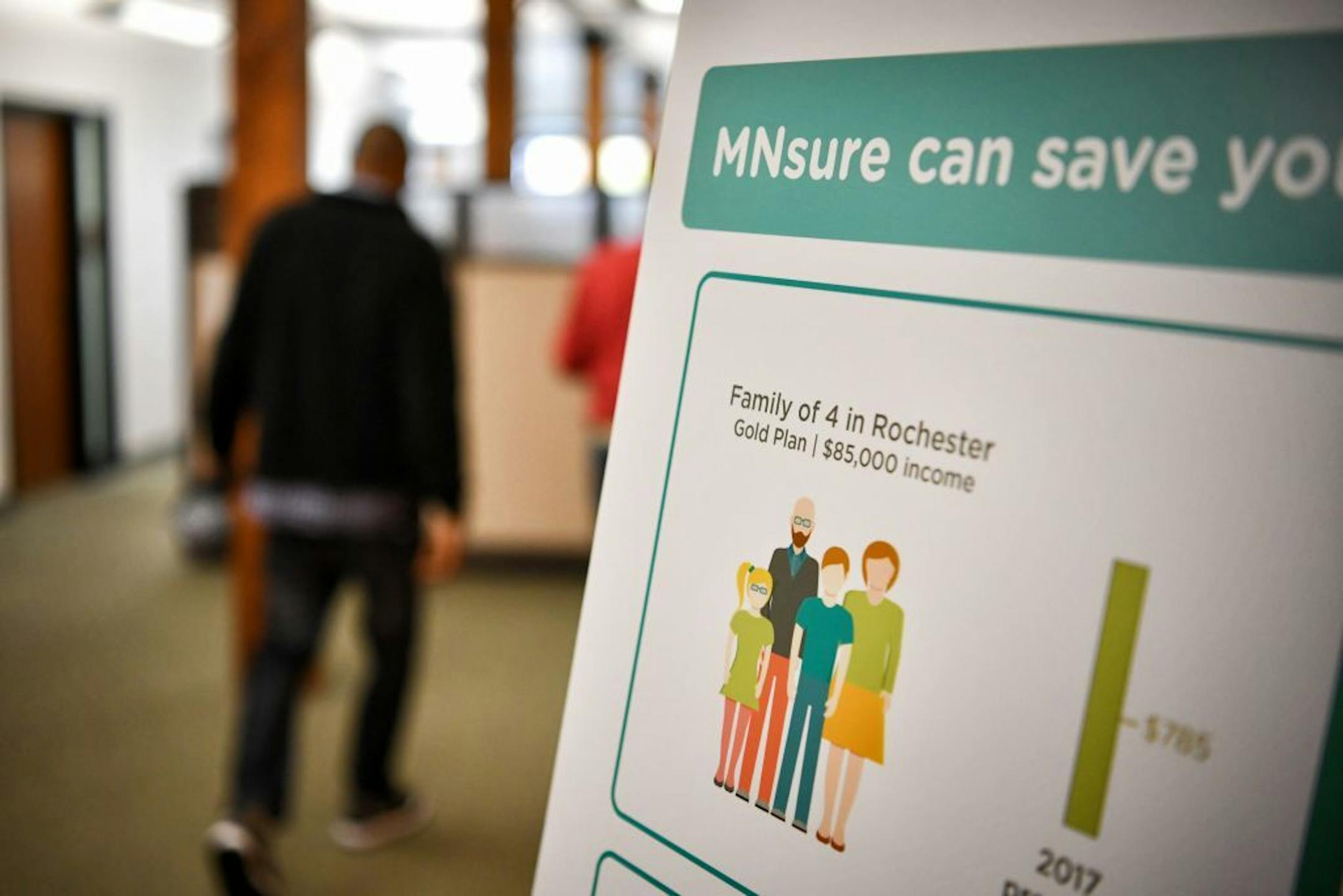
Reinsurance would lower premiums, but insurance agents say consumers likely won't see the savings in the form of outright premium declines, because one-time rebates will be going away at the same time.
"In the current environment, very few people pay the full premium," said Joshua Haberman, an insurance agent who is chief operating officer of the Alexander & Haberman Agency in Bloomington.
About 170,000 state residents buy coverage through the individual market, which has been highly volatile under the federal Affordable Care Act (ACA). After the state's individual market nearly collapsed last year, state lawmakers created a one-time 25 percent rebate program for many consumers in 2017, plus the reinsurance program that's scheduled to start next year.
Insurers in Minnesota are seeking average rate increases for 2018 that range from 3 percent to 32 percent, Commerce said July 31, but the range will shift significantly lower if the federal government grants approval for the reinsurance program. Two insurers say that with reinsurance, their average premiums will decline by more than 10 percent.
While this is good news for individual market consumers, insurance agents say, it also could be confusing. That's because the rebates, which currently are subsidizing about 100,000 consumers in the market, will switch off in January just as the reinsurance impact would kick in.


