

The article "State ready to get tougher on trash" (Jan. 27) misrepresented Minnesota's recycling system.
Members of the Minnesota chapter of the National Solid Wastes Management Association are the backbone of the curbside collection and processing of clean recyclable material in the Twin Cities. Yet the article did not make a distinction between clean recyclers -- Minnesotans who separate out paper, cardboard, aluminum, glass and plastic for recovery -- and waste processors, who recycle very little and have a primary purpose of managing raw garbage.
If recyclables are not separated from the rest of your trash, little can be recycled later at disposal facilities. Waste processors are able to pull between 3.5 and 10 percent of recyclables from the garbage coming into their facilities. Because these waste-processing facilities recycle so little, state law does not allow them to be called "recycling facilities." Those of us who work in the solid-waste industry, environmental groups, and state and local government know the difference.
The article was really about waste processors needing more garbage, not about recycling processors needing more recyclables.
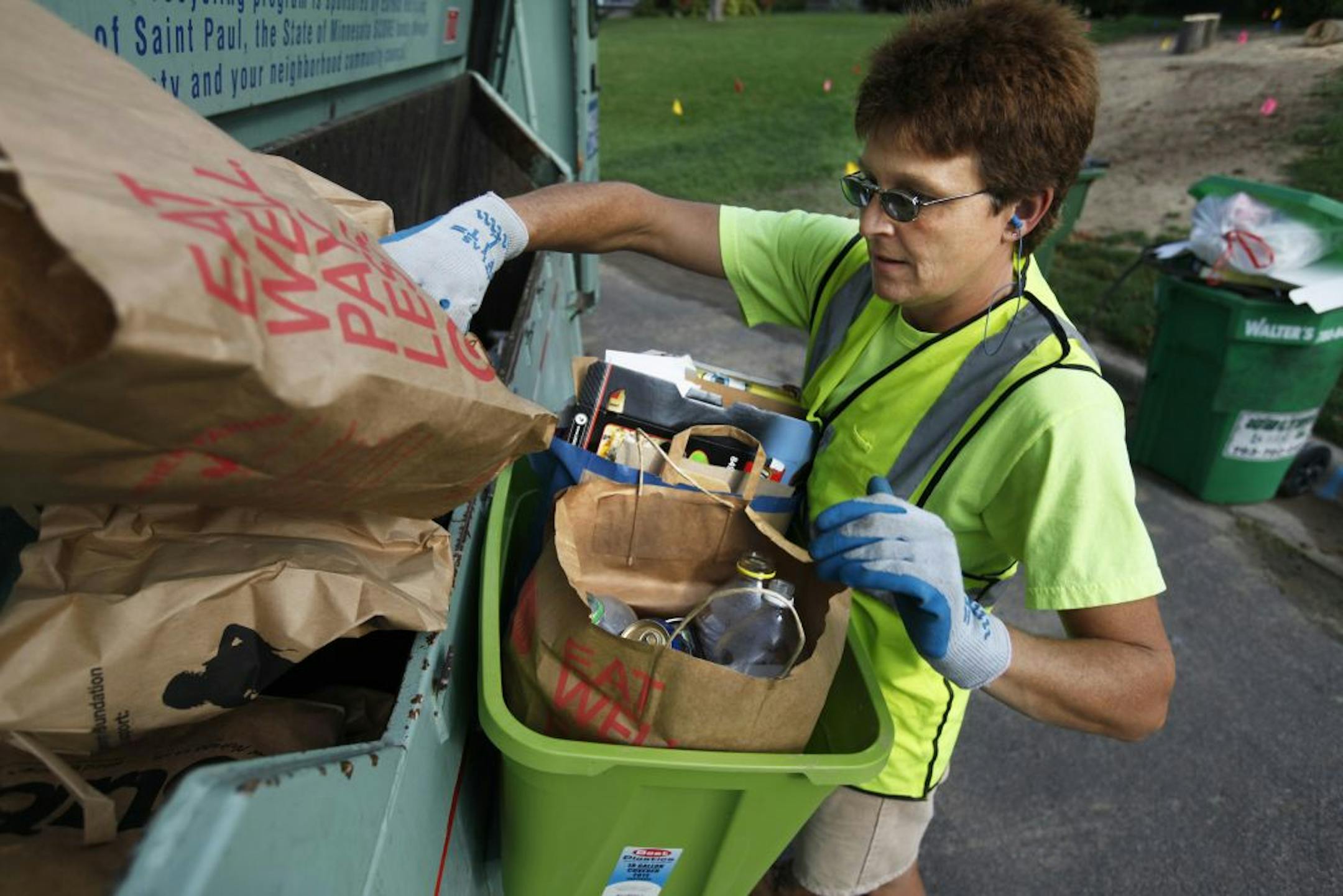
Real recycling starts at home. It is what you and I put out at the curb on recycling day. After it is collected, this clean material goes to a real recycling facility, where it is mechanically separated and baled for end markets. In Minnesota, the real recyclers, those of us who collect and process curbside recyclables, work with local units of government to educate citizens, our customers, to recover as much as possible to keep recyclable resources out of waste-processing facilities. Granted, some recycling programs are more effective than others, and there is room for improvement -- but real recycling starts when each of us makes the decision to separate recyclable material and put it out on the curb.
Real recycling does not occur when recyclable material ends up in the trash and makes its way to either a waste processing facility or sanitary landfill.
For the record, Minnesota is doing a great job on recycling. We are a leader in the nation at a 45 percent recycling rate, compared with Iowa at 36.5 percent, Wisconsin at 37 percent, Illinois at 37 percent and Michigan at less than 20 percent. But can we do more? Absolutely.
The question is simple: Should the state focus on increasing recycling, or on getting more waste processed? We want to recycle more.


