

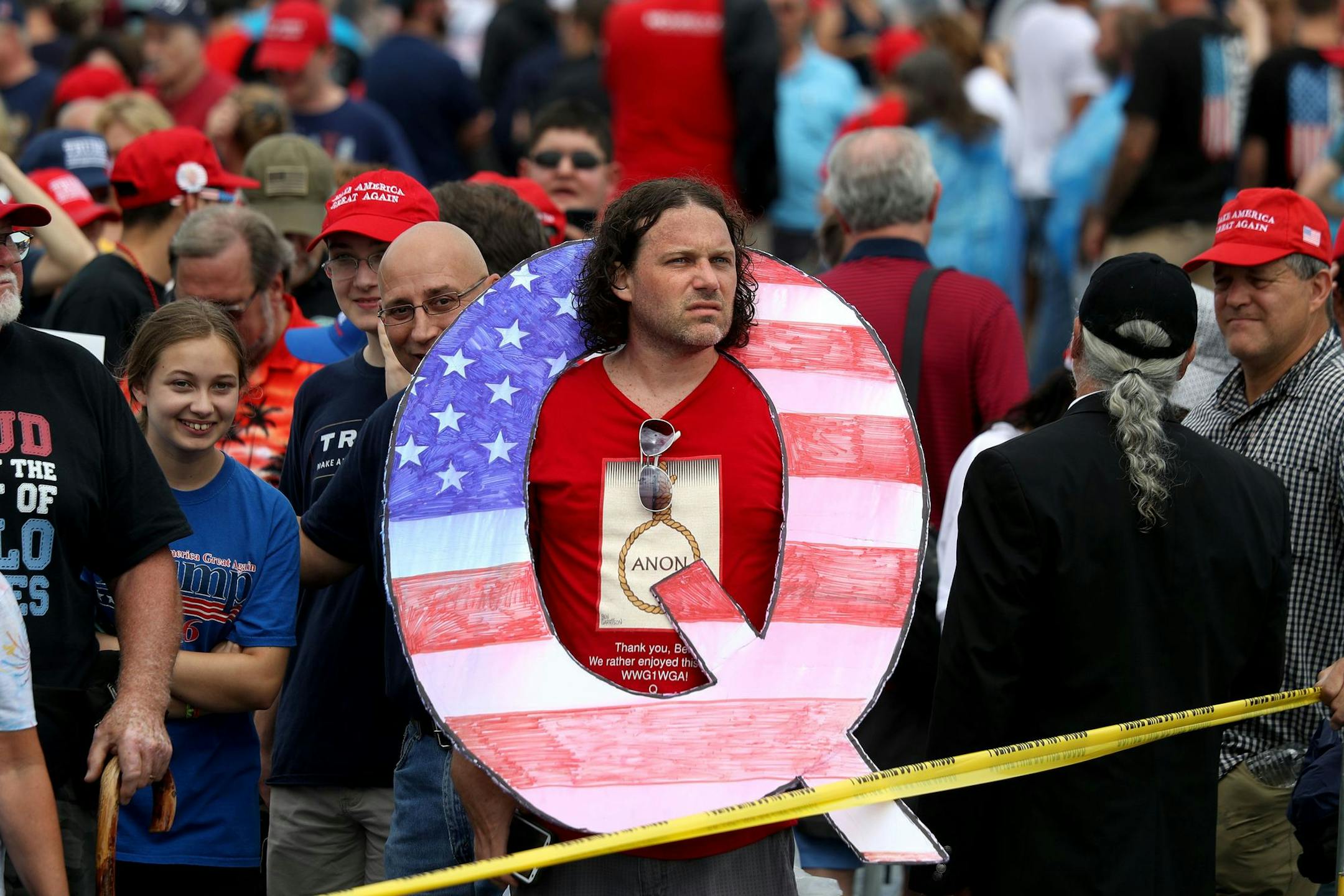
You aren't a conservative if you believe in conspiracy theories.
Before I defend this statement, I should say that as a general rule, I do not like statements that begin, "You aren't a conservative if ..."
It's not that I always disagree with such assertions. For instance, "You're not a conservative if you think the state should seize the means of production and usher in a new age of socialist economics" strikes me as not just defensible but self-evidently true — at least if you define "conservative" in the traditional Anglo-American sense. (The most committed Communists in the Soviet Politburo were routinely called "conservatives" because they were trying to conserve something very different from what American conservatives want to conserve.)
My objection is that when people say, "You aren't conservative if ..." they are usually confusing what is with what ought to be. Sure, conservatives ought to be (fill in the blank) pro-life, pro-gun, pro-free market, pro-this or anti-that. But that doesn't mean they all are. And if they disagree on this or that issue, they might simply be wrong. (Conservative is not synonymous with "correct.") Or they might put more emphasis on different factors or concerns.
Think about it this way: Most of the time when people say, "You're not a conservative if ..." they are engaging politics. "You're not a conservative if you aren't protectionist" should be understood as, "We should exile the free traders from the ranks of conservatives so we'll have an easier time winning arguments."
So why are conspiracy theorists different? Well, for starters, conspiracy theories are almost always offered in bad faith because they are non-falsifiable. The moment you provide evidence disproving a conspiracy theory, the response is invariably to resort to an even deeper conspiracy theory — or to accuse the debunker of being "one of them."
For instance, Attorney General Bill Barr, who has been far too loyal to the president throughout his tenure for my taste, recently told the truth: There's no evidence for the vast conspiracy theories Donald Trump has belched out to explain his election loss. The response from many of Trump's most ardent defenders was to insist Barr was in on the "deep state" plot to get Trump.
But the incompatibility of conservatism with conspiracy theories is more fundamental. One of the central tenets of conservatism is the idea that society is too complex to be easily controlled by a despot or even cadres of well-intentioned social engineers and bureaucrats, or what Edmund Burke, the founder of modern conservatism, dubbed "sophisters, calculators and economists."


