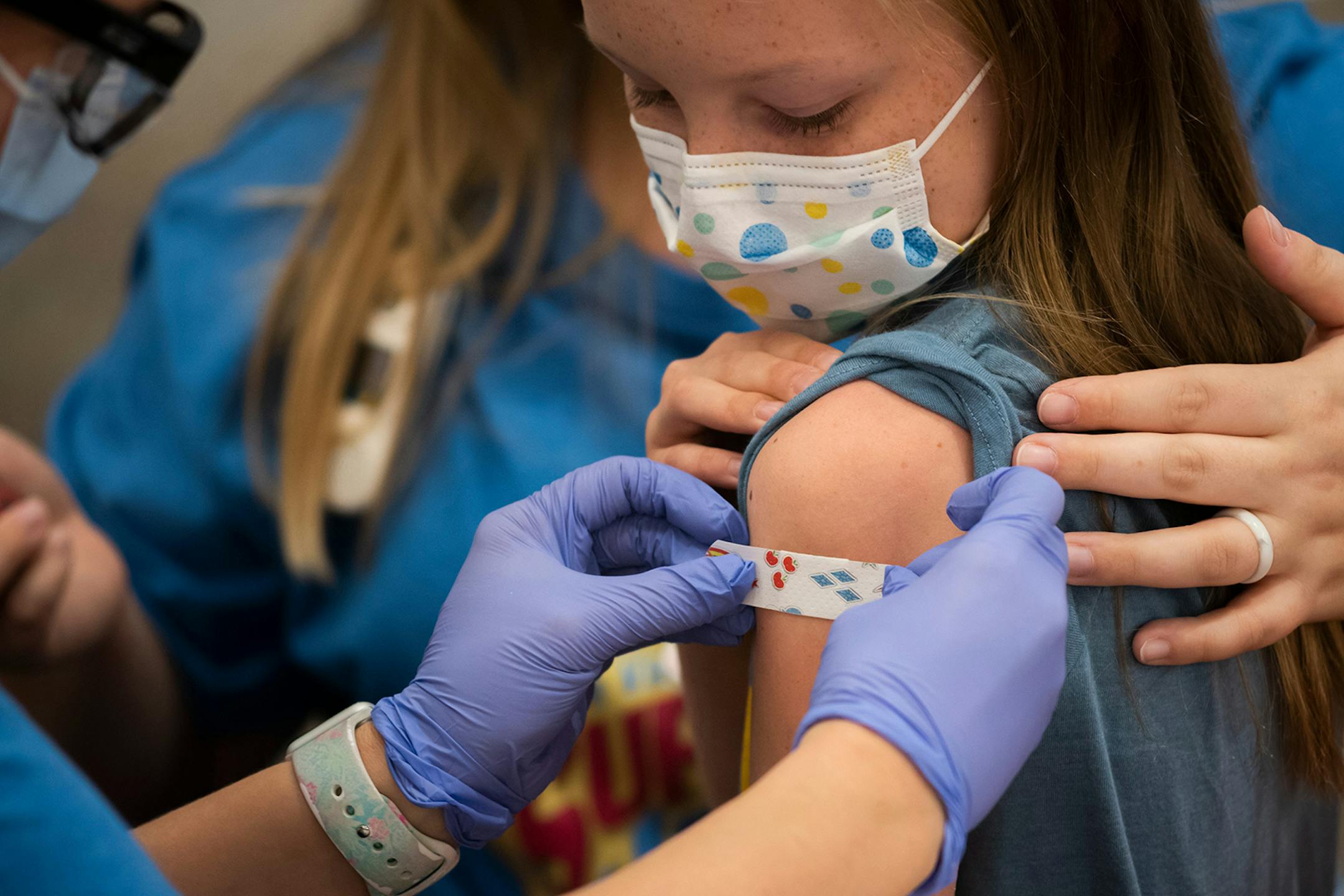
During the hearing of Health Secretary Robert F. Kennedy Jr. it became obvious that we cannot trust the advice, information or recommendations from RFK Jr. nor members of the current Centers for Disease Control and Prevention under his direction (“Kennedy defiant on COVID vaccine curbs,” Sept. 5). Perhaps blue states could get together and organize a new CDC (under a different name of course). This organization could give truthful, factual and scientific advice and recommendations to the medical community, and to parents who need advice concerning vaccinations and other medical issues. I understand that there are many former CDC staff members who have been laid off who may be interested in serving in such an organization.
Robert Kriesel, Stillwater
Most parents probably feel if infants or kids do not receive the measles vaccine, their kids may only develop a rash and fever. They probably have heard of measles encephalitis of the brain, but that is rare.
There is another risk in especially young infants of not receiving the measles vaccine of which most parents are not aware. It is present around the world but has been more rare in the US. The low U.S. incidence is probably due to the historically high measles vaccination rate. The disease is subacute sclerosing panencephalopathy (SSPE). It is always fatal. It effects all of the brain areas through four stages. Stage 1 effects personality, mood, depression and memory, and symptoms onset usually over six months. This is the only stage when some treatment may delay the other symptoms. Stage 2 brings movement muscle disorders, loss of vision, dementia and seizures. Stage 3 is when jerky muscle movements arise with rigidity. Stage 4 brings on breathing and heart disorders, low blood pressure, coma and death. It can be fatal one to three years after diagnosis.
The most interesting aspect of this disease is that the onset in older children can be an average of seven years after the patient had experienced measles! There usually are no symptoms until this later time. But this disease is more common in infants under 15 months. One study in 2016 showed a frequency at this age to be 1 out of 609 babies!