

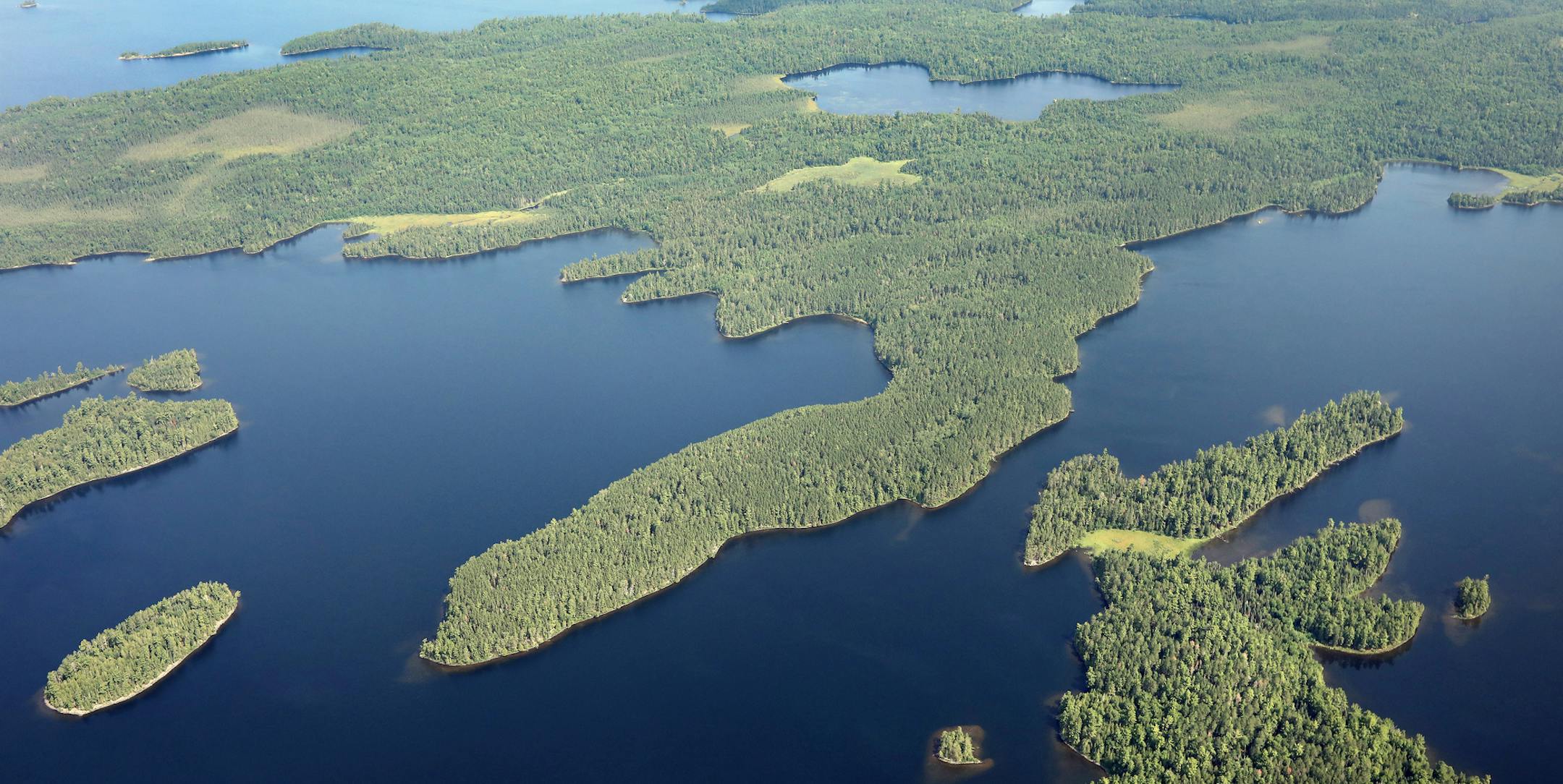
The chief executive of Twin Metals wants us to believe that Minnesota's "strong environmental standards" and "rigorous" environmental regulation will protect the Boundary Waters Canoe Area Wilderness from the disastrous consequences that have followed copper-sulfide mining everywhere such mining has been allowed ("Let the mine permit process work," Dec. 1).
So how "strong" and "rigorous" has Minnesota been in protecting our sky blue waters? Using data from the agencies charged with protecting water quality, here are some facts:
According to the Minnesota Pollution Control Agency, 56% of Minnesota's waters overall are impaired, and in farm country it's higher. The MPCA also found in 2015 that of 93 streams in southwestern Minnesota, only three were habitable for fish and only one was considered safe for humans to swim in because of agricultural pollution.
The state Department of Agriculture has found that nine Minnesota watersheds are contaminated with chlorpyrifos, a dangerous agricultural pesticide that is linked to brain damage in children and has been banned by New York, California and eight European countries.
According to the Minnesota Environmental Quality Board, fewer than 20% of rivers and streams in parts of southern and western Minnesota can support a healthy balance of aquatic life because of contamination from agricultural fertilizers and chemicals.
So, based on reporting from the agencies themselves, it seems pretty clear that Minnesota has not been "vigorous" and "strong" in protecting our water resources, especially when the problem is largely caused by a politically powerful industry. Up to now that industry is big agriculture, but soon it might be copper-sulfide mining.
Giant international outfits like Antofagasta Minerals and Glencore (behind the PolyMet mine project) are hiding behind the illusion that Minnesota is a leader in protecting its beautiful lakes and rivers. Don't fall for it.
Greg Larson, Excelsior
• • •
Twin Metals Minnesota CEO Kelly Osborne hypocritically accuses the Star Tribune of asking Minnesotans "to ignore state and federal law by pre-empting an open and transparent process designed to test a proposed project."


