

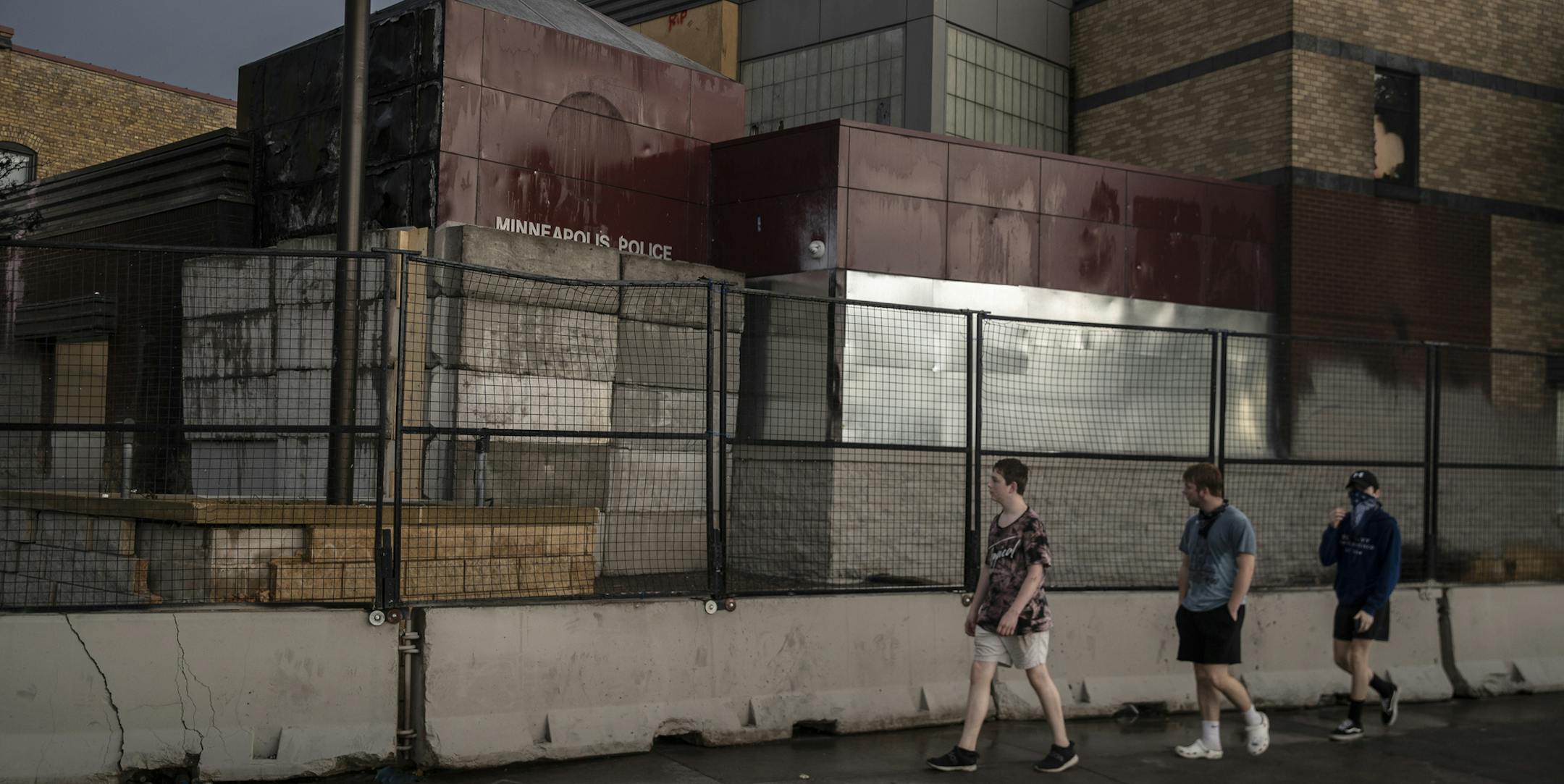
In his recent opinion piece, Elijah Todd-Walden poignantly asks, "What does this show us, the people who are supposed to place our trust in the police to 'protect and serve'?" (" 'Bad apple' theory is of little comfort to me," June 22). Todd-Walden's question comes in light of the impunity systemically granted to officers like Derek Chauvin, who had 18 complaints filed against him before George Floyd's death. The question could also well be asked in the wake of increasing gun violence in Minneapolis. On a recent night in Uptown, when police were prepared for trouble and present all night, 12 people were shot. At the end of the night, one of the victims had died and still no shooters were in custody. And we are supposed to place our trust in the Minneapolis Police Department to "protect and serve"?
It is time to amend the city charter. It's clear that we are not dealing with "just a few bad apples" but a decadeslong lack of public accountability and oversight. What this latest shooting tragedy shows us is that more policing does not stop crime or gun violence. The Minneapolis Police Department has not made our neighborhoods demonstrably safer at the same time as it has funneled crucial resources away from real solutions to public safety crises like homelessness and opioid addiction. As Minneapolis residents, we have a chance now to demand a vote and create together the kind of city Todd-Walden hopes for.
Craig Simenson, Minneapolis
• • •
We're writing to support the police in St. Paul and Minneapolis and not to underfund or abolish them. But changes need to be made, of which we think the following may be helpful. There ought to be continuing education for officers, along with semiannual performance reviews — more frequent if a complaint is made. When an officer's review shows poor performance, he/she should be required to attend a mandated re-education program or even face dismissal from the department. Finally, there should be annual recognition of officers who have made significant achievements in service to the community. There could be more opportunities for police to be involved in the community they serve.
Police departments, well-run and trusted, are windows through which the city is viewed. A high regard for the police is a genuine value to the Twin Cities.
David and Karen Conradi-Jones, Shoreview
• • •
I'm white, middle-class and old. I've experienced police in seven states where I've lived in the last 55 years, most either for traffic stops or as a witness to someone else's interaction, or on rare occasions when assistance from a police officer would have been helpful. From my perspective, I have to admit that when an officer is actually helpful or useful, it is a surprise. Generally, like the old man in "Catch 22," when I've heard the equivalent of "Help! Police!" it has meant that someone is being abused in some way by the police.
Anyone familiar with produce in a barrel knows that the rot in bad apples doesn't take long to infect most of the barrel's contents.
T.W. Day, Red Wing, Minn.
BUS LINES
Improve transit, lessen poverty
What to do about glaring differences in opportunity for our black, brown and indigenous citizens? A good first step would be to listen to the people most impacted. A second would be to focus on actions that are proven to work. A third would be to help our children.
Six elected officials of color at the city, county and state level are asking for better transit for their constituents ("Transportation access creates real change," Opinion Exchange, June 19). Specifically, they are asking for funding of three bus rapid transit lines that serve low-income and minority neighborhoods.


