
Readers Write: The Northstar Line, self-driving cars, rare jellyfish

Nostalgia can’t save Northstar.

The Minnesota Star Tribune
December 6, 2025 at 7:28PM
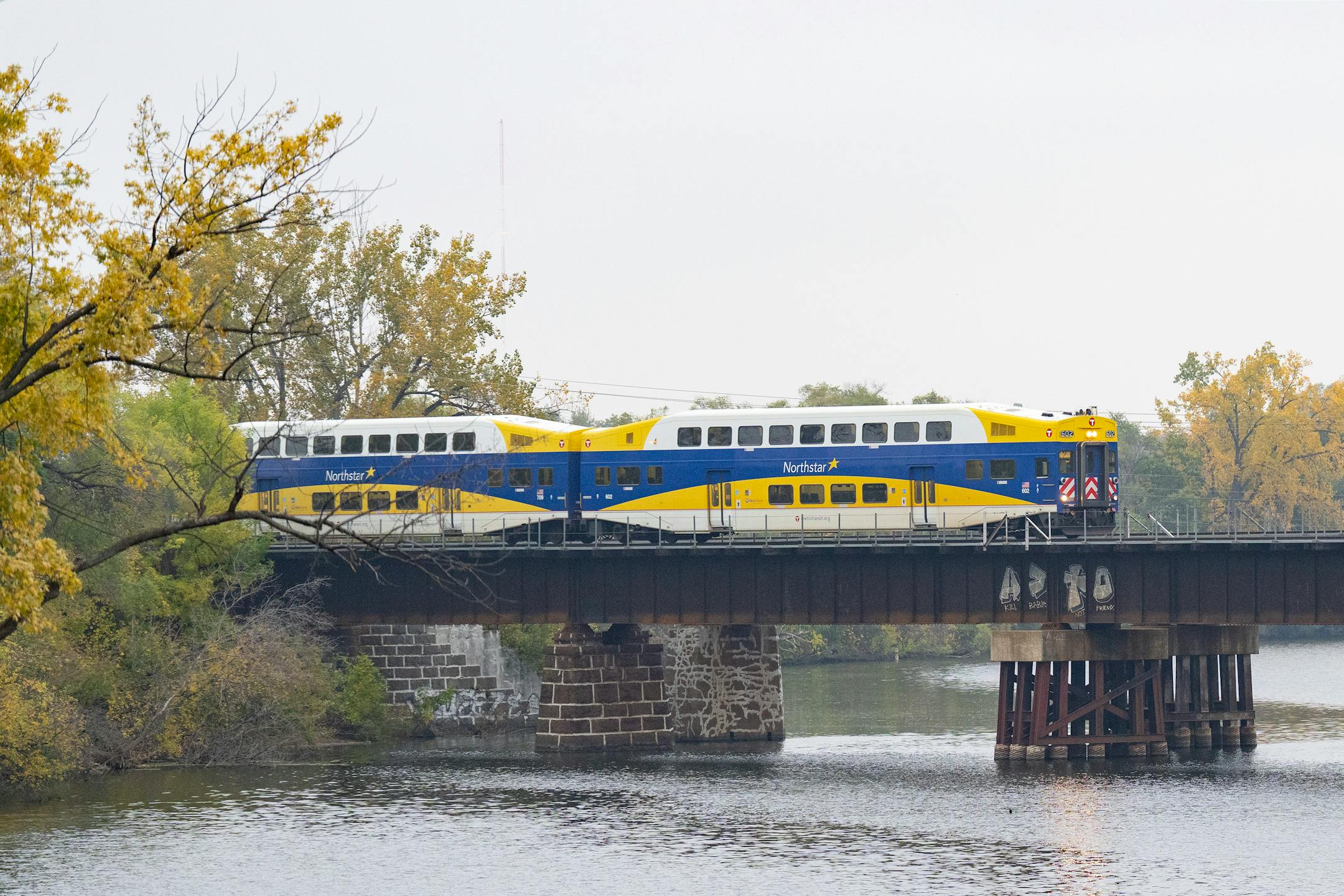
A southbound Northstar Line train crosses a railway bridge over the Rum River in Anoka on Oct. 16. (Alex Kormann/The Minnesota Star Tribune)

Opinion editor’s note: Strib Voices publishes letters from readers online and in print each day. To contribute, click here.

•••

In the recent commentary “This is the wrong time for the Northstar Line’s demise” (Strib Voices, Nov. 29), the author proposed that the long-troubled Northstar Line’s shutdown next month could be averted if its daily service were assigned to a contracted operator, service was expanded to run multiple times a day and the line was extended to St. Cloud via BNSF lines instead of ending in Big Lake.

Commuter rail ridership has never been high enough to support the Northstar Line. In fact, pre-COVID-19, the state could have bought every rider a new Prius and still saved money. Metro Transit, the Minnesota Department of Transportation and local governments have all studied farebox recovery, operating costs and ridership projections, and none of them have deemed the Northstar Line worthy of continuance or expansion.

The Northstar Line will not be going away. It is being replaced with bus service to more nimbly meet demand. For those who need to travel to and from St. Cloud, several bus lines are available, and the Amtrak Empire Builder line already makes six stops in Minnesota, including in St. Cloud and St. Paul.

The core issue with the argument in the commentary is that it is applying 19th-century technology to 21st-century problems. The era of the trolley car ended in the late 1950s, to be replaced by the bus. This was, and still is, a cheaper, more flexible mode of people-mover. Let’s not let nostalgia overrule prudent policy decisions.

Cal Bahr, St. Paul

The writer is a Republican state senator representing East Bethel.

•••

I read Jack Barbier’s commentary, “This is the wrong time for the Northstar Line’s demise,” with great interest. I agree with Barbier’s assessment — this is the wrong time to cancel the Northstar’s route. Instead, the line should be extended to St. Cloud as initially intended.

When living in the Chicago metropolitan area, I came to know the huge benefit of a well-built, metropolitan rail system. I took the train daily from the western suburbs to downtown, a drive of 25 minutes in light traffic but up to three hours in the Chicago rush hour. I arrived downtown relaxed, stress-free and didn’t have to pay for expensive parking.

Rather than closing the Northstar Line and wasting the invested funds, the Metropolitan Council should brainstorm on how to make it work, and Barbier’s ideas are a good place to start! Barbier’s right: a “conductor” on each train, to check tickets and monitor passenger conduct, is another necessity on all light-rail lines, including the Northstar Line.

Let’s get rail travel infrastructure moving. Can we get a line to Plymouth?

Dan McKenzie, Plymouth

•••

Barbier’s ideas for reconfiguring and improving Northstar Line rail service should be listened to. The fact that the entire line is now double-tracked along with other important safety improvements demands that some local government authority step up to the plate to maintain and improve this important rail service.

I grew up in a suburb of New York City, and every weekday morning the Long Island Railroad transported most of the working men to their city jobs. That railroad still serves as the lifeblood of that community. Today, New York City is also served by Amtrak’s 160-mph high-speed Acela train with dedicated passenger service from Washington, D.C., to Boston.

Worldwide, the U.S. is a laggard in fast, efficient high-speed rail service. In 2008, the California High Speed Rail Authority was authorized to connect the state’s major urban areas, a total system length of 776 miles. Nonstop travel time between San Francisco and Los Angeles will be 2 hours and 40 minutes. The planned start of service on about one-third of the route is 2032.

Certainly, here’s an opportunity for Minnesota to shine: Stop thinking about the Northstar Line’s demise! Start thinking of ideas put forward by Barbier about reconfiguring and strengthening the line so that it serves as a vital transportation link between Minneapolis and St. Cloud. Frequent, comfortable service will entice people away from their cars. Keep the momentum going by building a true high-speed rail line between Minneapolis and Rochester and its world-famous Mayo Clinic, then extend that line to Chicago.

Recently my wife and I rode the Southwest Chief from Los Angeles to Albuquerque, New Mexico. This is Amtrak’s follow-on to Santa Fe’s famous Super Chief, the “train of the stars” between Los Angeles and Chicago. When Amtrak took over, Santa Fe refused permission to use the Super Chief name for fear it would tarnish the luxurious, on-time service it was admired for. Nevertheless, we had a delightful trip with delicious meals in the dining car and interesting fellow passengers. Clearly, it’s time to start thinking out of the “freeway and air travel” box: Riding the rails is a comfortable, relaxing way to travel.

William Steinbicker, Minnetonka

SELF-DRIVING CARS

‘Human tasks’ get poached all the time

In a Dec. 1 letter to the editor criticizing self-driving cars, the author states that “there’s still a role for real people performing human tasks.” I agree completely, but earlier in the letter he states that he’s uncomfortable with a number of things that don’t exist.

Let’s look at things that do exist that were once “human tasks.” It was not that long ago that one needed to physically go into a bank and interact with a person doing a human task to do any type of transaction. Today that is the exception, and I think most people think this is an improvement. Over history, “human tasks” have been continually replaced by automation that has benefited humanity immensely. Textile work, auto manufacturing, farming … the list is endless. Meanwhile “human tasks” have shifted to higher-value activity and will continue to do so.

Artificial intelligence is just a tool like any other. If utilized effectively, the human condition improves. The Waymo proposition does pose a complex question when it comes to “human tasks.” We know today over 33,000 people in the U.S. are killed annually in car accidents. If self-driving cars reduce that number significantly then “human tasks” would be deemed to be inferior. The question is, are we willing to accept a lesser number of people being killed by machines than by humans? That is the type of question we should be pondering when it comes to AI.

Mark Plooster, Plymouth

MINNESOTA WATERS

Leave the jellyfish be

They actually killed a quarter-sized jellyfish rarely seen in Minnesota waters? Why? (“Tiny freshwater jellyfish surface in lake,” Dec. 2.) Such a magical story, an antidote to all the toxic news these days, which I was enjoying so much until the cold slap of the fourth paragraph from the end. The two water scientists who had captured the tiny creature “preserved the jellyfish in ethanol and took it to the DNR.” As it pulsed “through the calm water ... sunlight flickering through its translucent body” it was captured in a bottle, even though the jellyfish “are not considered invasive and pose no known risks.” What bad luck it was for the special little jellyfish to be spotted by human eyes, because soon after, its life was painfully taken in a jar of alcohol “so it could be measured and added to state records.”

A tiny creature blessed a tiny Richfield lake with its rare presence and our human response was to kill it. Could it possibly have been measured and recorded and returned to its unusual home to live in peace?

Christine Lewis, Minneapolis

about the writer

about the writer