Readers Write: The Israel-Hamas war, national history

This needs to end — on Hamas’ side, too.

The Minnesota Star Tribune
August 5, 2025 at 10:30PM
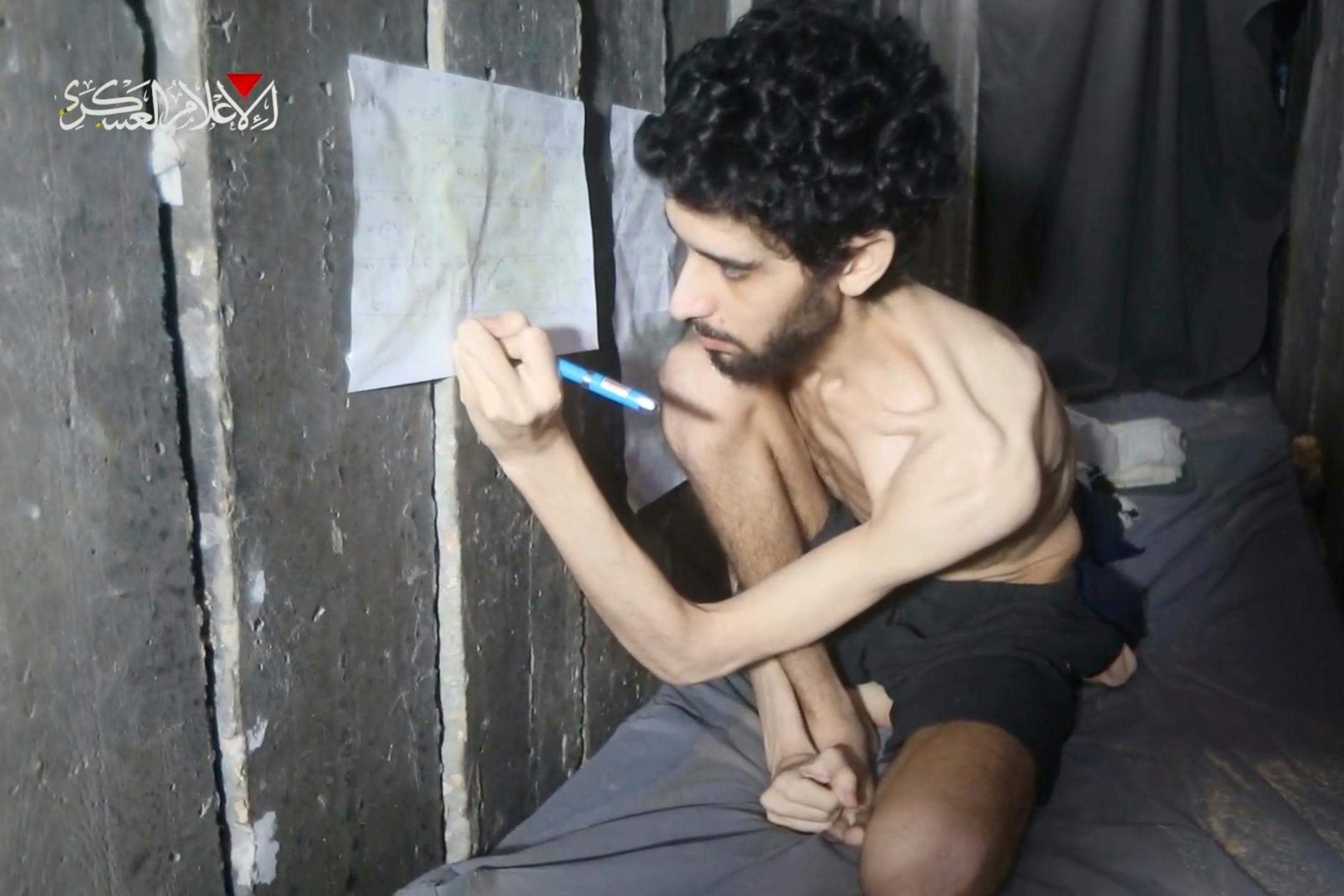
This image from an undated video released on Aug. 1 by Hamas shows emaciated Israeli hostage Evyatar David marking a food log on a calendar inside the Gaza tunnel where he is being held. David was abducted during the Hamas attack on Oct. 7, 2023.
This image from an undated video released on Aug. 1 by Hamas shows emaciated Israeli hostage Evyatar David marking a food log on a calendar inside the Gaza tunnel where he is being held. David was abducted during the Hamas attack on Oct. 7, 2023. (The Associated Press)

Opinion editor’s note: Strib Voices publishes letters from readers online and in print each day. To contribute, click here.

•••

The war in Gaza needs to end. I say this as a Jew and a Zionist. The fighting needs to stop; all the hostages need to be released; food, water, fuel and medicine need to be allowed into Gaza; and both the Israelis and Palestinians (but not Hamas) living in Gaza need to decide what comes next. Having said all this, “In Gaza, pictures of hunger and history” by Robin Givhan (Strib Voices, Aug. 4) gives a very one-sided view of what is transpiring in Gaza. Even the picture included in the article of a mother holding her “malnourished child” seems to ignore that the other child in the picture has a nicely rounded face and does not appear to be starving. The author of the article also alleges that a report issued last week by Cogat (an Israeli agency), which pointed out that a widely circulated picture of an emaciated child did not mention that the child has a genetic condition contributing to his appearance, was not true. This despite the New York Times acknowledging its mistake by not presenting the full picture with the child’s healthy-looking sibling.

We also need to be very clear that there are still 50 hostages being held in Gaza by Hamas, of which 20 are still thought to be alive — and they also have limited access to food and water and no access to health care, as those hostages that have been released have told the world. This past weekend’s videos of emaciated Israeli hostage Evyatar David, who has been held hostage for over 660 days, digging what may be his own grave in a tunnel, is also part of the history being recorded and was taken by Hamas and released by Hamas. The dilemma we all face with regard to Gaza is knowing what is true and what is not.

I have no doubt that the people of Gaza are not getting enough food, water, fuel and medicine. But we have also heard at various times of the huge amounts of these products being sent to Gaza but not getting to civilians, according to the United Nations, which recently stated only 10% of food aid sent to Gaza got distributed. In addition, the New York Times has reported that the prices to buy sugar ($106 for a 1 kg bag) and flour ($305 for a 25 kg bag) in a Gazan market are out of reach for most people. Israel needs to continue to do all it can to provide access to food and water for the Palestinians living in Gaza, and Hamas needs to do all it can to end the war by freeing the remaining 50 hostages, agreeing to a ceasefire, as Israel has repeatedly agreed to, and allowing the civilians in Gaza to have access to the needed supplies being provided.

Sheldon Berkowitz, St. Paul

•••

In contrast to what Givhan writes, one may want to read the July 31 Wall Street Journal opinion piece titled “Gaza Starvation Photos Tell A Thousand Lies.” The author, Eitan Fischberger, documents food stored in Gaza but not distributed because of the Hamas-inspired chaos. Hamas cannot win on the battlefield but it can accomplish its goals if it turns the world against Israel.

The food is there, but Hamas is preventing its distribution. It could care less if Palestinians starve to death. Hamas is laser-focused on two goals: one, the elimination of Israel and two, the extermination of all Jews everywhere. Starving the Palestinians is just another tool in their kit to accomplish these objectives. Do you notice that Hamas government officials and soldiers are not starving?

Why does the media promote the Hamas viewpoint? Why does the media not call out Hamas for its disruption of the distribution of food to the Palestinians? There are two reasons I propose. First is pervasive antisemitism. Too much of the world hates Jews. Every bad situation is always the Jews’ fault. The second reason is that Israel cares about its reputation in the world. Hamas cares only about its reputation among other terrorist organizations.

Since Judaism’s birth, Jews have been a minority, living subject to the whims of their government. Sometimes that has been acceptance and a good life. But too often it has led to persecution, expulsion or extermination. But since the establishment of the state of Israel, Jews have their own country where they call the shots and can live free and productive lives restricted only by their abilities. The world is having a hard time adjusting to this new reality. But never again (referring to the Holocaust) means never again.

Harvey Leviton, Minneapolis

•••

Andrew Zimmern’s thoughtful remarks in “A chef’s dilemma as the people of Gaza starve” (Strib Voices, Aug. 5) came at a perfect time for me, as I have just begun the Hennepin County “Stop Food Waste Challenge” (stopfoodwaste.ecochallenge.org). Maybe you’ve heard the statistic: Almost 40% of our food is wasted somewhere in the supply chain. Waste of the resources, energy and water that produced, packaged, transported and arrayed for your purchase. And then it rots in your fridge? While we are so distressed by the starving people in Gaza, this is hard to reconcile. We waste so much while so many people need so much. About 32% of the garbage burned in Minneapolis (HERC) is organic waste. We have the power to change this. If we stopped wasting food and recycled all organics, we’d reduce that number.

By wasting less, we can’t feed the people of Gaza with that food, but we can help our planet and our city and our own pocketbooks. I’m sending my savings to a food rescue committee that is trying to feed Gaza. Please join the effort to reduce food waste.

Mary Ann Knox, Minneapolis

NATIONAL HISTORY

The truth isn’t anti-American

We are living in an era of weaponized white fragility on full display in our country. Last month, Muir Woods National Monument in California took down signs that, per the Los Angeles Times, discussed “the efforts of Indigenous people who originally maintained the land, as well as the role of women in creating the national monument.” And here in Minnesota, the federal regime wants to “remove books and signs with historic references to the harsh treatment of Native Americans from Minnesota’s national park sites,” per Tuesday’s Star Tribune (“Park signs about Indian history at risk”).

Imagine if the German government launched a similar effort to purge public spaces of any messages or images that made German people “look bad.” Perhaps the Nazi concentration camp sites would be repurposed as shopping malls.

To my fellow white Americans (especially the men): Just what are we so damned afraid of? That kids will learn that white males are not the only people who ever did anything worth noting? That the things white people did were not always praiseworthy? And what terrible things do you think will happen if we allow these truths to be known? Please be specific; I genuinely want to know.

In the book “Teach Truth,” Jesse Hagopian summed things up much better than I ever could: “Perhaps I don’t need to persuade you that something is profoundly wrong with a society so terrified of its past that it endeavors to strangle history, dump its corpse in a casket, bury it beneath the earth, and not even leave an epitaph that would allow young people to recognize it had ever existed or be able to appreciate its heritage.”

Anne Hamre, Roseville

•••

Some day, all of the signs currently being removed from the national parks under President Donald Trump’s direction will be restored. Beside each of the previously censured signs there will be a little plaque, apologizing and explaining how it came to be removed.

Stan Kaufman, New Brighton

about the writer

about the writer