

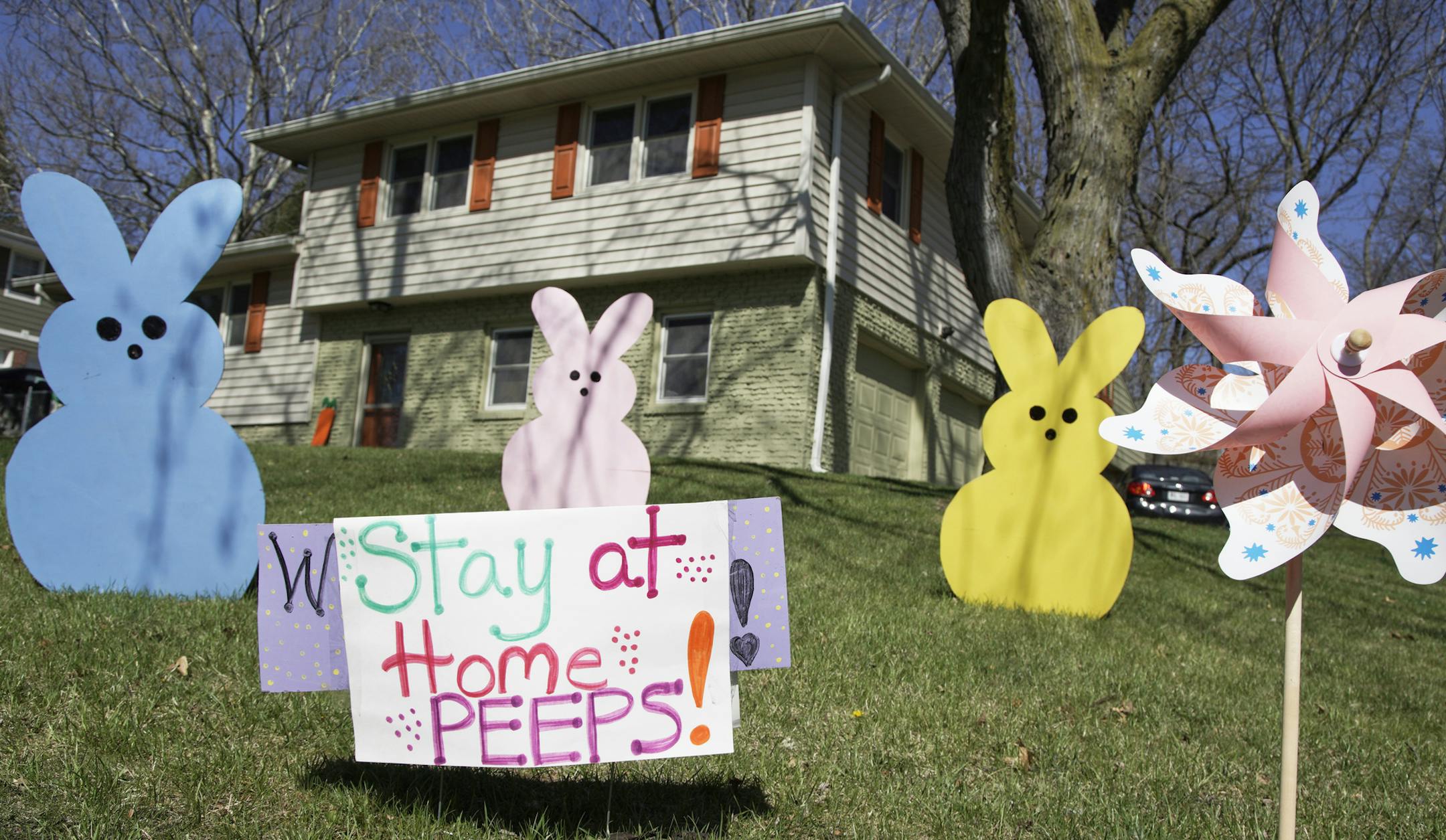
"I do not approve of the Governor's unilateral decision to continue the order to shelter at home until May 4th," Senate Majority Leader Paul Gazelka tweeted on Thursday ("State GOP blasts extended order," April 10).
Gazelka's comments are highly irresponsible. I humbly ask all elected representatives to please contact medical professionals to better educate yourselves regarding coronavirus before making public pronouncements that put people's lives at risk. We are in the midst of a worldwide epidemic. This epidemic should not be construed as a Democratic or Republican issue; it is a public health issue.
Due to the outstanding leadership at the state level, Minnesota has the lowest number of COVID-19 cases per million of all 50 states. Let's keep it that way.
Stanley Woolner, St. Paul
The writer is a hospital medicine physician currently treating COVID-19 patients.
• • •
The irony: The Star Tribune reports that Gazelka tweeted "We have to get on with our lives" on the same day that the paper's front-page headline reads "MN deaths hit daily high" (April 10). State Rep. Mary Franson said on the previous day, "I'm not staying home." Could there be any better evidence that these Republican politicians, like many others, have abandoned any grasp on data, science or reality? At least when they deny that humans are major contributors to climate change, the disaster they court is mostly in the future. With the criticism of Gov. Tim Walz's stay-at-home order, Gazelka and Franson are urging practices that endanger the lives of Minnesotans right now.
As a state, we have been reasonably fortunate to have had "only" 57 deaths by Friday afternoon. Why? Because we are staying at home! As examples from England, Sweden, New York and elsewhere show us, without social distancing and staying at home, we will (not may, will) see exponential growth in COVID-19 cases and deaths.
It has become fashionable among political conservatives in the state to question the model used by the governor. Models are not truth, but only tools to allow planning for the worst while enacting policies and hoping for the best. There is no model that shows minimal harm to Minnesota's citizens by opening up the local economy and relaxing current restrictions. The key difference among various models is whether we lose thousands or tens of thousands in the absence of those policies.
Until we have robust testing to allow Minnesotans to know who can safely return to work, school or simply go to the store, we cannot listen to uninformed and dangerous proclamations from political "leaders" who value commerce over the lives of Minnesotans.


