

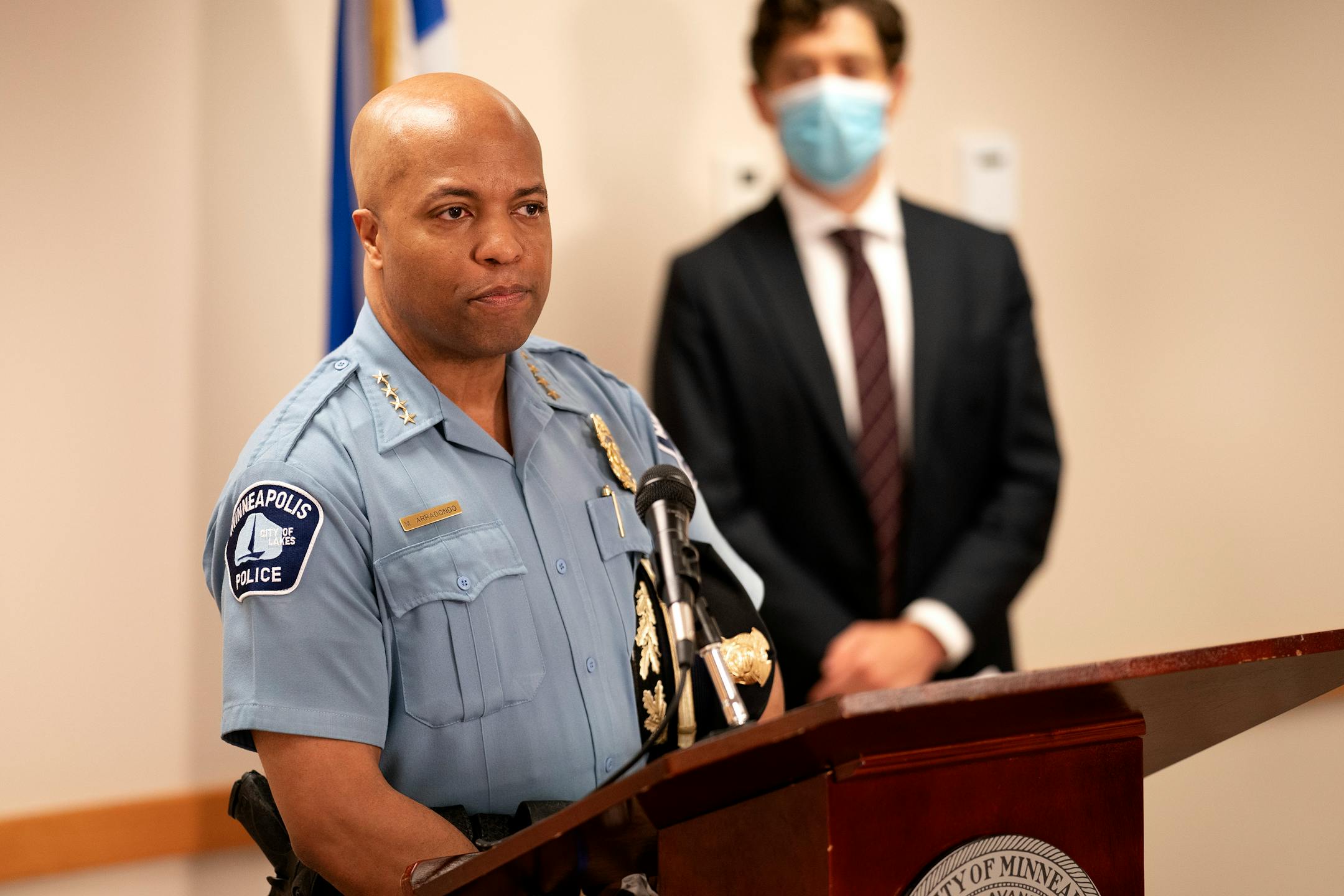
The Star Tribune described Chief Medaria Arradondo as having "guided the Police Department through the worst crisis of its 154-year history" ("Arradondo: Stepping down 'best' for MPD," front page, Dec. 7). It is more accurate to say that he "guided the Police Department into the worst crisis of its 154-year history."
If Chief Arradondo and his bosses at City Hall had been better at their jobs, George Floyd would still be alive today, and there would have not been a crisis.
Matthew Byrnes, Minneapolis
•••
Minneapolis Mayor Jacob Frey, who already has an official body, the Police Conduct Oversight Commission (PCOC), to make recommendations regarding public safety issues, now appoints another ad hoc body to do the same thing ("Onetime rivals will advise Frey on policing," Dec. 3). The difference? The PCOC meets in public; this new work group will be meeting in secret, so that people will "feel free to speak bluntly."
Let me be blunt. This is precisely what happened in 2015 when the city appointed five committees to come up with ways to implement the recommendations a Department of Justice study made regarding accountability procedures within the Minneapolis Police Department. Those committees too met in private, outside of the public eye, and in part because of that, the DOJ's recommendations ended up being scuttled instead of implemented.
Those DOJ recommendations included finally establishing an early intervention system (EIS) within the MPD, which still has not yet happened. Had those EIS recommendations been implemented, Floyd might well be alive today.
If there's anything we should have learned over the past few years, transparency — which includes such committees or work groups meeting in the open, not behind closed doors — is crucial on police-related issues. The mayor's new work group is déjà vu all over again, and its recommendations could well have little credibility in large segments of the community.


