

•••
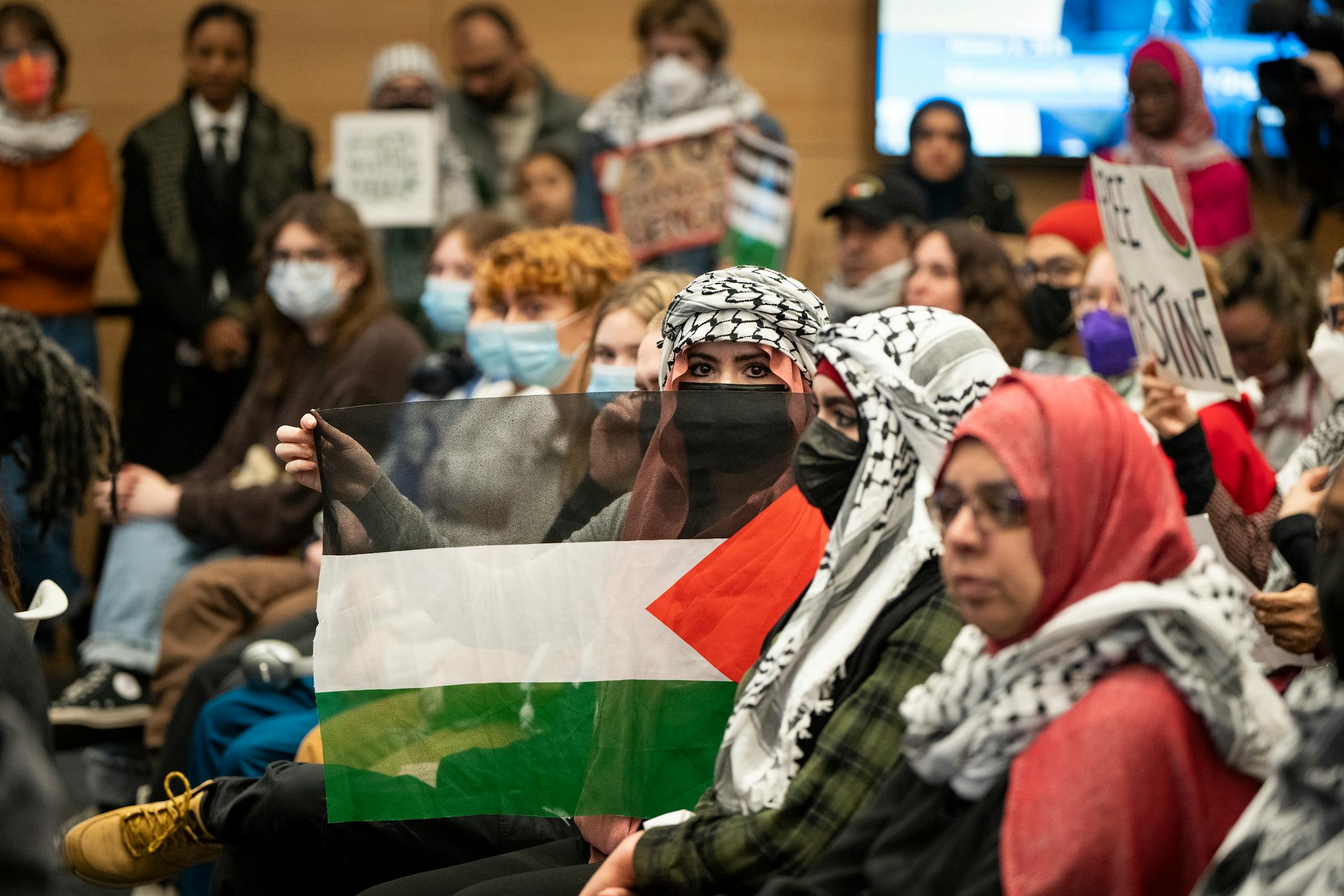
As someone who grew up in Minneapolis and still loves the city, I felt saddened to read about the disruption at the City Council meeting on Monday due to the proposed resolution about the war in the Mideast ("A council confronts war," Jan. 9). Defending the resolution, Council Member Aurin Chowdhury is quoted as saying, "This is a complicated issue, but that doesn't mean we should avoid it." That is an admirable perspective for many issues confronting the city. How does the city balance the need of unhoused people — many with addiction and mental health concerns — to have a place to sleep with the concerns of neighbors when encampments lead to problems in the neighborhoods where they are set up? How does the city balance the need for effective policing as one tool for public safety with the experience of too many people of color of unjust policing? Certainly, there are global issues where city policies make a difference. How can the city support a move away from a car-dependent transit system while also balancing the needs of small-business owners and those citizens who have trouble walking or using transit due to health limitations? There are many "complicated issues" one can be glad the council does not avoid.
But peace in the Mideast? It is indeed a complicated issue, but for the life of me I can see no way that a resolution by the Minneapolis City Council one way or the other will make any difference in resolving it. I credit the human desire to take a stand when one sees suffering anywhere in the world, but I believe that the City Council's focus on that issue is misguided and only fuels division that makes it harder to work together to address those complicated issues that actually fall within the council's purview.
John McGuire, Rochester
•••
The Minneapolis City Council and city residents will deal with consequences of the Gaza, West Bank and beyond war/wars from now and for years to come, affecting citizens and city budgets. It is appropriate for the body to be on record.
David Luce, Minneapolis

