

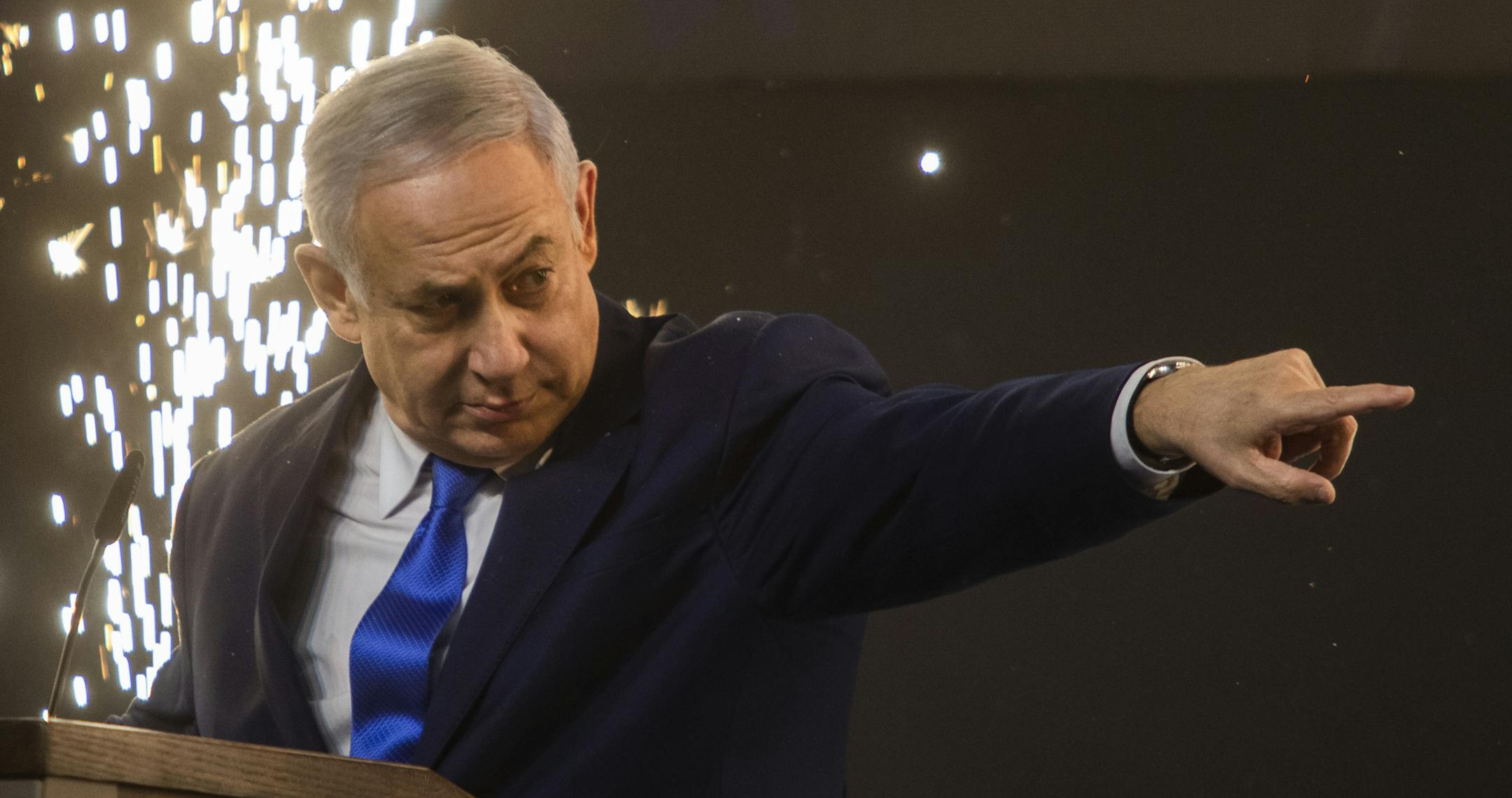
I think that in its April 11 editorial arguing for pressing Israeli Prime Minister Benjamin Netanyahu for a two-state solution, the Star Tribune Editorial Board touched on, but overlooked, a very important question.
In the weeks before the election, Hamas stepped up violence with an increase in rocket attacks and escalations at the border. Predictably, the Israeli electorate responded by leaning right, giving the Likud the narrowest of wins and giving the right an uptick of seats.
So why does Hamas want Bibi in the premiership?
The answer is simple, I think: A leftist government would press for a two-state solution, and Hamas' recalcitrance would be on full display. To the right of Netanyahu, Hamas might face a true existential threat.
Netanyahu neither has it in him to crush Hamas nor to negotiate with them. It is Bibi's unwillingness to fully commit to either path that makes him such a useful tool for delegitimizing Israel through a series of minor skirmishes with no decisive outcome.
That makes Hamas the real winner in this election.
Rich Furman, St. Paul
U.S. REP. ILHAN OMAR
Her characterization last month of Sept. 11 attacks was very insensitive
Last month in a speech before the Los Angeles chapter of the Council on American-Islamic Relations (CAIR), U.S. Rep. Ilhan Omar characterized Sept. 11, 2001, as the day "some people did something." ("Rep. Ilhan Omar faces heat from right over 9/11 remark," Star Tribune.com, April 11.) This is an unbelievable description of a day on which Muslim terrorists murdered 3,000 Americans. A day that still brings tears to the eyes of many Americans. Do we blame all Muslims for this? Of course not. But it was one of the most terrible days in America's history and deserves to be referred to with respect.
Chris Schonning, Andover
VACCINATIONS
If proponents feel they're safe, they must explain the problems we see
The vast majority now supports all attempts to require 100 percent compliance with national vaccination policies for the "common good." ("Two choices: One involving a mandate; the other, persuasion," Readers Write, April 11.) Back in the 1940s and '50s, we received relatively few vaccinations compared with the vast array required today. There was good discipline, and there were very few of the children now known as special-needs students, while our schools are full of them today. Special needs consume a major portion of our school budgets that require ever-higher taxes from all of us.


