
Readers Write: Housing, re-election campaigns, Minneapolis bike lanes, streetcars

We’re too far gone for incrementalism on housing.

The Minnesota Star Tribune
December 18, 2025 at 12:00AM
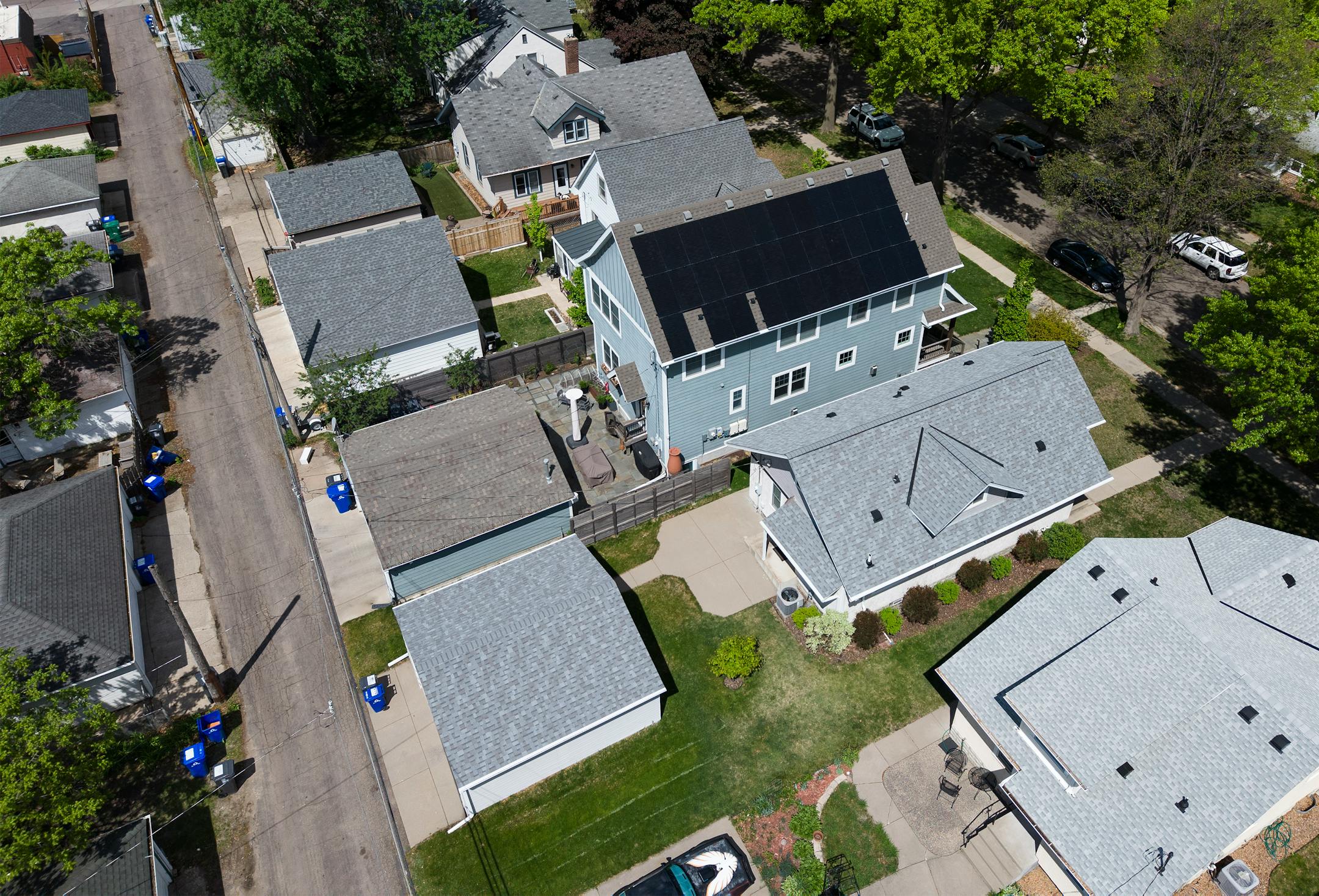
Homes in St. Paul in May. (Richard Tsong-Taatarii/The Minnesota Star Tribune)

Opinion editor’s note: Strib Voices publishes letters from readers online and in print each day. To contribute, click here.

•••

In his commentary “In housing, big solutions aren’t always the answer” (Strib Voices, Dec. 13), Bryan Lindsley argues that little adjustments to the existing market-driven housing market can be better than big ideas and big projects. He cites the zoning changes championed in the Minneapolis 2040 Plan as an example of how little changes can have a big impact over time. The elimination of R-1 housing is not unique to Minneapolis but tearing down single-family houses to build triplexes in their place will indeed take a very long time to have an impact. Especially when the most climate-damaging housing patterns occur in suburbs, not Minneapolis.

The American housing crisis, which includes homelessness and rental housing burdens as well as high home sale prices, will not be fixed by tinkering with minor market interventions. The problem with American housing policy is its reliance on the private market to supply American households with a decent place to live. Private enterprise has created the least effective and most expensive health care system in the developed world. It’s done the same with housing.

There are better ways to provide housing, but it will take strong commitment and significant resources from the federal government. Places like Vienna in Europe have produced high-quality housing for working and middle-class households by acquiring and owning land, selecting developers, assisting with financing and setting operating rules that keep the housing affordable. This housing is called “social housing.” Projects built in 1925 still provide good housing. Eighty percent of the residents of Vienna qualify to live there.

Lindley admits he’s no expert. I’ve been developing affordable housing in the city of Minneapolis for 45 years. My experience tells me we will never solve the American housing crisis by nibbling at the edge of the housing market cookie.

Tim Mungavan, Minneapolis

The writer is senior adviser, West Bank Community Development Corporation.

•••

While the need for new affordable housing is a pressing issue and cannot be ignored, the importance of green space in cities needs to be acknowledged as well. Having ample green space provides myriad benefits for the surrounding environment and can even mitigate climate change as cities continue to expand. According to the U.S. Department of Agriculture, one extremely important factor of green spaces is carbon sequestration. Trees and grasses have an enormous capacity for absorbing and storing carbon underground, preventing it from being released back into the atmosphere. These natural, wild plants hold substantially more carbon than the manicured grass that grows on lawns and golf courses, making them much more sustainable. In addition, the grasses and trees provide habitat for wildlife living in an otherwise urbanized area.

In the end, green space should remain green. Developing natural areas often stirs controversy — especially in areas full of environmentally conscious citizens — and projects often hit political and economic roadblocks that make development unnecessarily inefficient. New housing developments should be placed in areas with existing infrastructure; there is no reason to destroy nature when many cities already have an abundance of underutilized buildings.

Humans have unquestionably impacted Earth’s climate, and now it is up to us to begin minimizing damage and looking toward ways to create a sustainable future. It is time to look at the bigger picture and recognize that some land is much more precious and valuable as green space than it would be as another development.

Kate Schiller, Duluth

RE-ELECTION

No politician ‘deserves’ anything

Neither Gov. Tim Walz, nor former President Joe Biden, nor any other candidate “deserves” or “deserved” re-election (“Gov. Tim Walz deserves re-election, and could win,” Strib Voices, Dec. 16). This approach ignores lessons the Democratic Party should have learned when President Joe Biden and Vice President Kamala Harris were handed the nomination without primaries in 2024.

They lost the White House because voters weren’t allowed to choose from a full slate of qualified and baggage-less contenders. No doubt some potential Democratic voters were so turned off they voted for President Donald Trump. Yikes.

Republicans are having a field day with the bad news being laid at Walz’s feet. Recent exaggerations aside, Walz cannot distance himself from these matters and should be taking the high road by not seeking re-election.

It is voters who “deserve,” not candidates or incumbents.

Daniel Patton, Minneapolis

MINNEAPOLIS INFRASTRUCTURE

Actually, some of us like these changes

I have lived in Minneapolis for more years than I care to count, and I recently moved from one lovely, very walkable neighborhood to another. I am still near Bryant Avenue, which I watched with interest as the city redesigned it into a street I might actually like to live on. There is a new, wide bike path next the street that I can now use to ride with my grandkids to the park. The buses have been moved, the street is narrower, and people drive more slowly. The boulevards are full of flowers and filter stormwater to protect the lakes and creek.

And yet.

The Nov. 28 letter to the editor is just one of many I have read on this page that bemoan the loss of parking, the forced restrictions on speeding and congestion and the creation of more space for people who walk and bike in the city we live in. The writer cites the redesign of Bryant Avenue and says, “Minneapolis has fallen prey to fantasies of eliminating cars. In so doing it’s squandered millions of tax dollars ... .”

Yes, city planners made some mistakes on Bryant Avenue, but I give them permission to learn from them and do better next time. And yes, some Minneapolis business owners are concerned about how these changes will affect their business — I have no problem parking a block away and walking to the store. But I would urge the letter writer and others who share his opinion to visit the city of Miami, a place where traffic jams are just part of living in southern Florida, according to the local newspaper. There, you can walk faster than you can drive — if only there were more pleasant places to walk! And biking? The only bikes I saw there recently were pods of cyclists who rode together for safety early on Sunday morning. A pity for a place with such good year-round weather.

Miami is a lesson in how cars beget more cars and more congestion and, contrary to the letter writer’s view, more air pollution, not less. I for one am happy to live in Minneapolis, where I can walk or bike or drive. And I wish those who agree would speak up more often.

Josephine Marcotty, Minneapolis

STREETCARS

All good things must come to an end

I was 4 years old when the Como-Harriet streetcar made its last run, a story retold in the recent Curious Minnesota (“‘Holly Trolley’ had a real route,” Dec. 14). I surely wouldn’t remember streetcars, except for my mother. She must have been sentimental about riding them or maybe just aware that the end of them was an important moment for a young child to experience — and perhaps remember later to understand that the world constantly changes, with newfound things becoming old, lost things. So Mom made sure I was on one of those last streetcar rides. I remember her taking me for the ride and talking about why it was important. “Streetcars are so much fun to ride; this will your last chance to ride one.” I don’t remember much about the ride itself, but I remember well Mom’s enthusiasm about it. Sadly, Mom is gone, but her lesson remains with me, and thanks to the dedicated volunteers of the Minnesota Streetcar Museum that keep the Como-Harriet streetcar running, all of us can experience that fun ride again.

And now, as a grandparent, I take my grandchildren to ride that streetcar and tell them the story of how streetcars were the way we got around town before buses. I tell them how I took the last streetcar ride with my mother, and how it’s good to enjoy things you like right now, because when you’re older, they might be gone.

Andrew Kramer, Marine on St. Croix

about the writer

about the writer