

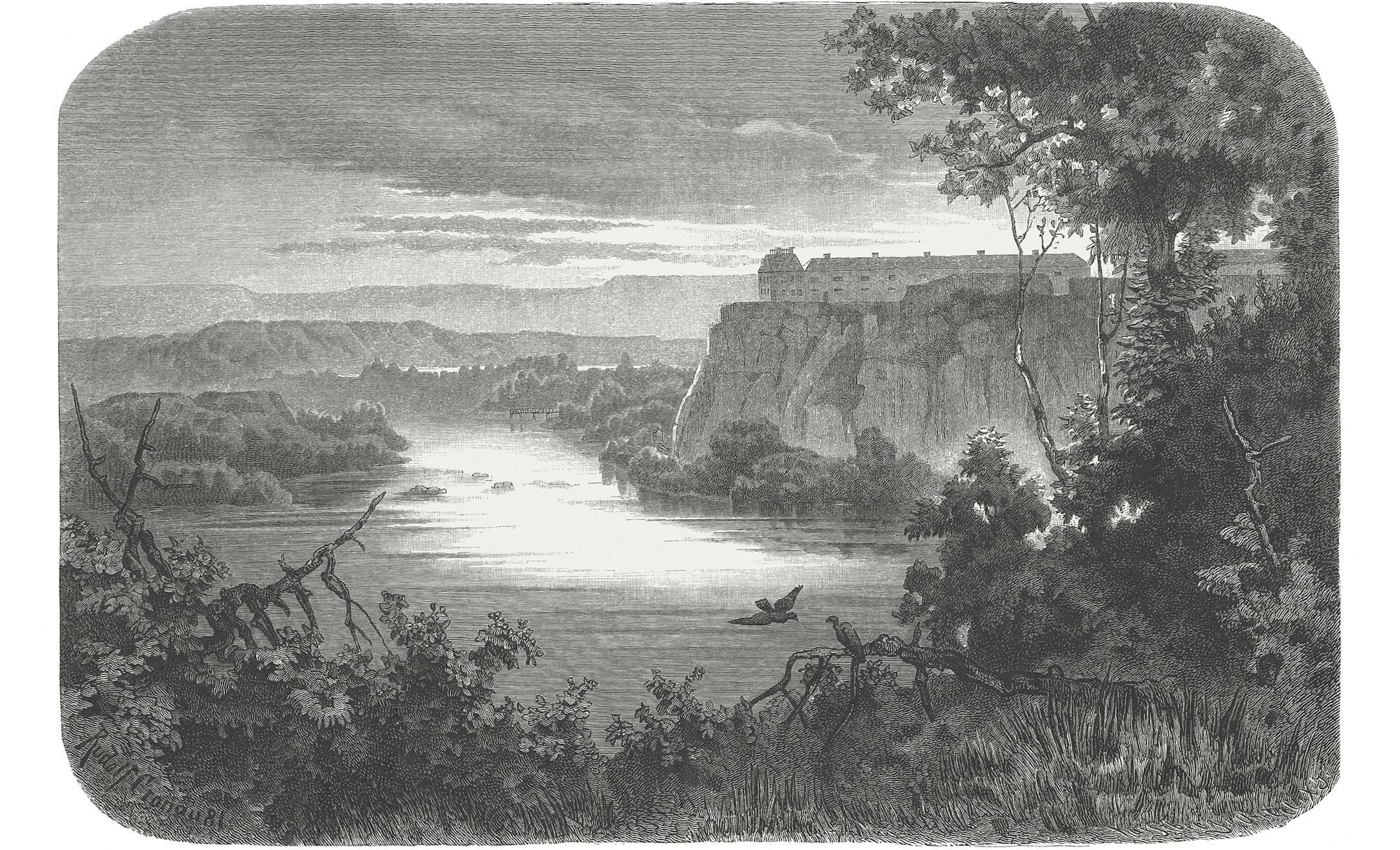
Regarding D.J. Tice's April 15 column ("Fort Snelling: new vision, old wounds"): My own experience of the Minnesota Historical Society's presentations of our history has been that it is always measured and fair in attempting to inform the public of our past. It seems to me that what Tice says should be our approach to history — to try to "understand the passions and motives of ALL (my emphasis) peoples of the past" — is precisely what the MHS is trying to do in its revitalization of Fort Snelling.
Why, precisely, would veterans be afraid of this expansion of attention to be given to African-Americans and the Dakota? According to the MHS draft program overview, stories will include "diverse veterans experiences through many eras"; its YouTube video says the Fort Snelling historical site will feature "stories of the many soldiers who prepared here to fight for America, soldiers who are buried nearby."
Tice says that critics fear a "simplistic tale of villainous whites and victimized minorities." That has been the overreaction of many conservative whites every time efforts are made to ensure a more inclusive telling of history in the U.S.
Where Tice sees a "censorious spirit" and "score-settling over slavery" in recent efforts to remove Confederate monuments and rename Lake Calhoun to Bde Maka Ska, I see efforts to be honest about our past and more comprehensive in the telling of the story. I see an effort to recognize all of this area's inhabitants, including its indigenous people. I see more careful evaluation of who we label "heroes." And that is real history, instead of myth.
Diane M. Ring, Minneapolis
• • •
Thank you, D.J. Tice, for your comments. Our family has visited Fort Snelling a few times since 1985. Our children loved the soldiers, the "school" where they sat on benches, and looking out over the rivers. I was there a few weeks ago at a Civil War symposium. Each visit is a positive experience. At the last visit there was a diorama of the fort during World War II.
I, too, am concerned about this tendency to emphasize certain parts of history and portray the events in light of current thinking. History is history. Telling the correct story, with explanations and facts, is important. Not just rewriting or reporting partial facts.
My father came to Fort Snelling from Meeker County when he enlisted in the Army. That was early 1942. He had never been to the metro area or out of the state. There were many rural farm men like him in 1942.


