
Readers Write: Gun culture, sulfates in water, the printed Star Tribune

Gun culture must change. Again.

The Minnesota Star Tribune
September 11, 2025 at 12:00AM
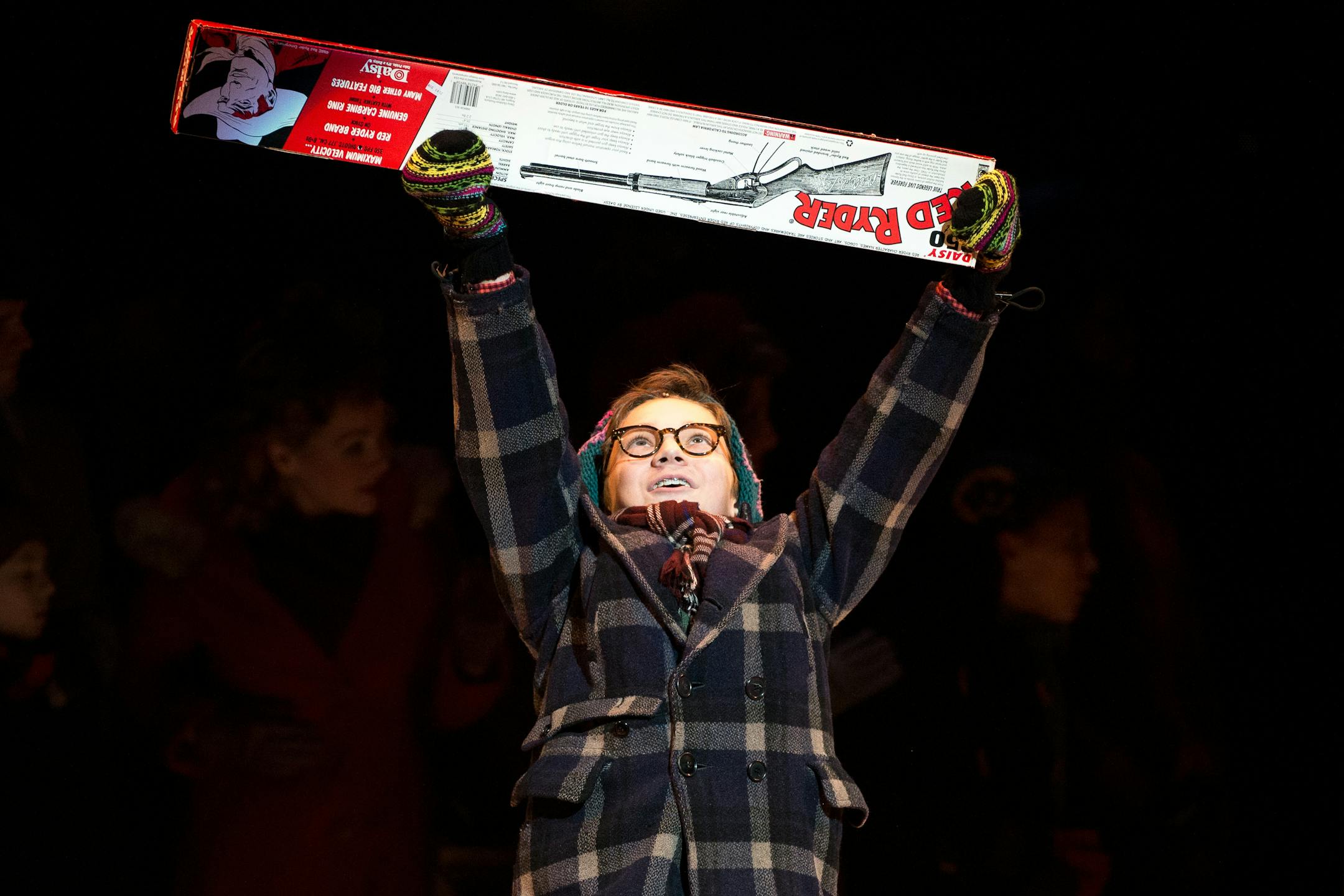
The actor Jake Goodman performs as Ralphie in a 2014 dress rehearsal for "A Christmas Story: The Musical" a the Ordway Theater in St. Paul. The character famously wants a Red Ryder BB gun for Christmas. (Aaron Lavinsky/The Minnesota Star Tribune)

Opinion editor’s note: Strib Voices publishes letters from readers online and in print each day. To contribute, click here.

•••

OK. Let’s talk about guns (“Has the shooting changed your mind about assault-style weapons?” Strib Voices, Sept. 7). Specifically, why every mass shooter wants an AR-15.

Because it is what they see in their media and video games.

In the 1960s, every boy wanted a cap pistol and a Red Ryder BB gun. Why? Because those were similar to what we saw John Wayne and Marshal Dillon use. In the 1970s the Army used primitive “first-person shooter” devices (games of a sort) to help us overcome our Judeo-Christian upbringing and to actually shoot at the enemy.

Today there are many “first-person shooter games” on everyone’s smartphone and they do shoot to kill. If you look at the graphics, most shooters are looking through an AR-15-type or M-16-type sight when they kill and get points. So just like me and my cap gun, why wouldn’t today’s shooters want an AR-15? And too many cannot put “Thou shall not kill” into context.

Unfortunately, it is way too late to restrict the AR-15 or to call back the large cap magazines. The mags and most rifle parts can be 3D printed at home. So now you can home print the same weapon your avatar uses! Wow.

The fix is to make AR-15-like weapons and most nonhunter and/or nonfarmer gun ownership socially unacceptable.

Almost no one smokes in public anymore. Certainly not around other people’s children. Drinking alcohol has been reduced through enforcement, high-cost insurance and social disapproval. We need to start doing the same with guns.

What if setting up a play date included the question, “Are there unsecured guns in the house?” What if Grandpa had to trade his guns for his grandkids for the day? And swap back when the parents reclaim the grandkids! Same as if Grandpa left an open bottle of beer sitting around.

Farmers, ranchers and hunters know that guns are tools and, like any dangerous tool, they respect them and know how to be safe around them. My kids went through hunter safety training so they would know when their friends were being unsafe.

We have come a long way from my Red Ryder to the AR-15 being an icon. We are not going to get back in a day or in one legislative session.

For starters, let’s revisit why Congress shielded those selling guns or ammo from liability. Then let’s make gun ownership “uncool” for those who do not need them as farm tools. Starting with the semiautomatic, magazine-fed ones.

Good luck. I too am tired of flags at half staff for tragedies.

Ernie Denzer, Minnetonka

•••

I am a former hunter who still currently owns sporting firearms but have never owned a military-style assault rifle nor have ever desired one. I expect some of my hunting colleagues own them, but I have never seen them being used for hunting wild game. I cannot explain why some of these people own such weapons other than for the power they provide in someone’s hands.

I have refused to become a member of the National Rifle Association because it allows and encourages ownership of such weapons. What I want my fellow hunters to do is to condemn the NRA and endorse the outlawing of ownership of military-style assault weapons. They have the moral obligation to do so, and this may actually help ensure their right to own firearms that they can use for sport hunting.

Bill Habedank, Red Wing, Minn.

SULFATES

Needed: high, but achievable, standards

I just finished reading Aaron Brown’s thoughtful column on a way forward in the sulfate debate in the Iron Range (“‘Follow the science’ in Iron Range sulfate debate yields hard truths and hope,” Strib Voices, Sept. 10). I agree that the minerals and mining industry are important to the Iron Range, the state of Minnesota and the nation, so we need to find a way to mine and process these minerals without permanently damaging the environment (air, water and land) and perhaps creating commercially viable byproducts in the process. I am not suggesting the standard needs to be zero or close to it, but it must be a reasonable and safe standard for the environment, not a standard the industry can easily and inexpensively achieve without regard to that environment. Brown has suggested that there is a way forward, and I would urge the governor, our state representatives and our state agencies to consider what he has suggested.

I would also suggest that we invest state resources in solving the problem and harness the power of the University of Minnesota to develop solutions for this and other problems faced by our mining industry.

That said, lost in Brown’s discussion is the fact that our state’s sulfate standards were set in 1973 and compliance with those standards has been sporadic ever since. That’s over 50 years! That’s not a standard, that’s an example of an exception becoming the rule. The scientific and engineering solution should be to set reasonably safe standards for the environment, including the wild rice, and work to achieve those standards. The political solution is to simply waive or change the standards to allow mining at the expense of the environment. I support the former but not the latter. I support keeping our standards high, but not impossible, and investing state resources to work with industry to solve the problem.

David Witte, Plymouth

THE PRINTED PAPER

Iowa move portends a worse product

Tuesday morning, coffee in hand, I reached for the sports section. Instead of reading the Minnesota Star Tribune’s take on the amazing Vikings comeback, I read about the disappointing first half. Apparently the paper’s bedtime is earlier than mine ... and it will only get worse with the closing of the printing plant and the switch to an Iowa printer.

I’ve been getting home delivery for the past 36 years. We pay the full subscriber rate to support local, professional journalism. Now that your story deadline will be 5:15 p.m., you have all but eliminated the value of the sports section. The article states that “some late-breaking news and sports scores won’t make the next day’s paper” (“Star Tribune to shut down printing plant, lay off 125,” Sept. 9). That is dishonest. Most (not some) professional sports are played after 5:15, with only rare exceptions. And because of the delay, I’m betting the content will be whittled down since its relevance will be diminished.

If you’re trying to kill off the print version, this is a great first step.

Christopher Oace, Hopkins

•••

The news that the Strib is moving its printing to Iowa is disheartening and has drawn many comments from subscribers — all of whom I agree with. That said, it seems that many of them are concerned that sports scores will not be available first thing in the morning because of the earlier deadline for getting the news to Iowa for printing and the morning delivery to our front doors. However, I pay the exorbitant subscription rate for the “rest of the story” behind the headlines and scores. The headlines are readily available on local TV or radio news or the many apps and e-news subscriptions available on electronic devices. The details behind those headlines are often only available in the morning Strib. The earlier deadline for production in Iowa will not only not make those sports scores available, it will also delay the headlines and “rest of the story” for local and national news — community news, social events, mass shootings, local and national government and politics.

Rebecca Fuller, Woodbury

about the writer

about the writer