
Readers Write: Farming, Vance Boelter

All farm sizes and farming methods needed.

The Minnesota Star Tribune
August 16, 2025 at 8:59PM
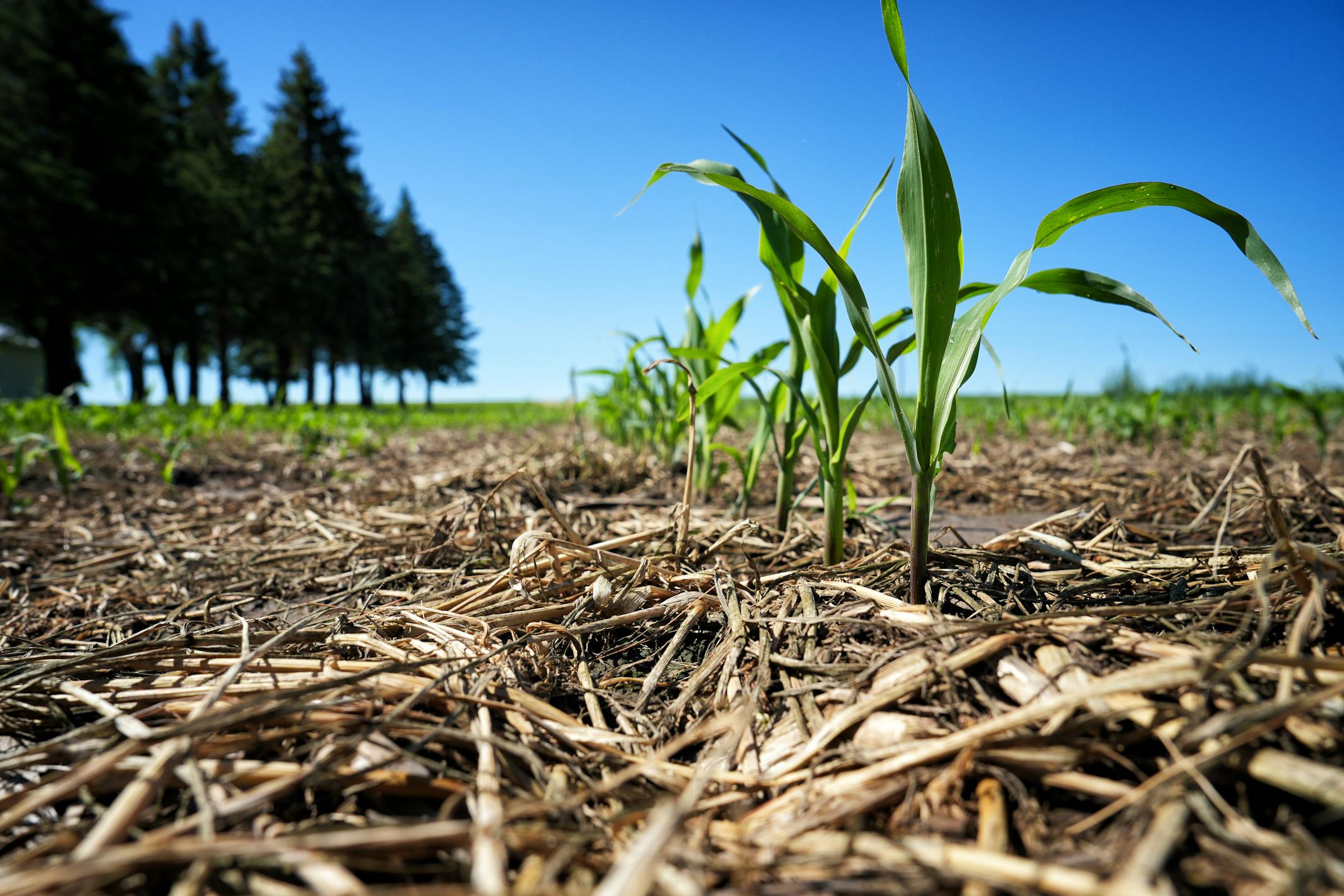
Field corn grows near Zumbrota, Minn., in May 2024. (Glen Stubbe/The Minnesota Star Tribune)

Opinion editor’s note: Strib Voices publishes letters from readers online and in print each day. To contribute, click here.

•••

In her most recent article, Karen Tolkkinen once again uses polarizing words and generalizations about agriculture that only continue to deepen a divide when profiling Minnesota’s diverse agriculture community (“Big Ag needs to loosen its grip,” Aug. 10).

As a fifth-generation farmer raising the sixth on our dairy farm, I know the triumphs and trials of keeping a family farm going and the complexities of bringing the next generation back.

We often want simple answers to complex issues. But agriculture isn’t a single system, and narrowing it to a single narrative ignores the diversity of farms and ranches that keep agriculture and rural communities strong and help feed our growing population.

It takes farms of all sizes and methods to sustain our communities. Our state’s varied topography means the practices farmers use vary just as much. And farmers, whose livelihoods depend on the soil they work, make decisions every day to care for their land to preserve it for the next generation. This diversity in farming also gives consumers more choices when buying food.

Pitting farmers and how they farm against each other only distracts from the real conversations we need to have, which is how we ensure that we have a viable future for agriculture and create space for farmers, no matter how they enter or what they grow.

If we truly want the next generation to choose farming, we need more holistic conversations and solutions, not oversimplified portrayals. Respect for all types of farms is where that conversation should start.

Dan Glessing, Waverly, Minn.

The writer is the president of the Minnesota Farm Bureau and a dairy farmer.

•••

I appreciated Tolkkinen’s column advocating for a push away from large monoculture farms and toward a new generation of farmers working smaller, more sustainable farms growing a diverse mix of crops. Minnesotans should be proud of our farming heritage, while recognizing that farming can and should change to meet the evolving needs of our communities and our Earth.

Driving around Minnesota, it is amazing how much of our land is dedicated to growing just a small handful of crops — much of which goes to feed livestock and produce ethanol for gas.

Tolkkinen’s piece notes that Minnesota’s farmers received more than $16 billion in subsidies between 1995 and 2024. It is hard not to wonder how different our state’s farms could look if a portion of those subsidies were devoted to helping new and existing farmers transition to more regenerative models, utilizing less water and other key inputs while producing more crops for local and regional consumption.

Doing so could reduce farming’s climate impact, protect our public waterways and contribute to healthier communities consuming local produce. I would love to see legislation at the state level to provide incentives for small or midsize farms that conserve resources, utilize holistic farming practices and take action to live more harmoniously with wildlife.

Brian Wagenaar, Eden Prairie

•••

After reading the Aug. 8 article “Minnesota farmers fear new crisis on horizon,” I am absolutely perplexed. Farmers have concerns about tariffs destroying their markets, their workers getting deported by Immigration and Customs Enforcement and health care expenses. A majority of farmers voted for Donald Trump, and he campaigned on tariffs and deporting people here illegally. (As for health care, Republicans have a long history of not supporting any policies that will actually reduce costs for the average American.) I feel bad for the farmers who did not vote for Trump, but for those of you who did, well, what did you expect?

I wish I could say it’s not my problem, but this mess is all of our problem, as it may well lead to much food supply instability and hasten the number of large corporate farmers who buy up land at fire-sale prices but don’t support the local small-town economy. We are paying, and will pay, much higher grocery prices as well. This is not what I voted for and I’m angry that Americans voted for a chaos economy!

Peter Hall, Edina

VANCE BOELTER

We aren’t calling him a Christian terrorist because he isn’t one

Regarding “Why aren’t we calling Vance Boelter a Christian terrorist?” (Strib Voices, Aug. 10): We aren’t calling Vance Boelter a Christian terrorist because he has no organization of supporters behind him. All Boelter’s previous Christian connections have denounced him and his actions. Terrorism is not a tactic of any present Christian denomination I am aware of. Also, we don’t know Boelter’s motivations yet. Since he targeted Democrats, his motivations might be purely political.

When Mark Chapman killed John Lennon, the media highlighted Chapman’s religious background. It was similar to Boelter’s. Lennon had said that the Beatles were more popular than Jesus, as blasphemous a statement as can be made since we all know that the Beatles were not even as popular as Elvis. The Christian response to Lennon was either to laugh at him or pray for him. There was no call for violence. No fatwa. Some still looked for a Christian connection to Lennon’s killing. But when the facts came out, the book “The Catcher in the Rye” had more to do with the killing than the Bible.

John Hinckley, the would-be assassin of President Ronald Reagan, also had a strong Christian background. But he was influenced by the movie “Taxi Driver,” not any religious doctrine. The anti-government Timothy McVeigh, the Oklahoma City Bomber, was also dubbed a “Christian terrorist” by some even though his ties to Christianity were tenuous, if not nonexistent. Was Charles Manson a “Christian terrorist”? Didn’t he derive his “Helter Skelter” from the Book of Revelation?

To label as a “terrorist” every individual “Christian” who kills is unwarranted. Terrorism is a logical, organized mass movement, not illogical individuals acting for uncertain and individual motives with no mass appeal.

David Wiljamaa, Minneapolis

•••

Thank you for printing Lois Thielen’s excellent piece, “Why aren’t we calling Vance Boelter a Christian terrorist?

I suggest the better question is, “Why are we calling these terrorists Christians?” Letting them seize the label gives them undeserved credibility. Jesus Christ was God’s answer to the brutality of the Romans and the mistakes of the Old Testament. Seizing Jesus’ name in order to twist his purpose should be neither allowed nor furthered. Call them power-hungry christianists or something else, but they’re nowhere near being Christian. Read what he actually said, not what these people rant.

David K. Porter, Bloomington

•••

Thielen’s excellent opinion piece asks why we do not label Boelter a Christian terrorist for allegedly killing the Hortmans and wounding the Hoffmans. Boelter apparently believed the Hortmans’ and Hoffmans’ Democratic views violated his religious convictions, and he was required to silence them. Thielen suggests that because Boelter is a white man from Minnesota rather than a person who fits our stereotypes of a terrorist we are reluctant to name him accurately. I agree with her.

We might ask ourselves what level of chaos and injustice deserves to be called “terrorism.”

I want to suggest that the proposals of some of our elected and appointed national leaders seeking to regulate our civic life by imposing their religious views on everyone amount to terror.

Secretary of Defense Pete Hegseth, for example, by reposting a video from the Christian nationalist evangelical pastor Doug Wilson, has raised the specter of denying women the right to vote. The idea is so ludicrous, so ignorant of history and the importance of our Constitution, that I hesitate to believe it’s a real proposal and am tempted just to say to myself “Oh, good grief.”

The Boelter shooting, with its deadly intrusion of religion into our social fabric, is a wake-up shock. Denying women the vote is a shocking terror. We need to take seriously every threat to the rule of law.

Melinda Quivik, St. Paul

The writer is a pastor.

about the writer

about the writer