
Rash Report: What 'Dunkirk' displays about Britain, then and now

A temporary retreat from a hostile continent during wartime to a permanent Brexit divorce from today's welcoming Europe.

July 21, 2017 at 11:59PM
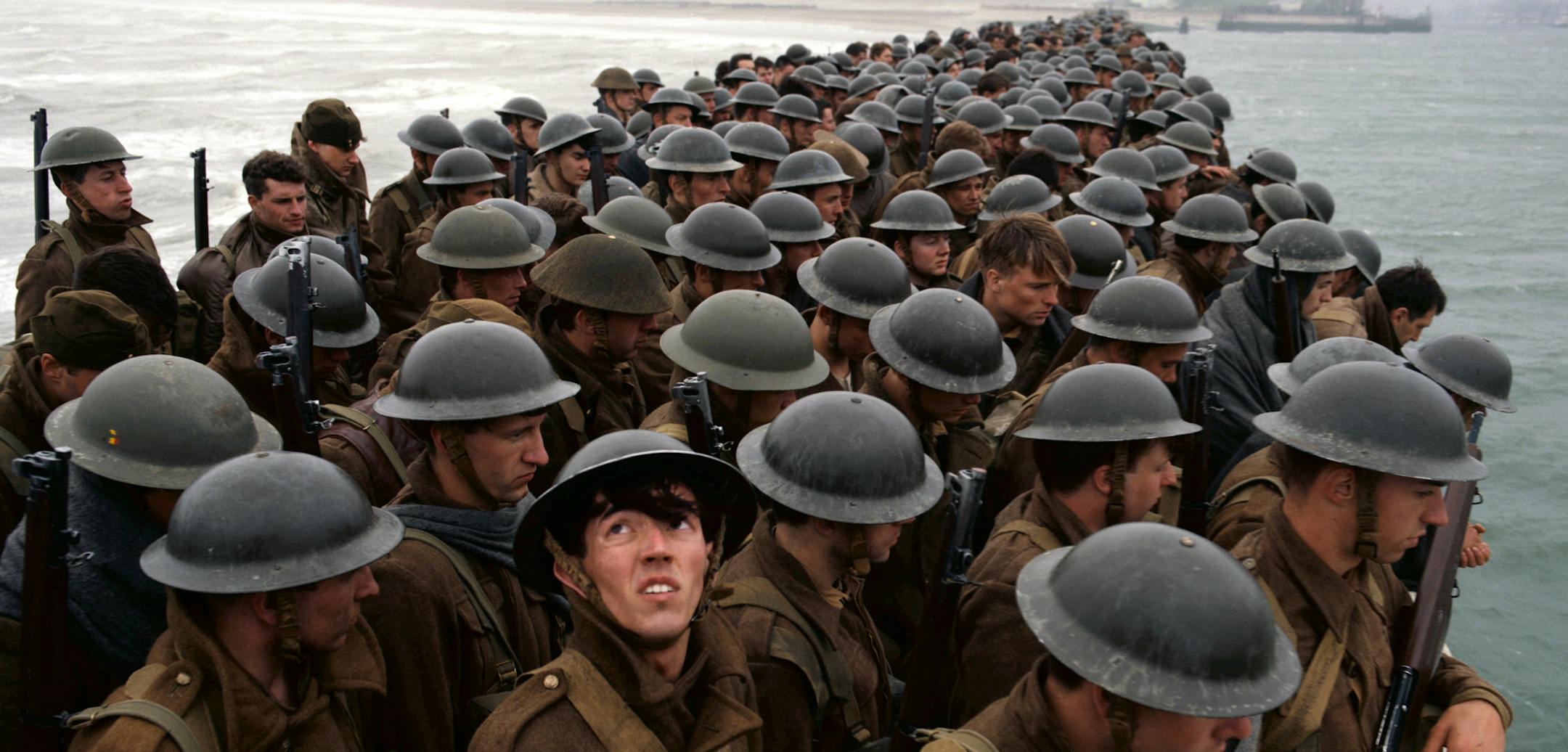
This image released by Warner Bros. Pictures shows a scene from "Dunkirk." (Warner Bros. Pictures via AP) ORG XMIT: MIN2017071814185634
“Dunkirk” tells the true story of the remarkable rescues in 1940 of more than 338,000 trapped Allied soldiers from Dunkirk, France. (The Minnesota Star Tribune)

Superheroes will be the big box-office draw again this weekend. Yet this time they won't be wearing capes, but military uniforms and, most notably, civilian clothes, as heroic, humble British citizens rescue trapped Allied soldiers in "Dunkirk."

This riveting film tells the true story of the remarkable rescues in 1940 of more than 338,000 troops from Dunkirk, France, many by everyday Brits in fishing boats and other small craft that could traverse English Channel waters too shallow for large naval vessels.

While "Dunkirk" is told in individual, harrowing narratives — a besieged British soldier, an intrepid Spitfire pilot, a steady, stoic rescuer — the geopolitical context and consequences were enormous.

"There is the immediate consequence [that] the British Army can survive, and therefore Britain can survive," said William T. Johnsen, who holds the Henry L. Stimson Chair of Military Studies at the U.S. Army War College. "In the longer-term consequence, Britain is largely a disarmed nation, and where do those [new] arms come from? And that brings a larger involvement of the United States."

"The United States is faced with a decision," Johnsen continued. "'Do we provide additional arms and materiel to the British, or do we safeguard for our own use in the event we have to mobilize?'"

Based partly on the Dunkirk rescue, Johnsen said, "We're stripping our armament cupboards bare to help support Britain, so it's the [British Expeditionary Force] coming off the beaches at Dunkirk that allows the Brits politically to continue the war, which then consequently draws us in a little more solidly on the British side."

Britain, to be sure, was in a total mobilization that's rarely seen in Western societies despite decades of warfare since.

"The Brits understood that they were at war as a nation and that survival probably hinged on whether or not you could bring the BEF off," Johnsen said. "When you know you're going to be engaged in sort of a life-and-death existential struggle for the survival of your nation, you know popular support is going to be required."

Or the "Dunkirk spirit," as it became to be called — a national unity that's in short supply in today's Great Britain, which just marked the anniversary of the Brexit vote.

Brexit revealed a deeply divided society, split by geography and generations, among other demographic distinctions. And as evidenced by last month's national election, the political splintering continues, with the Conservative Party losing its parliamentary majority.

"The election has really complicated things because the government is so weak and no one knows when the prime minister will leave; they only know that she is going to leave," said Frances G. Burwell, a distinguished fellow for the Future Europe Initiative at the Atlantic Council.

Burwell was speaking of Theresa May, who like most modern-day prime ministers won't be remembered like Winston Churchill, who gave his famous "We shall fight on the beaches" speech after Dunkirk.

May gambled that a clear, clean victory would strengthen her hand to negotiate with the European Union. The political risk failed, just as it had under her predecessor, David Cameron, who like the rest of the country — let alone the world — seemed stunned after Brits voted to exit the E.U.

Indeed, an inversion of the Dunkirk spirit has taken hold in the United Kingdom. Instead of British citizens united as they temporarily retreated from a hostile continent, they're now divided as they seek a lasting retreat from a welcoming, wanting Europe.

"Dunkirk gets spun into a successful retreat from a horrible risk, but followed by a consolidation of British power and a movement forward to victory," said John Watkins, an English professor at the University of Minnesota.

Watkins, a savvy student of British society and politics, said some Brexiteers feel "that this is another victory over the threats of Europe."

He added that this group "is pitted against younger people, particularly in the professional classes, who see Britain as a part of Europe."

Neither side seems to see each other, or the looming reality, as depicted on the cover of the U.K. edition of the Economist, headlined "Facing up to Brexit." But it's the illustrated image that makes an impact — Brits on a beach, with all but a young child sticking their heads in the sand.

Behind them are white cliffs, the kind seen in Dover, which in "Dunkirk" a wounded evacuee longs to see. The courageous captains of small craft saving lives, and by extension, the world, probably longed to turn back toward their beloved island, too.

But the boats — hundreds of them — kept coming, facing France, facing down the Nazis and facing up to their national destiny.

"Do you know where we are going?" asks George, a teenager, as he pushes off the dock.

Mr. Dawson, the featured rescuer in "Dunkirk," whose small boat becomes part of a big global moment, answers with a stiff upper lip, "Into war, George."

"I'll be useful, sir," George says, reflecting his nation's Dunkirk spirit.

John Rash is a Star Tribune editorial writer and columnist. The Rash Report can be heard at 8:10 a.m. Fridays on WCCO Radio, 830-AM. On Twitter: @rashreport.

about the writer

about the writer

John Rash

Editorial Writer

John Rash is an editorial writer and columnist. His Rash Report column analyzes media and politics, and his focus on foreign policy has taken him on international reporting trips to China, Japan, Rwanda, Kazakhstan, Turkey, Lithuania, Kuwait and Canada.

See Moreicon

More from Commentaries

See More
card image
Anthony Souffle/The Minnesota Star Tribune

The state can either lead the digital economy or watch it pass us by.

card image
card image