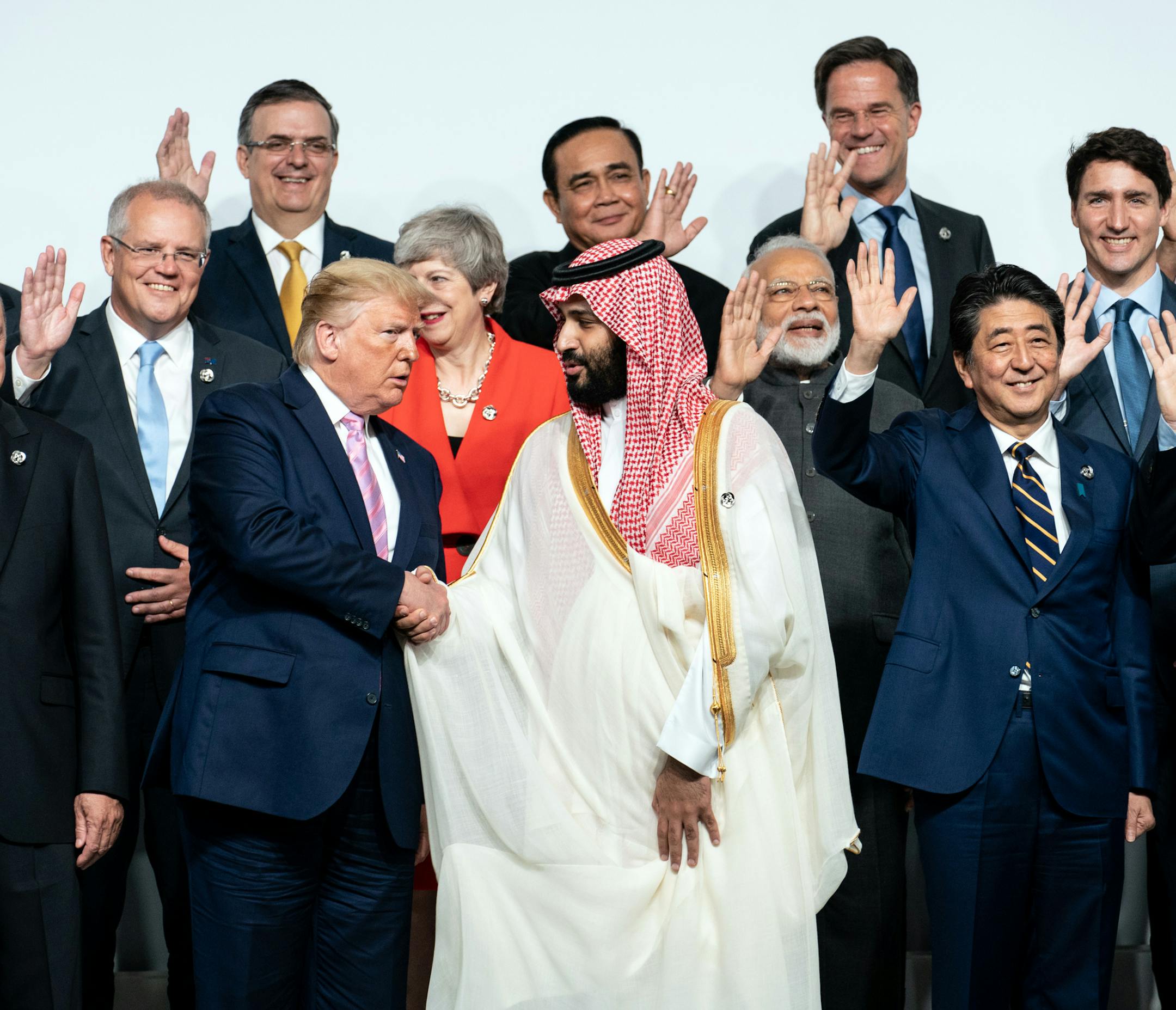
In Osaka, it was the G-20 — a summit of leaders of the top 20 economic powers.
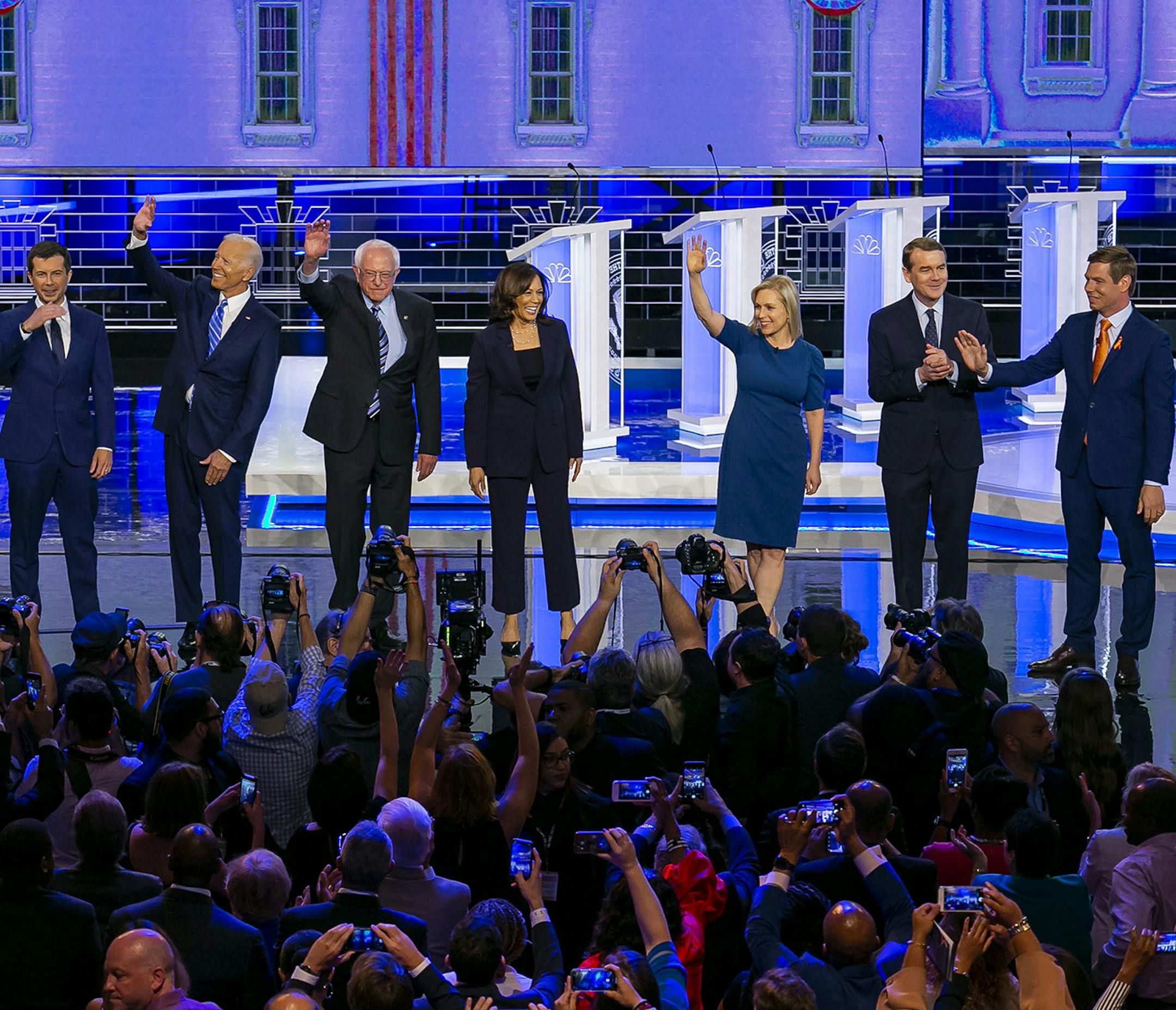
In Miami, it was the D-20 — debates featuring the top 20 Democratic candidates for president.
The agendas, and the rhetoric, revealed much about today's geopolitics.
In Japan, the focus wasn't conflict between nations, but transnational challenges or domestic dynamics vexing every country. "Main themes" noted by the host nation were the global economy, trade and investment, innovation, and development, as well as closely related issues like the environment and energy, health, women's empowerment and employment.
Not officially on the G-20 agenda, but on world leaders' minds, were the spiraling crises in North Korea, Iran and other countries contesting the global order by weapons proliferation or state-sponsored terrorism.
And the existential threat identified by many presidential candidates as the top international challenge, climate change, wasn't a separate summit agenda item and wasn't the subject of a separate debate among the Democrats, as some advocates and candidates called for.
Still, several presidential prospects, including Beto O'Rourke, Cory Booker, Julian Castro and Jay Inslee, named climate change when asked what they considered to be the biggest geopolitical threat to America.
Actually, Inslee first mentioned President Donald Trump, who was en route to the G-20 when night one of the D-20 occurred. While he initially used his travel status as a rare reason for radio (actually, Twitter) silence, Trump soon tweeted: "Sorry, I'm on Air Force One, off to save the FREE WORLD." But then the president prodded viewers to follow @TrumpWarRoom and other sites for "RAPID RESPONSE, FACT CHECKING and the TRUTH!" and later declared the debate "BORING!".