

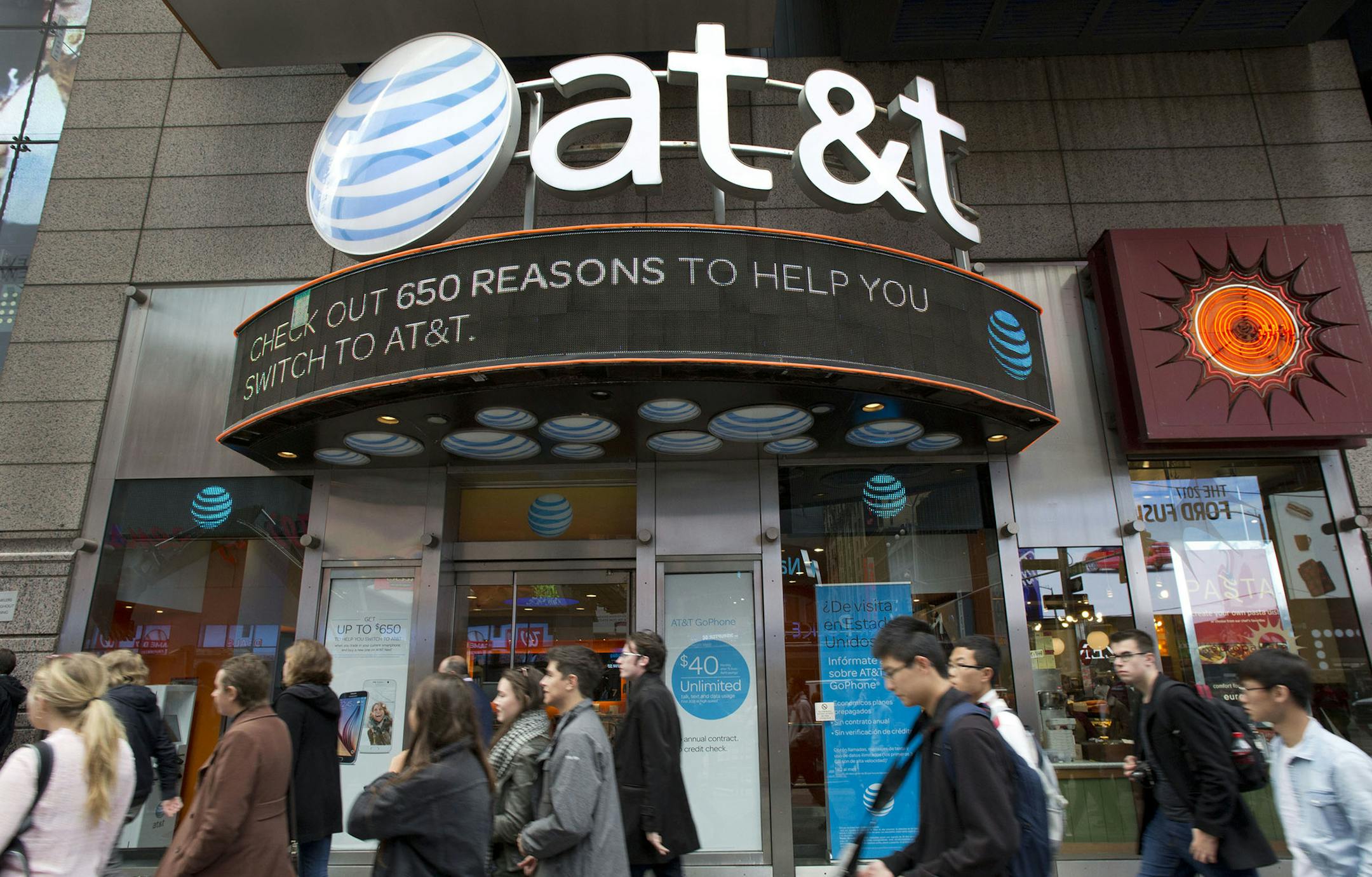
AT&T's proposed purchase of Time Warner is designed to respond to a rapidly evolving media environment. But even quicker shifts in the political landscape could make the merger moot.
Whatever justifications the Department of Justice or other federal regulatory agencies tasked with the approval process are presented, the $85 billion media megamerger comes amid increasing concern over the concentration of institutional power, be it political, media or business.
In fact, all three entities crowd the bottom of Gallup's 2016 ranking of Americans' confidence in 14 key institutions. "Big business" is second-to-last, with only 18 percent expressing "a great deal" or "quite a lot" of confidence in the sector, just below TV news, 21 percent, and newspapers, 20 percent. Congress ranked last with only 9 percent.
While polls indicate the establishment candidate will win the presidency, Hillary Clinton is well aware that 2016 is an insurgent, not an insider, year. So while she had a more measured merger reaction than the quick condemnations from Donald Trump and Bernie Sanders, the transaction may face even tougher scrutiny than previous deals such as Comcast-NBCUniversal.
Minnesota Sens. Amy Klobuchar and Al Franken, both Democrats, will play key congressional roles. But concern about the accord seems bipartisan, as evidenced by a statement from Sen. Mike Lee, R-Utah, and Klobuchar, the chairman and ranking member, respectively, of the Senate Judiciary Subcommittee on Antitrust, Competition Policy, and Consumer Rights. "We will continue to carefully review and investigate any consolidation in this industry to make sure that it does not harm consumers," they wrote.
"I have significant concerns about this merger based on the fact that we have already seen substantial consolidation in this industry," Klobuchar elaborated in an interview. "This dwarfs some recent mergers, including Comcast-NBC, AT&T-DirecTV, and Charter-Time Warner [Cable]," Klobuchar said, adding: "You are seeing this substantial consolidation; this is a humongous amount of money."
Humongous is the word many may use to describe their monthly cable or satellite-TV bills, which makes this merger more tangible to voters than other recent corporate combinations.
And beyond the impact on consumers, the communications industry has a unique role in our democracy, sparking more scrutiny.


