

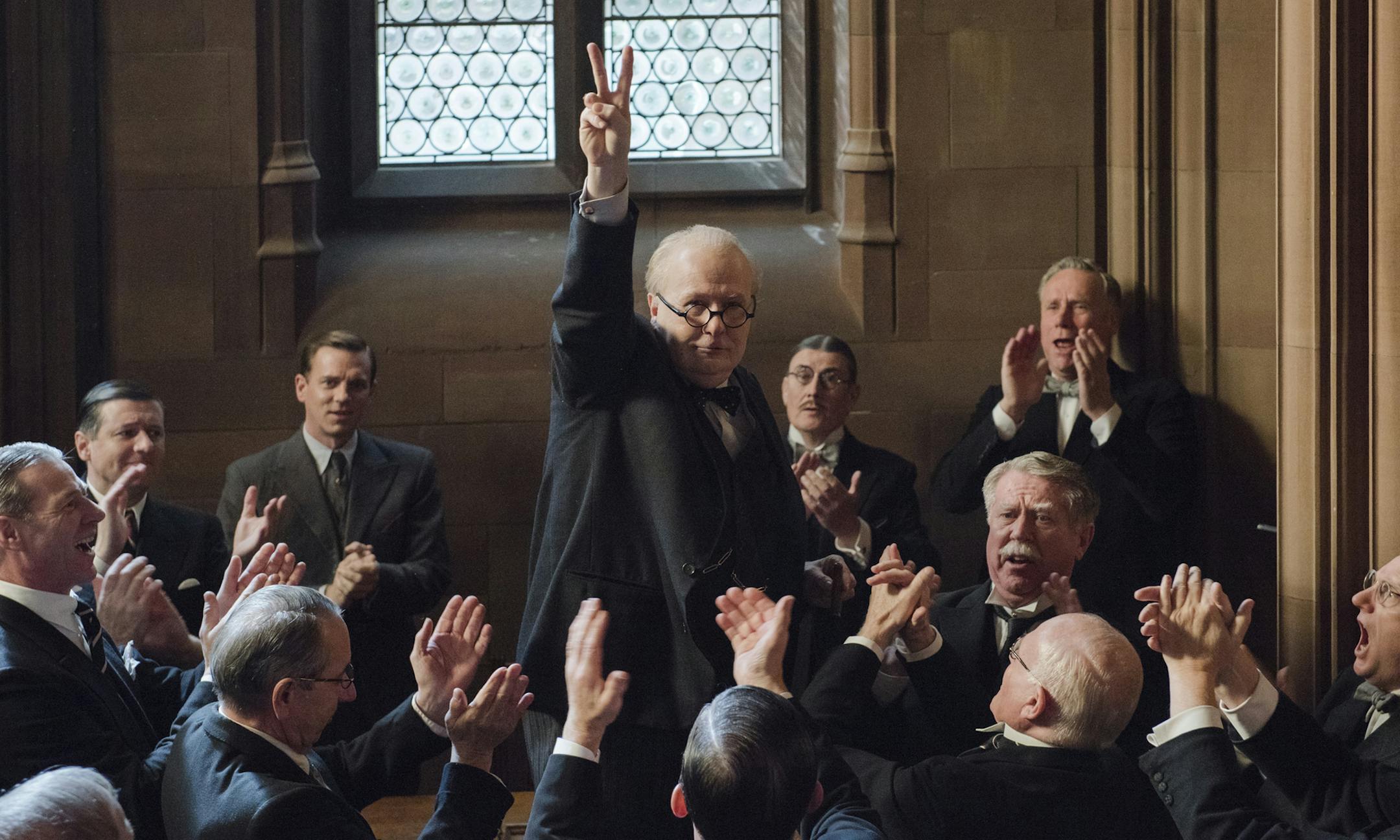
This summer's superhero flicks were interrupted by "Dunkirk," a searing film about real, everyday heroes rescuing British and French forces, and by extension, civilization itself from fascism. Looming large but off-screen is Winston Churchill, whose soaring "We shall fight on the beaches" speech isn't heard in the prime minister's voice, but read aloud by a war-weary evacuee.
In "Darkest Hour," debuting locally on Friday, Churchill (an excellent Gary Oldman) delivers that speech in a dramatic denouement to a perilous period of military defeats and political infighting.
Churchill is rightly depicted as an extraordinarily confident, competent wartime leader who despite personal and political flaws rallied the United Kingdom and united defenders of democracy worldwide to win World War II.
Unlike any current leader, Churchill's iconic status spans nations and ideologies: In just one example, no less a leftist than Bernie Sanders named Churchill, who led the Conservative Party, as his most admired foreign leader. Indeed, he's held up by Brits, Yanks and people of many nations who yearn for his ability to concurrently reflect and rally his citizens.
"Churchill was the eternal optimist — no matter how bad things looked he always had the energy, the verve, the courage to bear up," said William T. Johnsen, who holds the Henry L. Stimson Chair of Military Studies at the U.S. Army War College. "He personifies this idea that Britain will never surrender no matter how dark it gets — 'we will fight on to the end' — he gives a tremendous morale boost to the general populace, who I think was more in tune with Churchill in terms of wanting to fight on than some of the other leaders."
This split between Churchill's will vs. voices calling for negotiations with the Nazis (personified, but not limited to, Neville Chamberlin) is depicted in "Darkest Hour." And in an honest accounting, even the leonine Churchill considers conceding to peace talks. But he's steeled by British resolve, which he in part creates.
"He made them believe that they were equal to the fight," John Watkins, an English professor at the University of Minnesota, said in an e-mail exchange. Watkins, an insightful scholar of British history, society, and literature, added: "In speech after glorious speech, he reminded them that they had defended this island in times past, and would defend it again with great success. Above all, he believed, and he made them believe, that British civilization was worth fighting for."
As for Churchill's view of his fellow Brits, Watkins said: "He saw them as the greatest people who have ever walked the face of the earth, the greatest guardians of civilization itself, the ones who got it right in terms of politics, religion and civilization. And he also saw them as a nation, certainly not of belligerents, but of warriors capable of defending against aggression."


