

Ramstad: With co-workers in grief or suffering, remember that not everything happens for a reason

In Minnesota’s workplaces this fall, many people are connecting with colleagues touched by terrible events.

Columnist Icon
The Minnesota Star Tribune
September 2, 2025 at 5:23PM
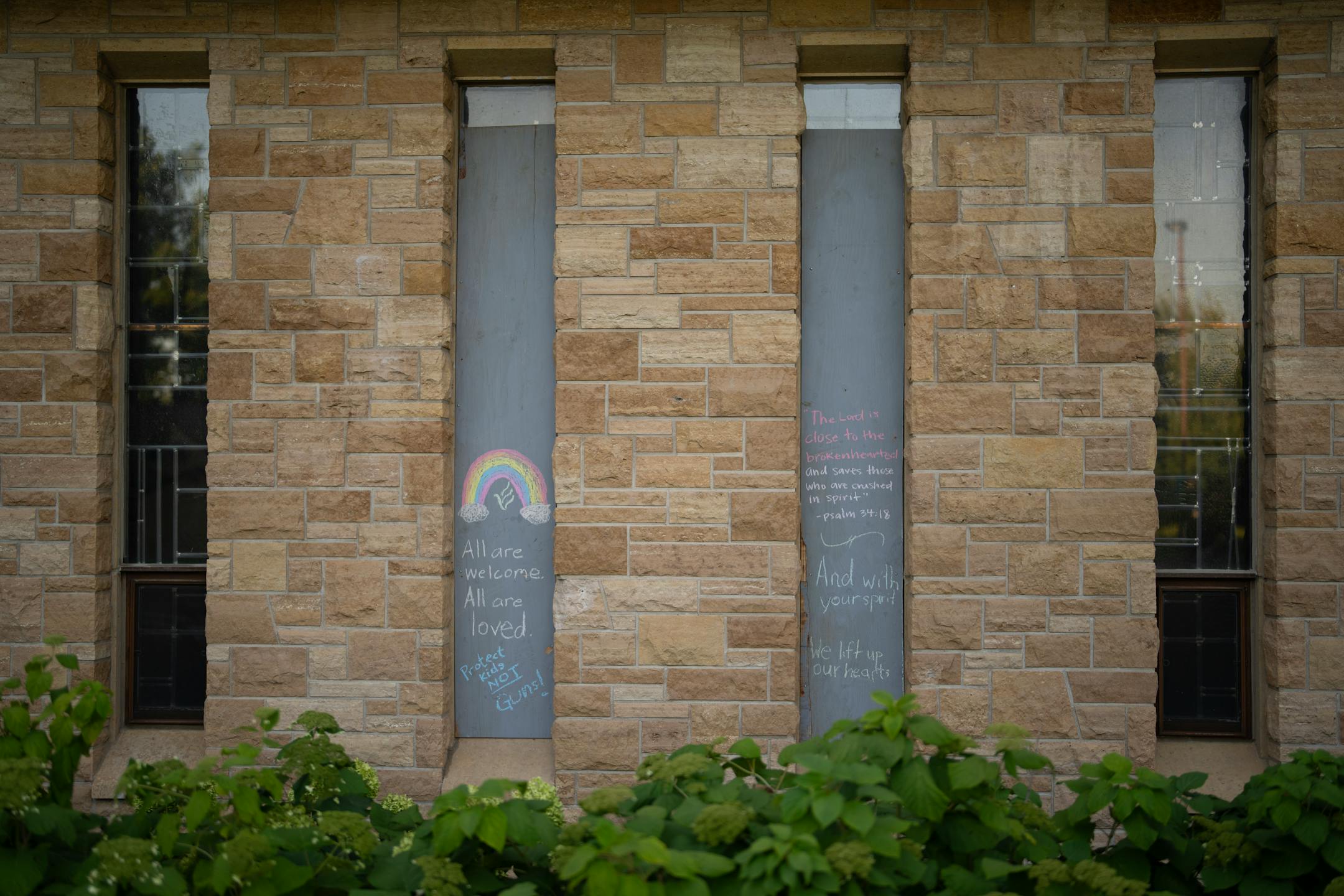
Stained glass windows shattered by gunfire are covered with plywood, which was then adorned with messages of support for the grieving at Annunciation Church in Minneapolis. (Jeff Wheeler/The Minnesota Star Tribune)

The day after Labor Day is a second New Year’s Day, the start of the busy get-stuff-done time of year that lasts up to Thanksgiving.

It feels different in Twin Cities workplaces this year.

We have been changed by the terror of mass violence — the shootings of legislators in June and students and adults at Annunciation Catholic School and Church in Minneapolis last Wednesday.

While these horrors have economic and policy consequences, today I want to discuss how they cross into our workplace lives and affect our business interactions.

As after the police slaying of George Floyd five years ago, this is a moment for caution and care in how we deal with each other.

Our reflexes to empathize are not perfect. Our desire to explain, our search for understanding may actually not be the thing our friends and neighbors most need right now.

Before saying more, I will mention I’m motivated to these thoughts by a personal connection. As the Minnesota Star Tribune has reported, our business editor is the mother of two children who attend Annunciation. They were deeply affected, though neither was struck by bullets.

All of us who work for her were terrified for them in the moments when we didn’t know. And we remain in a kind of vigilant state, with varying rage and sadness, on behalf of her and her family.

My sportswriter colleague Michael Rand, a father of three, imparted on his Substack blog what many people all around the Twin Cities and region are feeling after the Annunciation shooting: “I cannot imagine it, but I can also imagine it.”

Actor Aubrey Plaza, in a podcast last month with her former “Parks and Recreation” co-star Amy Poehler, powerfully described her grief over her husband’s death early this year as a “giant ocean of awfulness that’s right there.”

“Sometimes I just want to dive into it and just be in it. And then sometimes I look at it. Sometimes I try to get away from it, but it’s always there,” Plaza said.

There’s another layer of complexity for the communities at Annunciation and the Legislature.

These shootings were not simply passing events. They represented a loss of control. They demolished the sense that we always know the story of our lives.

They become surprising, literal turning points, with an “after” that won’t be at all like the “before.”

In a way, they are like what happens to individuals when told they have cancer or another life-threatening illness. Those who survive such a diagnosis often say everything they knew or hoped about life became different.

In a conversation about changes in churches two weeks ago, the Rev. Matthew Fleming of St. Andrew Lutheran Church in Eden Prairie told me about last year’s visit by Kate Bowler, the Duke Divinity School professor and bestselling author of “Everything Happens for a Reason and Other Lies I’ve Loved.”

Bowler, after a cancer diagnosis, noticed and began to examine the often-inadequate, sometimes offensive things that well-meaning people say to friends who are suffering.

She described three kinds of reactions from people about her cancer. There were the “minimizers,” the ones who offer “praying hands” emojis and told her we live in an uncaring and neutral universe.

There were the “teachers,” the people who told her she will learn something from having cancer. And there were the “solutions people,” who told her to keep a positive attitude because that will determine her destiny.

“Most everyone I meet is dying to make me certain,” Bowler wrote. “They want me to know, without a doubt, there is a hidden logic to this seeming chaos.”

The Minnesota Star Tribune is in the business of making sense of things. We look for certainty. Nearly everything we write connects cause and effect.

I have written before about how certainty and uncertainty divide society, and that there can be power in accepting uncertainty.

And so, I’m open — and think we all must be open — to the possibility the shootings at Annunciation and of the legislators will never make sense. They may never be fully, or even reasonably, explained.

“I can’t reconcile the way the world is jolted by events that are wonderful and terrible,” Bowler wrote in her book. “Except I’m beginning to think these opposites do not cancel each other out.”

As we encounter our friends and colleagues in the Annunciation community or around the State Capitol, I think we must recognize the difference and immensity of what they feel.

Listen closely. Dial back the “I can relate” instinct. Resist the urge to explain or to dismiss.

If you are uncertain what your friend or colleague needs from you in the moment, just ask. That alone is connection.

This weekend, Bowler showed up in my YouTube feed with a short message about “Grief Awareness Day,” which happens annually on Aug. 30. It’s a day less for the grieving, she said, than for the people around them.

Bowler advised viewers not to try to “fix” people who are grieving.

“Grief doesn’t need to be solved,” she said. “It just needs to be witnessed.”

about the writer

about the writer

Evan Ramstad

Columnist

Evan Ramstad is a Star Tribune business columnist.

See Moreicon

More from Business

See More
card image
Renée Jones Schneider/The Minnesota Star Tribune

The insurer says it is working with the health system to finalize the deal, which Fairview says will ensure “full, uninterrupted” access for patients.

card image
card image