

Ramstad: What’s worse for farming, great weather or President Trump?

Beautiful weather led to abundant harvests and low prices. Trump’s trade policies depressed demand, keeping a lid on prices.

Columnist Icon
The Minnesota Star Tribune
November 22, 2025 at 1:20PM
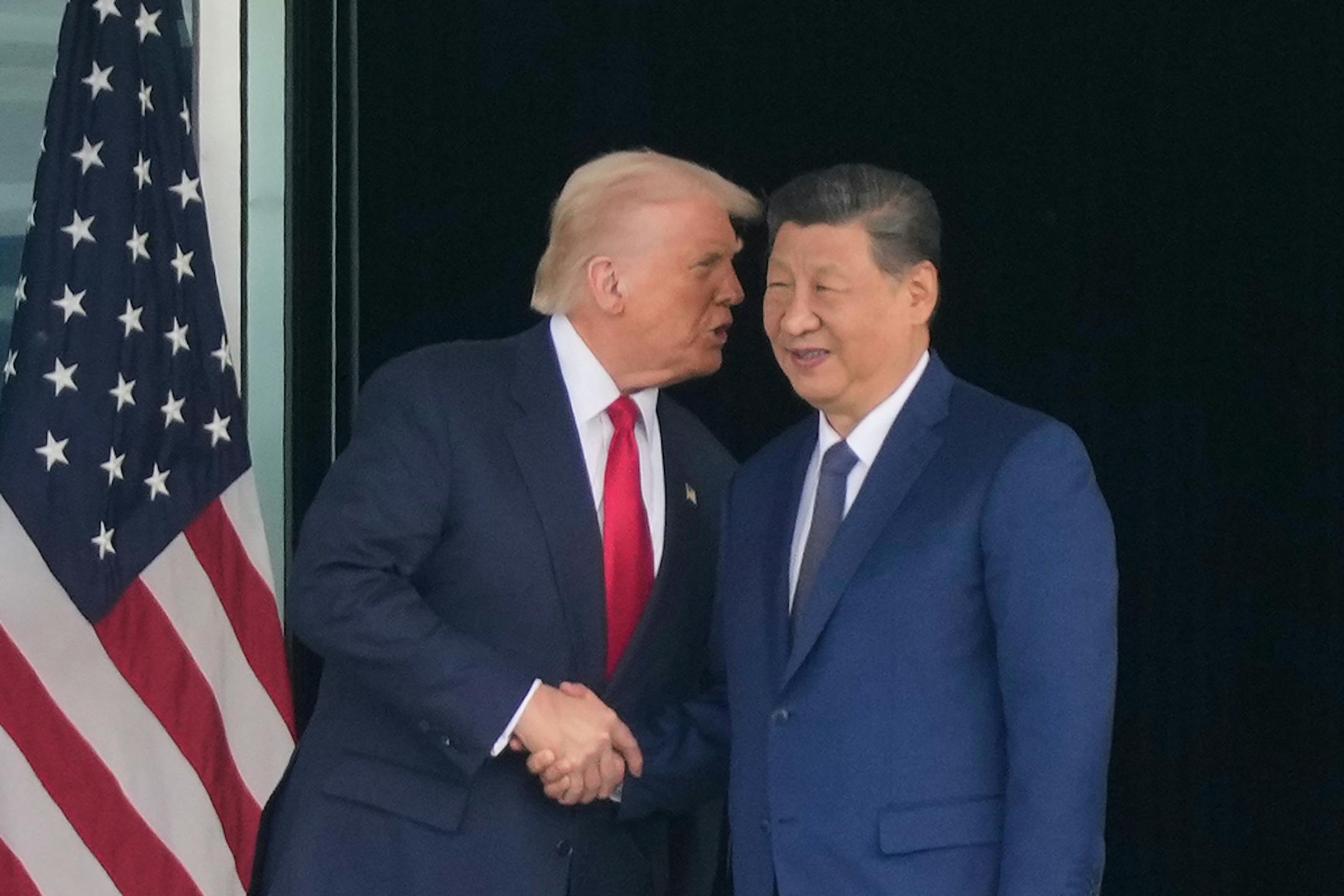
President Donald Trump and Chinese President Xi Jinping shake hands after their U.S.-China summit meeting at Gimhae International Airport Jinping in Busan, South Korea, on Oct. 30. (Mark Schiefelbein/The Associated Press)

The rumor came on Monday, and the confirmation on Tuesday: China has started buying the soybeans its leader Xi Jinping told President Donald Trump it would late last month.

Soybean prices have gone up about 10% to around $11.50 a bushel, near year-ago levels, since the two leaders met in South Korea on Oct. 30 and brought an apparent end to China’s boycott of U.S. soybeans in the larger trade war between the two countries.

I was driving into Crookston in northwest Minnesota on Tuesday when I heard an announcer from the Red River Farm Network on the radio talking about the previous day’s 3% price spike on the rumored first purchase.

The U.S. Department of Agriculture confirmed the rumor that morning. China ordered 792,000 metric tons, or about 7%, of the 12 million metric tons Xi told Trump it would buy before the end of the year. In a common market move, soybean prices fell on the actual news.

Minnesota is one of the nation’s top producers of soybeans, and the trade issue has gotten a lot of attention and headlines this fall. But a farmer reminded me recently that prices are down for nearly every crop — corn, wheat, sugar beets, canola, sunflowers. The list goes on.

Sugar beet prices, for instance, are 30% below a year ago on slightly lower U.S. consumption of sugar — which some analysts attribute to the GLP-1 dieting phenomenon — and greater imports from other countries.

More importantly, though, 2025 was a great year for growing crops.

The irony is never lost on me that a year of nice weather, as we’ve had in Minnesota, and abundant harvests tend to depress farm income. It’s the supply-demand equation at work: Big supplies outweigh demand and push prices down.
The opposite is happening with livestock: Low supplies of cattle are pushing beef prices higher.

The Minneapolis Federal Reserve Bank announced earlier this month that its latest survey of farm bankers in a district stretching from Michigan to Montana found 83% expect farm incomes to be lower than a year ago.

“A lot of conditions were just right for farming in the region if you look at the yield metrics,” said Joe Mahan, an economist at the Minneapolis Fed. But he added, “We’re getting a very prolonged slump of ag prices.”

I wonder what’s worse for farmers: great weather or Trump’s trade policies, which disrupted established trade relationships and depressed demand for U.S. commodities.

There’s no controlling the weather, of course. The only hope for controlling Trump, since farm lobbies and farm state members of Congress have proven spineless, is the U.S. Supreme Court.

Justices are considering whether the president has abused an emergency powers law to unilaterally impose tariffs. They could give an immediate positive jolt to the U.S. economy by ruling against Trump and forcing a reset of America’s trade relationships to how they were before he imposed steep taxes on so many of the nation’s imports.

Even if they rip out many of Trump’s tariffs at the roots, he has sown the seeds of distrust with other countries.

“There’s been so little policy stability coming from the administration that it is difficult for their counterparts to anchor their expectations about U.S. future behavior,” Cullen Hendrix, a trade policy analyst and agriculture specialist at the Peterson Institute for International Economics, told me.

Trump’s unpredictability created a risk for dealing with the U.S. As a result, buyers elsewhere will price America’s goods and services higher, making them less competitive.

“If you’re indifferent between, say, a U.S. soybean and an Argentine soybean, part of the cost now is the implicit risk of rebuilding dependence on United States soybeans and then having it suspend exports or politicize exports in ways that other countries are less likely to do,” Hendrix said.

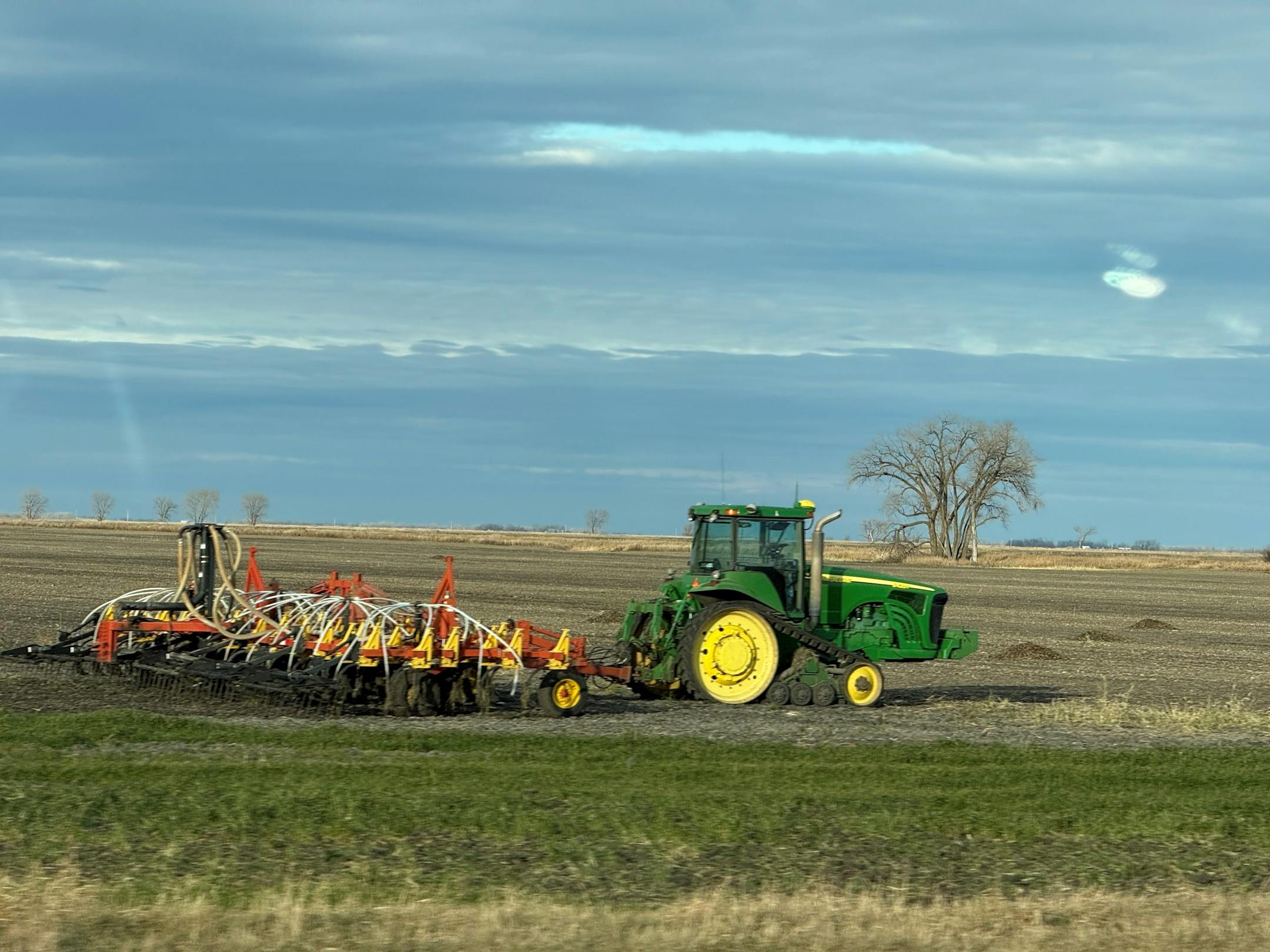
A tractor and tillage disk implement on a harvested field near Crookston, Minn., last week. (Evan Ramstad)

When Trump imposed triple-digit-percent tariffs on Chinese goods earlier this year, one of the ways China retaliated was by halting purchases of U.S. soybeans, which it uses to make soy sauce, tofu and other products.

Chinese leaders knew American farmers had become dependent on their market. China bought $12 billion worth of U.S. soybeans last year, $10 billion more than the next-biggest spender, the European Union. In 2022, China bought $18 billion worth of U.S. soybeans.

When it stopped purchases in May, China had bought about 6 million metric tons. The agreement three weeks ago for an additional purchase of 12 million metric tons — if completed — will bring its total to 18 million tons, exactly two-thirds of its 2024 purchase volume.

Farmers and grain processors tell me they will be happy if the purchases get done by early February, when harvests in South America start to come in. At the moment, U.S. soybean prices are higher than Brazil’s. China and other soybean importers will turn to Brazil and other South American countries for supply as soon as they can.

In the last two months of 2024, U.S. rail and barge operators moved 18 million metric tons of soybeans to seaports, said Mike Steenhoek, executive director of the Soy Transportation Coalition.

Moving two-thirds of that amount, even on short notice, can be done, Steenhoek said. “There’s likely to be some hiccups in that process, but it’s something that’s possible,” he said.

However, low water levels on the Mississippi constrain the river’s overall shipping capacity. Three-fourths of China’s first order, the one I heard about on the radio Tuesday, will be shipped on the river.

about the writer

about the writer

Evan Ramstad

Columnist

Evan Ramstad is a Star Tribune business columnist.

See Moreicon

More from Agriculture

See More
card image
Anthony Soufflé/The Minnesota Star Tribune

The lab, which pioneered promising crops for sustainable aviation and is one of only two research operations of it kind, is among many ag science sites feeling federal cuts.

card image