

Ramstad: The walls of Minnesota’s future houses grow in farmers’ fields

Minnesota is on track to be the first state to put straw and hemp in its residential building code.

Columnist Icon
The Minnesota Star Tribune
August 11, 2025 at 4:38PM
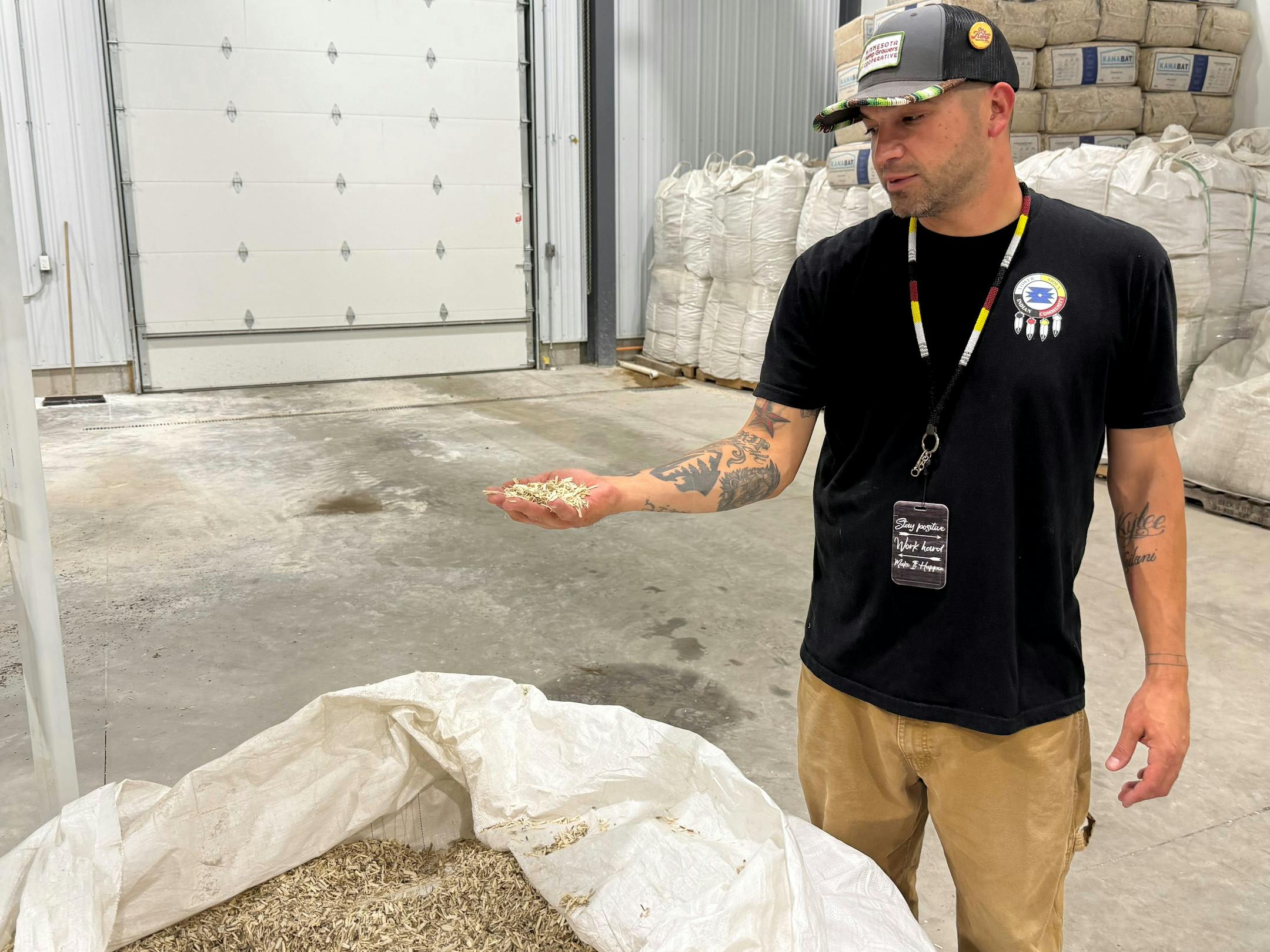
Danny Desjarlais, hempcrete construction manager at Lower Sioux Indian Community in southwest Minnesota, inspects "hemp hurd" in the tribe's processing plant. (Evan Ramstad)

Two castoffs of a typical Minnesota farm, straw and the stalks of hemp plants, are becoming valuable as building materials.

The state is on track to become the first to authorize straw and hemp in building construction, chiefly as insulation, thanks to some enthusiastic sustainability experts, architects and innovative builders at one of the state’s Indian nations.

Last month, a technical advisory group working on the once-every-six-years building code update, set to be finalized in 2026, gave its blessing to both materials.

The International Residential Code approved straw bales for use in homebuilding in 2015, and gave the nod to hemp in 2022.

The affirmation from the advisory group to the Minnesota Department of Labor and Industry is a strong sign both materials will be approved in the 2026 revision of the state residential code.

When that happens, their economic viability can be tested by the marketplace.

“Once the code goes into effect, then hopefully more people are curious about how these systems work,” said Janneke Schaap, sustainability lead and designer at Oertel Architects in St. Paul who helped write the proposal taken up by the advisory group. “And if they have the desire and the means, it’s just more freedom of choice in how you build your house.”

Hemp and straw substitute for fiberglass insulation, which is made from resin-bound glass and other materials, and the plastic wraps that became a feature of home construction over the past 30 years.
The materials are natural insulators, but they aren’t as dense as fiberglass. That means houses using hemp and straw have thicker walls, which is no trouble in most of Minnesota but may be in space-constrained Minneapolis and St. Paul.

However, Katie Jones and her husband built a house using straw bales for insulation three years ago in the Uptown neighborhood of Minneapolis. They relied on the city’s “alternative construction” code that requires a high level of involvement by inspectors and other officials.

“We were getting bids from builders, and they were all coming back and saying, ‘If you want a really energy efficient home, put foam in it,’” Jones said. “I was thinking, that’s not from Minnesota, we don’t have any oil here. Why would I want to put something like that in my walls? What would be another option? I literally went to the library in downtown Minneapolis and looked up books about natural building materials.”

Last year, Jones was elected to the Minnesota House and, after learning about the process for revising the building code, jumped in to help proponents of straw and hemp.

“By putting this into the code as official options, it just makes everything clear and there are fewer bureaucratic hurdles that people have to go through,” Jones said. “We want to make building more homes easier.”

Meanwhile, the Lower Sioux Indian Community, which is able to operate outside the state building code, for the past several years has been a kind of incubator lab for the use of hemp in home construction.

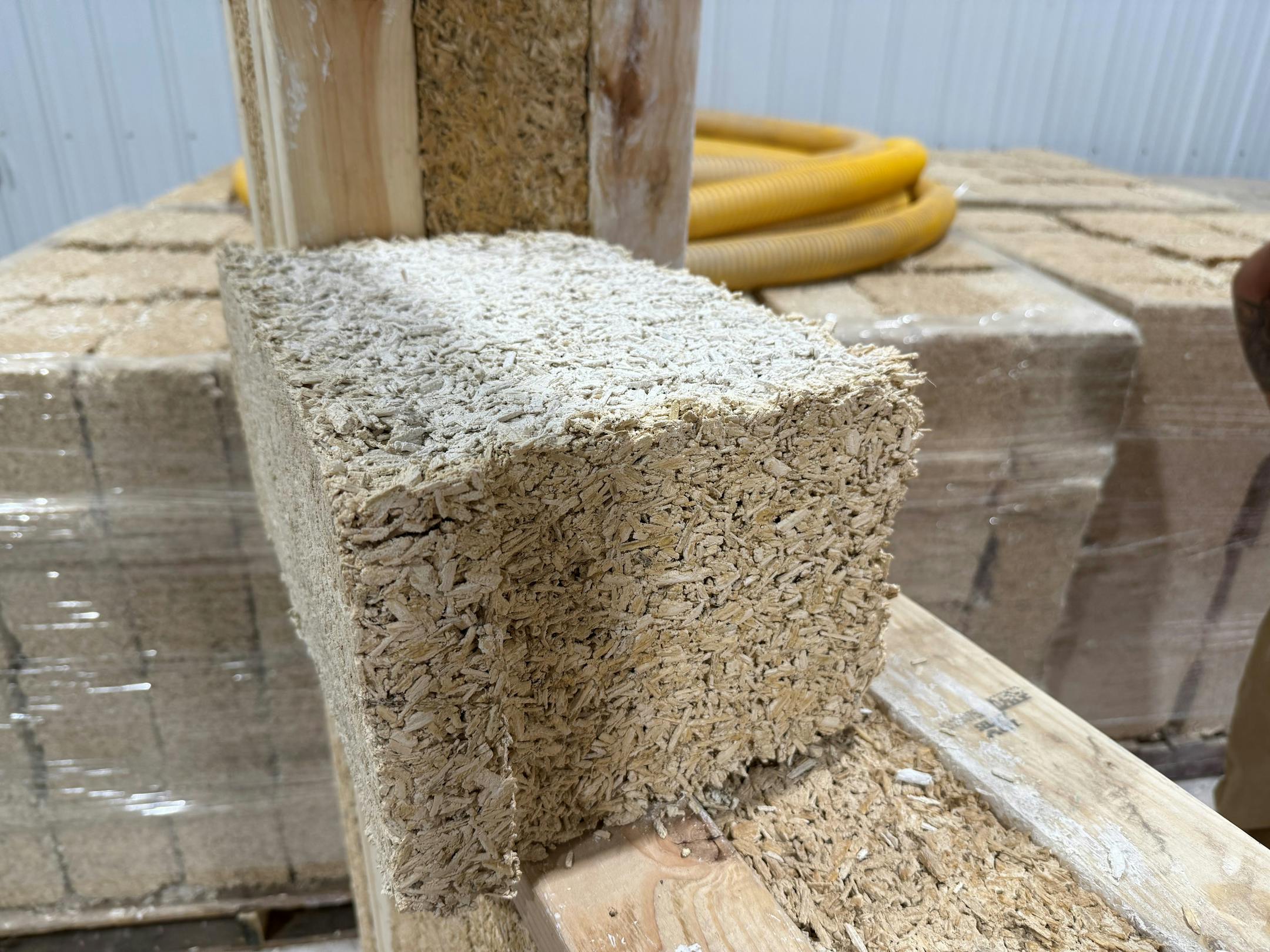
The tribe in southwest Minnesota has built four homes using “hempcrete,” a mixture of hemp, lime and water that turns rock hard almost instantly. Construction crews make hempcrete in spray form, in bricks and as complete wall forms that, weighing about 700 pounds, can be lifted into place by three or four people.

A hempcrete brick sits atop a panel form with hempcrete packed inside. Both products are made at a processing facility in the Lower Sioux Indian Community in southwest Minnesota. (Evan Ramstad/The Minnesota Star Tribune)

They recently stripped one of the oldest houses in the community down to the studs and rebuilt it using hempcrete as insulation. There are plans to update dozens more homes in a similar fashion. In a building near the tribe’s Jackpot Junction casino, they are now processing and storing hempcrete bricks for a new, 90,000-square-foot school.

Danny Desjarlais, the hempcrete construction project manager for Lower Sioux, began learning about it just three years ago when a tribal elder invited him to attend a national hemp convention. Desjarlais had just finished commercial driver training, but what he learned at the convention put him on a new career path.

“Getting to meet all the head people in the industry for my first step, that was ‘Holy cow, this is happening,’” Desjarlais told me when I visited the community last week. “I felt this urgency come over me that we need this on our reservation.”

The community started growing hemp in 2016 and harvesting the seeds atop the plants for processing into CBD oil. The remaining stalks, about 4 to 6 feet long, are stored in round bales until they are processed in clothing fiber, animal bedding and “hemp hurd,” the tough wooden chips for hempcrete.

“We make enough off the seed to where everything that was left over was free,” Desjarlais said.

The Lower Sioux crews are building hempcrete-insulated homes for about $170 per square foot, he said. That’s well below the $230 per square foot that is at the low end of builder-grade homes in Minnesota these days. Desjarlais acknowledged the tribe doesn’t face some permitting costs that builders off the reservation do and isn’t trying to make a profit off construction.

“We win in the long run with better homes that are healthier and longer-lasting,” he said. “These walls should last forever. They’re not going to be mold-ridden. If you have to take it down, you can grind it up and put it in your next [hempcrete] mix. It’s recyclable.”

about the writer

about the writer

Evan Ramstad

Columnist

Evan Ramstad is a Star Tribune business columnist.

See Moreicon

More from Business

See More
card image
Provided by AGNT Media

A former Cold War-era missile launch site is among three Minnesota listings with their own “safe rooms.”

card image