

Ramstad: Step one, build credit for Leech Lake members. Step two, build houses for them to buy.

Leech Lake Financial Services lifted up hundreds of tribal members to mortgage-level credit scores. Now, they need houses to buy.

Columnist Icon
The Minnesota Star Tribune
January 10, 2026 at 1:00PM
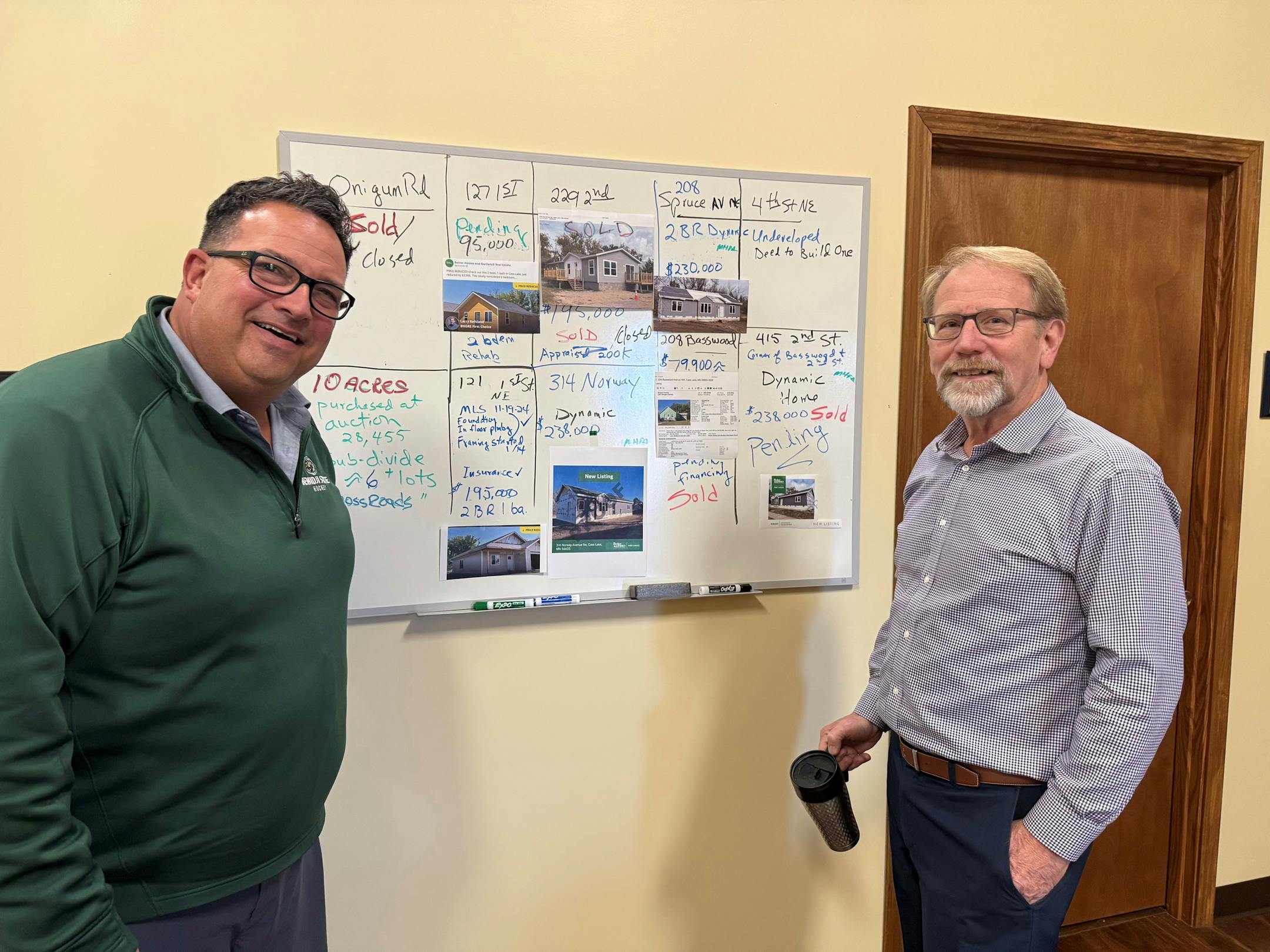
Rob Aitken, executive director of Leech Lake Financial Services, and Larry Refsland, manager of its residential development program, keep track of the organization's portfolio of home construction and renovation projects. The community development financial institution on the Leech Lake Reservation stepped in housing development after construction plunged in the region. (Evan Ramstad)

CASS LAKE, Minn. — Rob Aitken is the mastermind of what I consider one of the most ingenious wealth-building programs in Minnesota.

Leech Lake Financial Services (LLFS), the community development financial institution where Aitken is executive director, helps members of the Leech Lake Band of Ojibwe and other local residents build credit scores by offering personal loans that use the vacation time they’ve built up at work as collateral.

As people repay their loans, LLFS tells borrowers’ employers to restore their vacation hours or paid time off. No one wants to lose their PTO, so they pay off their loans. In the process, their faithful loan repayment builds a credit score that banks and other lenders look upon favorably.

Hundreds of Leech Lake tribal members have gone through the LLFS credit-building program — only to then encounter the record shortage of homes that vexes the entire state of Minnesota.

“We’d help someone get a (mortgage) pre-qualification letter from the bank, and then I’d bump into them at the grocery store a year later and say, ‘Hey, what’s going on with the house?’ And they’d say ‘I gave up on it’ because of this obstacle or that obstacle, and primarily it was lack of something to buy,” Aitken said. “There’s no inventory.”

As a result, LLFS in 2024 started building and rehabbing homes on the reservation, which stretches across four counties and 1,300 square miles between Bemidji and Grand Rapids, including about 400 square miles of lakes.

The firm has been helped by funds and advice from the Greater Minnesota Housing Fund, Minnesota Housing Partnership and the Minnesota Housing Finance Agency.

LLFS has built two houses from scratch and remodeled three others so far. All five sold at market rates with mortgages provided by local banks. All the buyers went through LLFS’ credit-building program and another course on home financing and ownership.
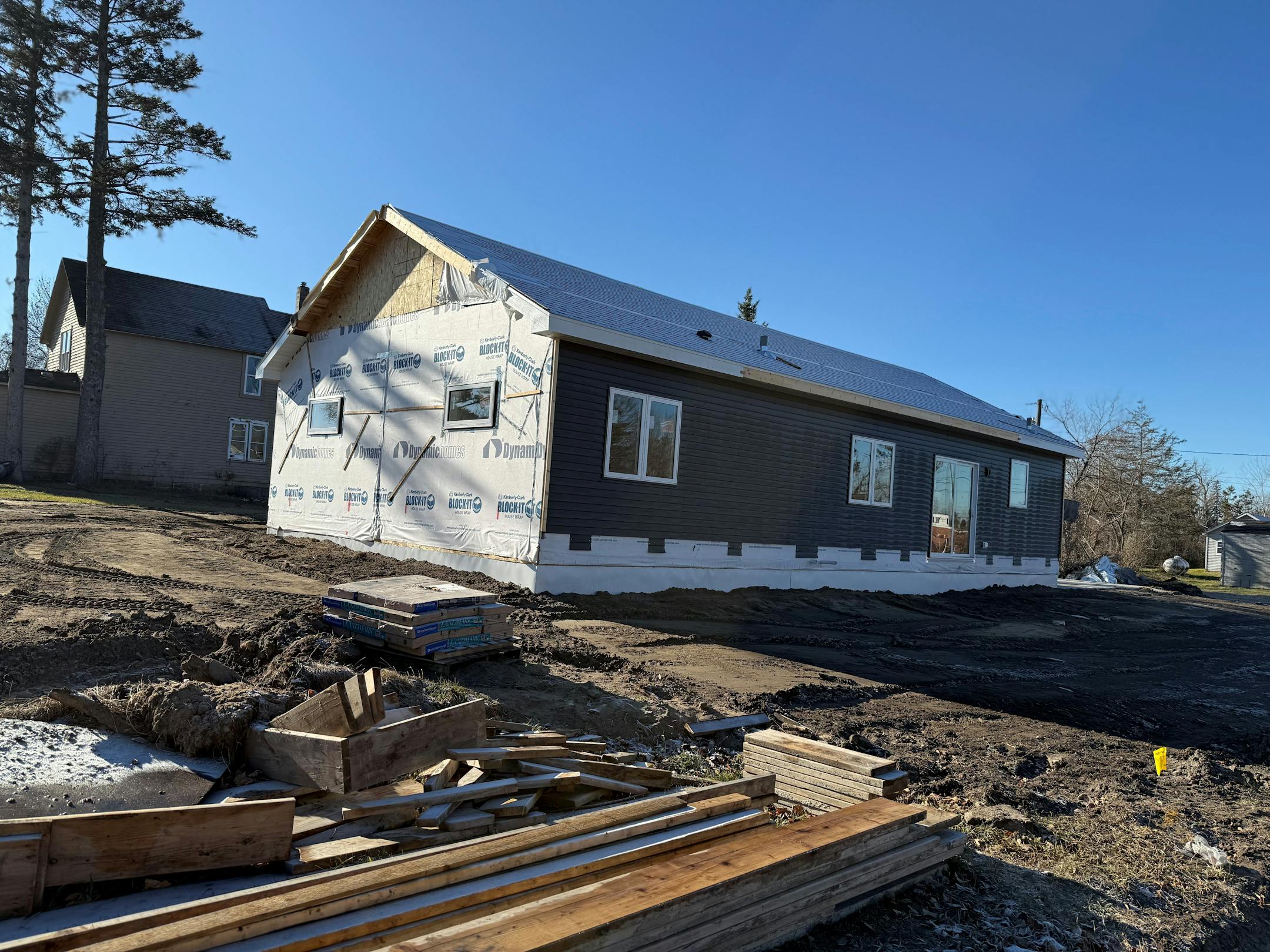
LLFS has another 15 new and remodeled house projects in the works that it hopes to complete in 2026 and 2027.

“But the need, depending on which report you look at, is up to 4,000 new houses are needed in this entire area,” Aitken said.

The housing shortage is so bad in Minnesota that it can seemingly only be confronted by actions like those at LLFS, even if they only make a small dent in the problem.

Consider the numbers on the Leech Lake Reservation. From 2000 to 2009, more than 1,500 houses were built in the area. From 2010 through 2019, 480 homes were built.

And from 2020 through 2024, just nine.

Nine!

We can at least add the two that LLFS just finished in 2025.

The financial impact on the reservation is obscured by the number of expensive homes, some owned by seasonal residents, around lakes that are part of it. There are multimillion-dollar homes around Cass Lake, for instance, and then tracts of public housing in the town of Cass Lake.

“Our average housing prices are overlooked on the federal level, because we really don’t have a sad story when it comes to that,“ Aitken said. ”We’re not getting attention to what’s happening on the reservation. A private developer isn’t going to build houses here and sell them for a profit. The comparables (in pricing) just aren’t there.”

The LLFS development project grew out of a meeting convened by tribal leaders in 2022 with representatives of state and federal housing agencies, county leaders, local banks, developers and agents.

While community development financial institutions can be banks, many are organizations like LLFS that have a focus on assisting low-income people in a specific area. They are reviewed and regulated by the U.S. Treasury Department and receive funds to help people enter the financial mainstream. Aitken said that after the 2022 meeting, LLFS decided to focus more heavily on the community development portion of its mandate.

The organization hired a retired local banker, Larry Refsland, to start fixing up houses. LLFS obtained a $1.5 million grant from the Greater Minnesota Housing Fund, which Refsland uses to finance new construction or remodel existing properties. When LLFS sells a property, it replenishes that pot and looks for other opportunities.

“We’ll just recycle that money as long as we can and hopefully it doesn’t dwindle down too fast,” Refsland said.

A newly built home in Cass Lake, Minn., developed by Leech Lake Financial Services and sold to a member of the Leech Lake Band of Ojibwe. (Evan Ramstad)

Community members and city officials have approached LLFS with suggestions for new building and renovations. A local bank donated a foreclosed home for rehabilitation.

“I’ll get a call from the city and they’ll say, ‘Hey so-and-so is thinking about selling their house and they have this empty lot next to it,’” Refsland said as we looked at the whiteboard. “Like this one. We bought it for $68,900 and sold it for $79,900, and we got the extra lot for free.”

A couple of homes sold for less than LLFS spent to build or rehabilitate them. In those cases, it used grants from state or federal agencies to make up the gap.

“Larry’s got enough money to build five houses,” Aitken said. “When those all sell, he’ll have enough money to build at least three more. And then I’ll fund raise on that.”

LLFS doesn’t want to lose money, but it has some cushion from the outside grants. Also, it doesn’t have the interest costs nor the need to hit a profit target, as private developers do — two key barriers slowing housing activity.

“We just try to get as much of our money back as possible,” Refsland said.

about the writer

about the writer

Evan Ramstad

Columnist

Evan Ramstad is a Star Tribune business columnist.

See Moreicon

More from Business

See More

But spending to spend can create a deficit of emotion. Morgan Housel’s “The Art of Spending Money” is a good primer on how to make decisions.

card image