Ramstad: Open the Whipple Federal Building now

One of the first things Tom Homan should do is reveal the place and conditions in which Minnesotans have been detained.

Columnist Icon
The Minnesota Star Tribune
January 27, 2026 at 6:21PM
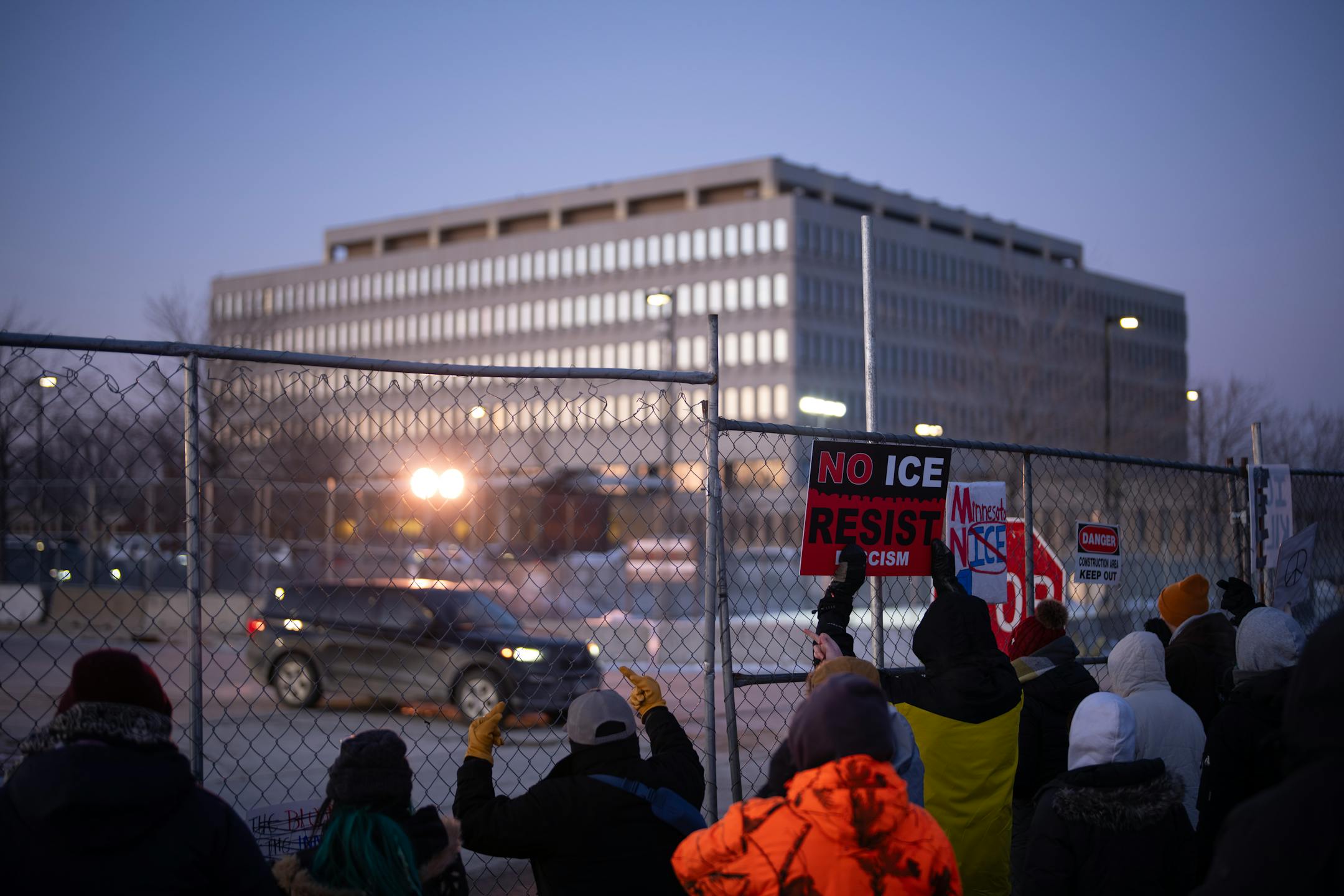
Protesters are blockaded across the street from the Whipple Federal Building near the Minneapolis-St. Paul International Airport on Jan. 25. (Jeff Wheeler/The Minnesota Star Tribune)

We need to see it.

For two months, the stories about the detention conditions Minnesotans faced at the Whipple Federal Building near south Minneapolis dribbled out in horrifying drops.

One of the first things border czar Tom Homan should do to begin to restore trust in the federal government is open the parts of the building where people are being kept.

It will probably be terrible. It will probably embarrass President Donald Trump and his administration more than they already are by the debacle of Operation Metro Surge.

Still, it needs to happen.

Just changing the face at the top of Operation Metro Surge after federal agents killed two Minnesotans isn’t enough. The bluster and lying must end — and light must be shone on what’s happening behind closed doors.

The Department of Homeland Security has been hiding many things about Operation Metro Surge, particularly the scale of arrests and detentions made by the thousands of federal agents involved in it.

More than 90% of the undocumented immigrants arrested since Dec. 1 do not have criminal records, despite repeated statements that the operation was designed mainly to seek “the worst of the worst.”


The department also turned the Whipple Federal Building near Minneapolis-St. Paul International Airport into a fortress.

The building is the site of the immigration courts for Minnesota and other parts of the Upper Midwest. Since 1965, it has been a key administrative center for the federal government in the Twin Cities, housing offices for the Department of Defense, Veterans Affairs, U.S. Fish and Wildlife Service and other agencies.

On Jan. 10, three Democratic members of the Minnesota congressional delegation sought to inspect the building and were shown only a portion of a detention area. Even that took a confrontation with Immigration and Customs Enforcement officers.

U.S. Reps. Ilhan Omar, Kelly Morrison and Angie Craig wait to be let into the Whipple Federal Building on Jan. 10. (Elizabeth Flores/The Minnesota Star Tribune)

“This can’t stand,” Rep. Kelly Morrison said that day. But it has stood, after a judge last week refused to block the DHS policy of restricting access.

ICE and Border Patrol agents have picked up likely hundreds of Minnesotans for following them around, recording them on cellphones or making them angry in some other way. The precise number hasn’t been disclosed, and such detentions fall into legal gray zone since most weren’t charged.

A few of them have described what they saw during the hours they spent in the detention facilities at the bottom of the Whipple building.

“I had to beg for water and to be allowed to relieve myself in another crowded cell with a toilet behind a short wall,” Patty O’Keefe wrote in an op-ed for USA Today earlier this week.

Ryan Ecklund, a real estate agent in Woodbury who was picked up by ICE agents on Jan. 12 after following a convoy of them around that suburb, said he spent nine hours inside the Whipple detention area. He was released without being charged.

“It was a very scary, unorganized adult day care,” Ecklund told me this week. He was kept in leg irons and spent most of the time in a large room that eventually filled with eight other men who were all American citizens.

One of them was a 24-year-old carpenter who said he was hauled in after refusing to shake the hand of an ICE agent who showed up at his job site looking for undocumented immigrants.

Ecklund didn’t see where undocumented immigrants were kept. The U.S. citizens were kept in large rooms with concrete benches. They needed escorts to use a bathroom that was monitored by DHS officials.

“There weren’t beds or cots or sleeping areas,” he said. “These cells did not appear to be intended for long-term stay by anybody.”

The slaying of Alex Pretti this past weekend became the breaking point for the people, including many business leaders and top Republicans, who had been giving the Trump administration leeway in its pursuit of criminal undocumented immigrants.

To many others it was clear that if Operation Metro Surge was really about pursuing criminals, it would have been run very differently. ICE for many years investigated and arrested criminal undocumented immigrants without making a show of marauding through a community, asking random people to prove their citizenship and arresting people who did nothing more than anger an agent along the way.

DHS hasn’t commented on conditions at the Whipple Building, nor the individuals who have spoken publicly about it. In only a small number of cases have officials said anything about what they’ve done with the non-criminal undocumented immigrants they arrested.

Many have apparently been sent to other detention facilities around the country. Some have been left in other states after release and had to find their way back to Minnesota, according to news accounts.

As always, there are deeper issues at work. For years, the government has been eroding the ability of American citizens to sue its agencies and officials when laws and constitutional rights are violated.

Legal scholars in recent years have chronicled the demise of the “Bivens remedy,” which was created in a 1970s Supreme Court ruling that allowed damages against federal law enforcement officials who allegedly violated Fourth Amendment rights.

That amendment, which protects Americans from unreasonable searches and seizures and ensures privacy, has come up again and again in discussions about whether ICE and the Border Patrol have gone too far in Minnesota.

For Homan, who will try to salvage sinking political prospects for Trump and Republicans, opening the Whipple building would immediately signal a new day and approach.

about the writer

about the writer

Evan Ramstad

Columnist

Evan Ramstad is a Star Tribune business columnist.

See Moreicon

More from Business

See More
card image
Alex Kormann/The Minnesota Star Tribune

The nonprofit Minneapolis Foundation will distribute money to help local businesses make payroll, pay rent and cover other costs. Companies like Target, General Mills and Ecolab contributed.

card image
card image