

Ramstad: In Lino Lakes, a quiet end to a firestorm about growth and religion

Exurb sets a high bar for building out one of the last big open tracts in the Twin Cities.

Columnist Icon
The Minnesota Star Tribune
August 30, 2025 at 11:00AM
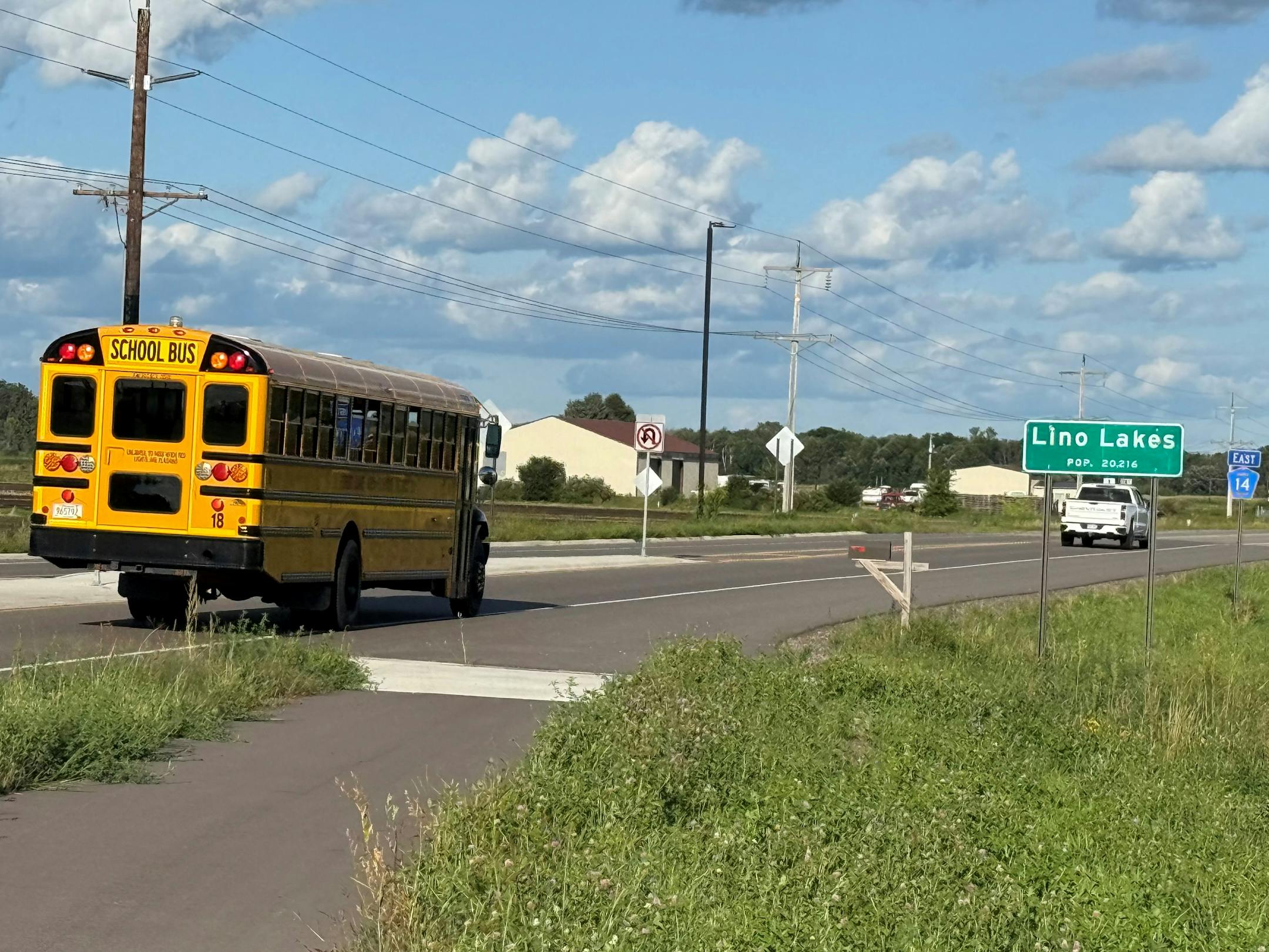
The entry on Main Street and Sunset on the northwest corner of Lino Lakes is the anchor point of a 900-acre site that city leaders and community members for a year have been debating how to develop. (Evan Ramstad)

The controversy over building out one of the last really large open spaces in the Twin Cities — nearly 1,000 acres in a corner of Lino Lakes on the northern edge of the metro — burst into the headlines a year ago.

It ended Monday with a unanimous vote on a development master plan by the Lino Lakes City Council in a 44-minute meeting attended by fewer than 20 people. City officials were expecting more, particularly after raucous meetings in summer 2024 and at the town’s planning board earlier this month.

Police officers, ready to control an overflow crowd, passed out admission slips to Monday’s meeting. I arrived 20 minutes before the start, was given slip No. 3 and realized there would be no fireworks.

Gone were the people who held up “Slow the Growth” signs at earlier meetings. Also missing: a developer who proposed building a mosque and housing with special appeal to Muslim families on a 150-acre parcel.

His proposal — and especially the community criticism that followed, some of it exclusionary and discriminatory — led the City Council to place a one-year moratorium on development in the entire space.

The council also kick-started the development of a master plan for the 1,000 acres, which had been a to-do item for Lino Lakes this decade but was put off a few years back.

The resulting master plan process created its own set of arguments and fiery meetings. One outcome was a shift in where big multifamily housing and commercial development would be placed in that northwest corner.

The council on Monday agreed it should be right on the border with Blaine, which has three times the population of Lino Lakes.
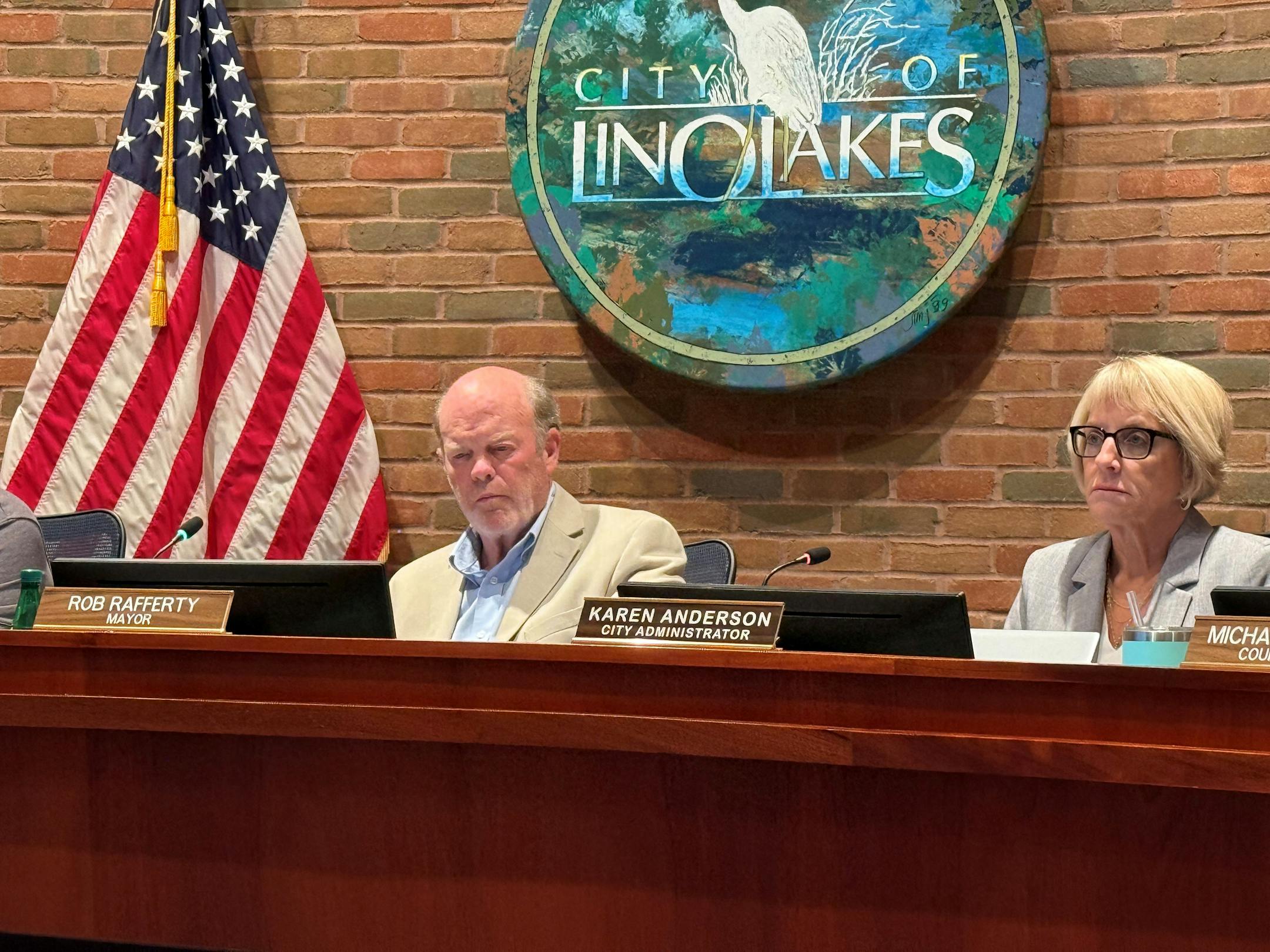

“A lot of things have taken place. Time flies. Here we are after basically one year,” Mayor Rob Rafferty said as he thanked town staffers and consultants after the vote. “The community got involved and gave their ideas.”

Lino Lakes Mayor Rob Rafferty, left, and City Administrator Karen Anderson listen on Aug. 25, 2025, to a consultant presenting details about a master plan for developing 1,000 acres in the city's northwest corner. (Evan Ramstad)

It’s kind of refreshing to hear a community leader with a gift for understatement, I thought as he spoke.

To someone like me, who thinks and inquires a lot about the slowing growth of Minnesota, Lino Lakes and other outlying suburbs hold a lot of power over the future of the metro area. They have space to build and could focus on entry-level housing that is most in demand by young families and early-career workers.

And so, it’s exciting to see Lino Lakes commit to a major new buildout even though it may take 10, 20 or 30 years to happen and there’s no guarantee of entry-level options.

That corner of Lino Lakes, which borders Blaine to the west and Columbus to the north, could one day have about 2,200 single-family homes and 3,400 apartments.

That’s a 70% increase to the 7,700 housing units that now exist in Lino Lakes. The town’s population of 22,000 could nearly double.

But again, that’s over 30 years.

Which means Lino Lakes is also an example of how Minnesota’s growth has slowed and how tough it’s proving to get it going again.

The community’s population grew 71% from 2000 to 2010. Then it slowed to 6% growth in the decade of the 2010s. Its population has risen 6.6% since the 2020 census, which is a lot for Minnesota these days. The state’s population is up 2.4% since 2020.

The Lino Lakes residents who wanted city leaders to “slow the growth” got their wish. The new master plan, for instance, limits apartment complexes to three stories in height. The “rural feel” of Main Street, which is also Anoka County Hwy. 14 and bisects the area to be developed, will be preserved with setbacks of 100 feet.

Despite its open spaces, Lino Lakes has some physical constraints. The town is essentially a township — Centerville Township, to be precise. It grew up around the city of Centerville (population 3,900) and, as a result, today has a doughnut shape.

For decades, most people in what is now Lino Lakes lived on big lots and had their own well and septic systems. Today, 1,600 households are still like that, and big parts of the community feel rural.

It’s a complicating factor in the entire economics of Lino Lakes. City engineers are constantly thinking about where sewer lines run and, as septic systems age, whether sewer access will be needed in the parts of the town that don’t have it.

“We have to work around some of those existing larger-lot neighborhoods, recognizing too that they may need services in the future,” said Lino Lakes community development director Michael Grochala. “We’re designing for the new but keeping our eye out for the existing.”

With the community now set on how its northwest corner should develop, Grochala said developers can submit applications for that area anytime. He expects first approvals to come in late next year or early 2027.

File photo of developer Faraaz Mohammed at a Lino Lakes City Council meeting in June 2024. (Carlos Gonzalez/The Minnesota Star Tribune)

The applicants may include Faraaz Mohammed, the developer who proposed the housing project that included a mosque. He sued Lino Lakes after the moratorium, but he lost his request for an injunction to remove it.

His attorney, Sam Diehl of Minneapolis, said the suit continues, which limits Mohammed’s ability to comment on plans.

“The evidence we have obtained through the suit continues to demonstrate our claims will be successful,” Diehl said.

about the writer

about the writer

Evan Ramstad

Columnist

Evan Ramstad is a Star Tribune business columnist.

See Moreicon

More from Business

See More
card image
Leila Navidi

The Winona-based company’s President and Chief Sales Officer Jeff Watts will become chief executive July 16.

card image