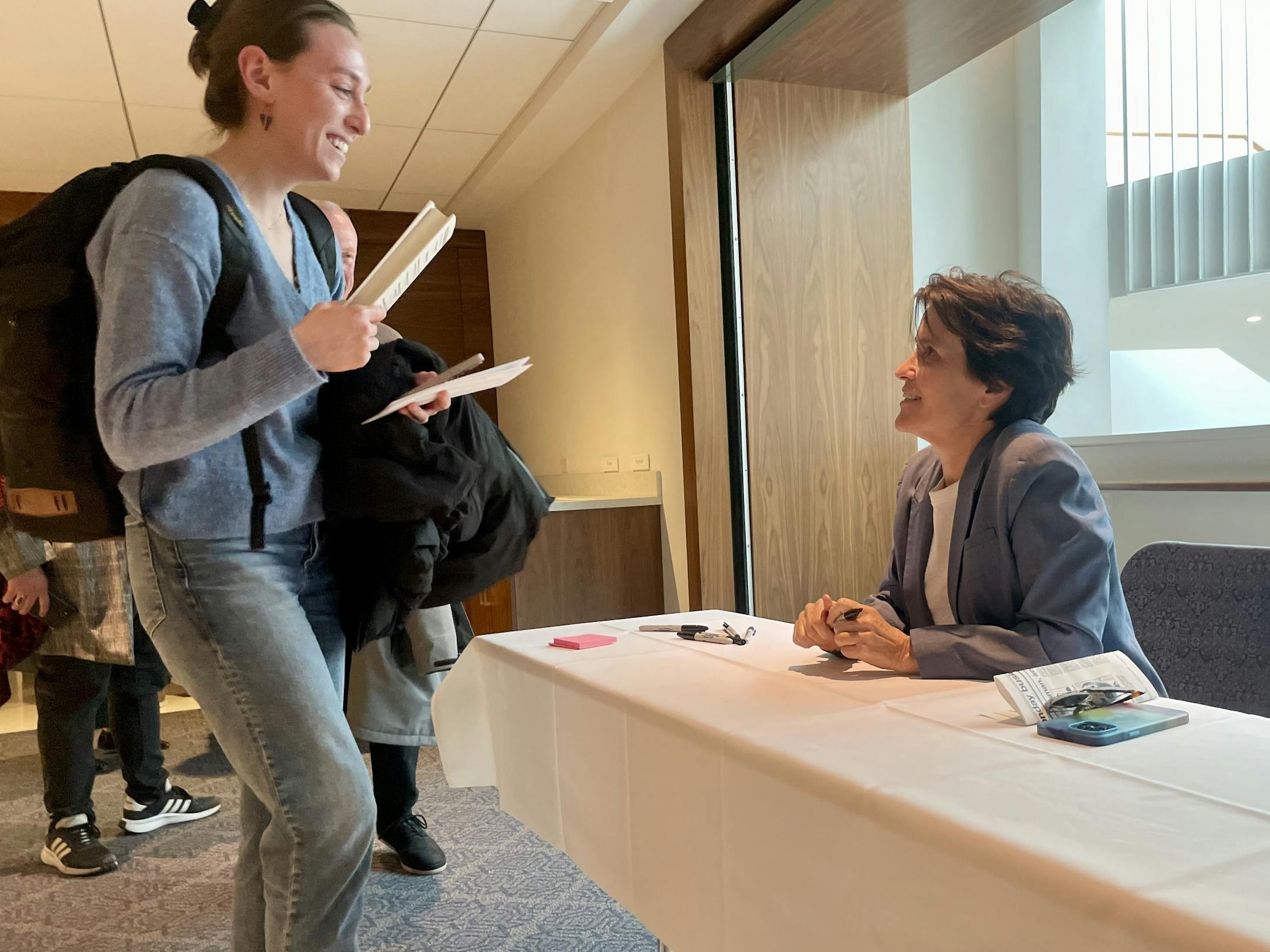
The most Kara Swisher thing that Kara Swisher did with her new book “Burn Book: A Tech Love Story” was to make sure there was no index.
“So you have to read the whole book all the way through to see if you’re in it,” she wrote inside. “I’ll be honest — most of you are not.”
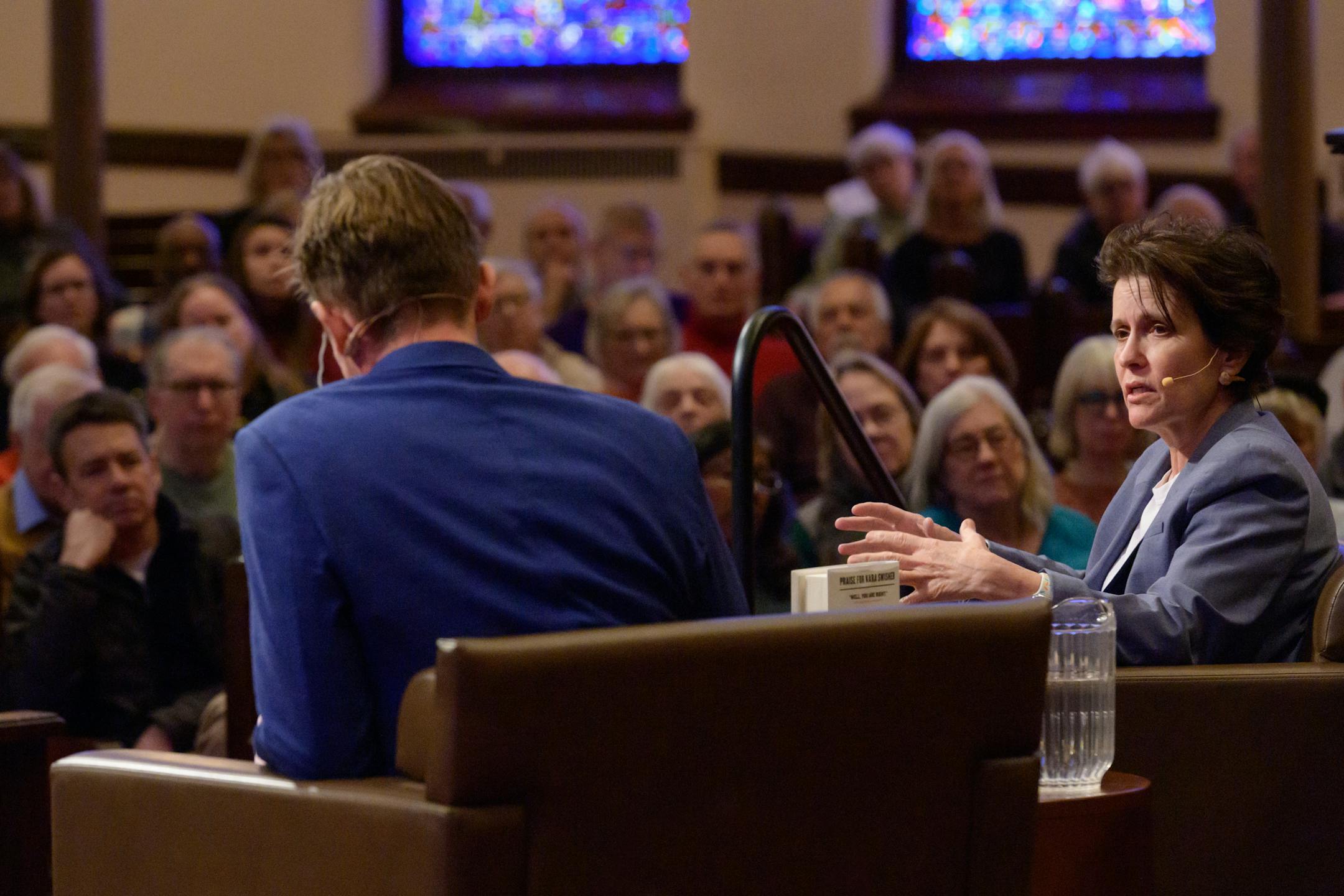
No business journalist in this generation has carried more clout within the industry they cover than Swisher. On Tuesday, speaking in downtown Minneapolis to promote the book, she described how she became both loved and hated by some of the wealthiest and most influential people in American business.
“I tended to separate the adults from the man-boys,” Swisher told the audience at Westminster Presbyterian Church. “You don’t need to be childish to invent things.”
For 15 years, Swisher and I were part of the 40-or-so person team covering the technology industry at the Wall Street Journal. I was based in Dallas and then in Asia, far from the core group in San Francisco that included Swisher. Still, I’d have a nice addition to my retirement account if I was given $1 for every time someone asked me to be introduced to Swisher or Walt Mossberg, the Journal’s first — and legendarily scrupulous — tech product reviewer.
While I was covering the PC war between Dell and Compaq in the late 1990s, Swisher recognized that power was rapidly shifting away from manufacturing companies to newcomers focused on the internet, like Netscape, Yahoo and America Online.
In the book, Swisher said the Journal’s focus on PC hardware and software was important. “But to me, that was like focusing on the inside of the mechanical watch — an assortment of gears, calipers, and gaskets few people understood or cared to know about. The Internet was different. I was determined to tell people not how the watch worked, but what time it was,” she wrote.
After a year or so, Swisher became a columnist. Her influence grew as she punctured the hype and pretense of the mostly young men at those internet firms, while breaking news about their latest deals or firings. “One of the things I like about tech is the immediacy and the urgency of the people in it,” she said at Westminster on Tuesday. “They’re making things.”