

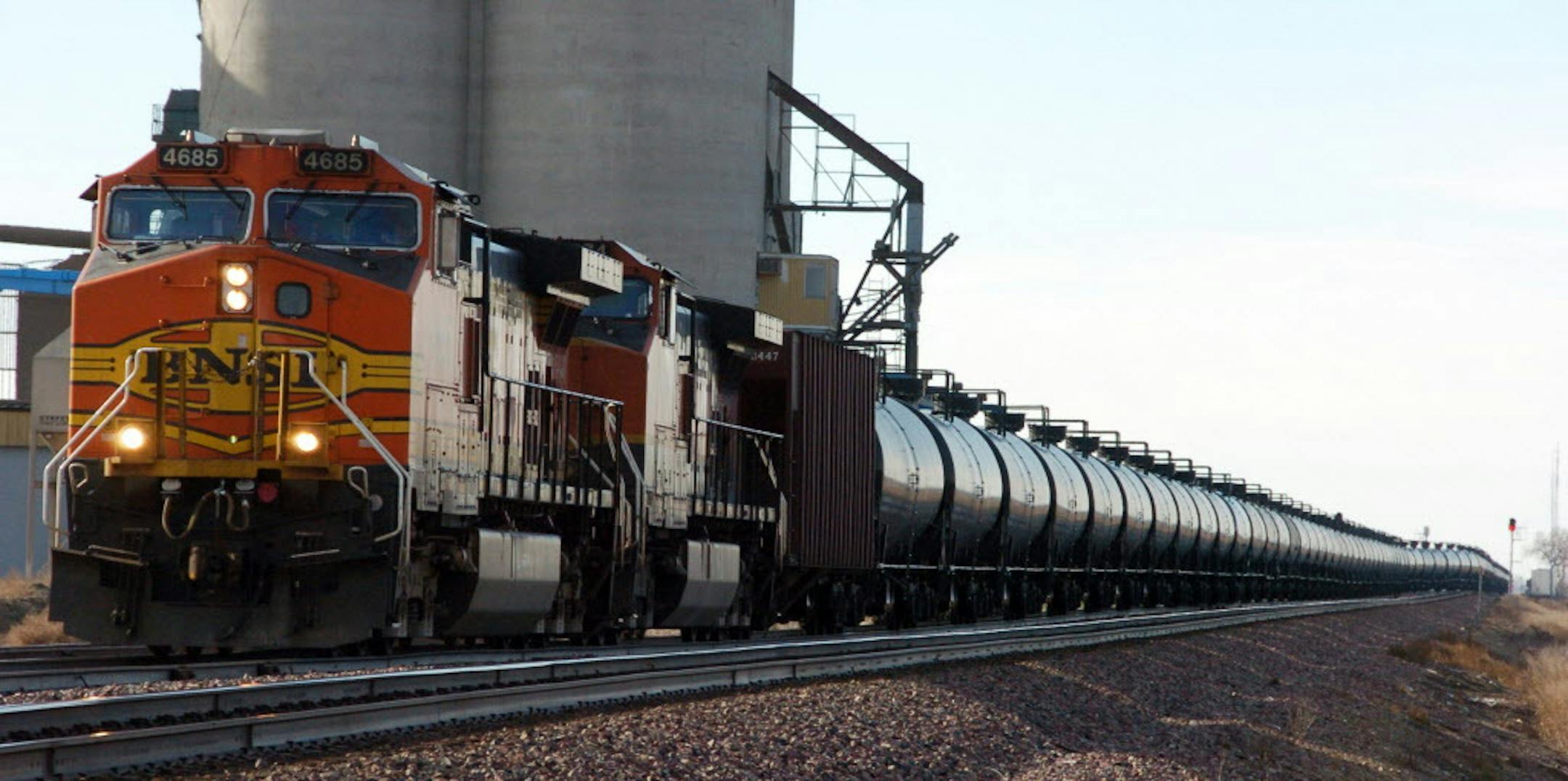
The U.S. railroad industry has agreed to slow down oil trains in 46 "high-threat urban areas," including the Twin Cities, under a voluntary program to enhance the safety of moving crude oil by rail.
The program, announced Friday, is the result of private discussions between the Association of American Railroads and federal regulators. But rail safety advocates said the measures won't significantly reduce the risks of 100-car-long oil trains.
Railroads said such trains will go no more than 40 miles per hour by July 1 in urban areas. BNSF Railway Co., the major carrier of North Dakota crude oil, said it still has some 50 mph speed limits in the Twin Cities area that now will be reduced. Canadian Pacific said it already operate trains at 40 mph or below in Minneapolis and St. Paul.
The local speed zone includes a 10-mile buffer extending beyond the east and west borders of Minneapolis and St. Paul. In some places, trains already run at even-lower speeds, industry officials said.
The industry announcement comes as railroads find themselves under increasing scrutiny after recent disasters involving oil trains from North Dakota, including the July 2013 crash that killed 47 people in Lac-Mégantic, Quebec, and the Dec. 30 derailment and explosion of a BNSF oil train near Casselton, N.D.
Separate legislative committee hearings on rail safety are scheduled next Wednesday in the U.S. House and Minnesota House, where a state bill to boost emergency response capabilities has been proposed.
Dave Christianson, who oversees rail planning for the Minnesota Department of Transportation, said Friday that he was pleased to see the industry measures.
"At 40 mph, you have a lot less dynamic force when cars are hitting each other," he said. "It really is aimed at reducing the likelihood of a puncture."


