

In two months on the road covering the 2016 presidential primaries, I've seen the U.S. going through something of an identity crisis, after decades of dominance. The candidates are talking about what the voters are thinking about: What does it mean for America to be great?
To a traveler, America's greatness is revealed in simple, visual ways. Everywhere, even in sparse rural areas, there's a healthy bustle of activity. Americans get up early, and they find it hard to keep still. At a Florida intersection, I watched a man expertly juggle a mattress-store sign to attract customers. He might hold the sign for minimum wage, but that's not why he juggles it.
The whole country is never in repose; an energy runs through it that you won't find anywhere else, and a sense of constant, habitual competition is ever-present. This is the biggest economy in the world, and it feels like it. It feels like a great nation.
To the presidential candidates, however, the issue of greatness is debatable.
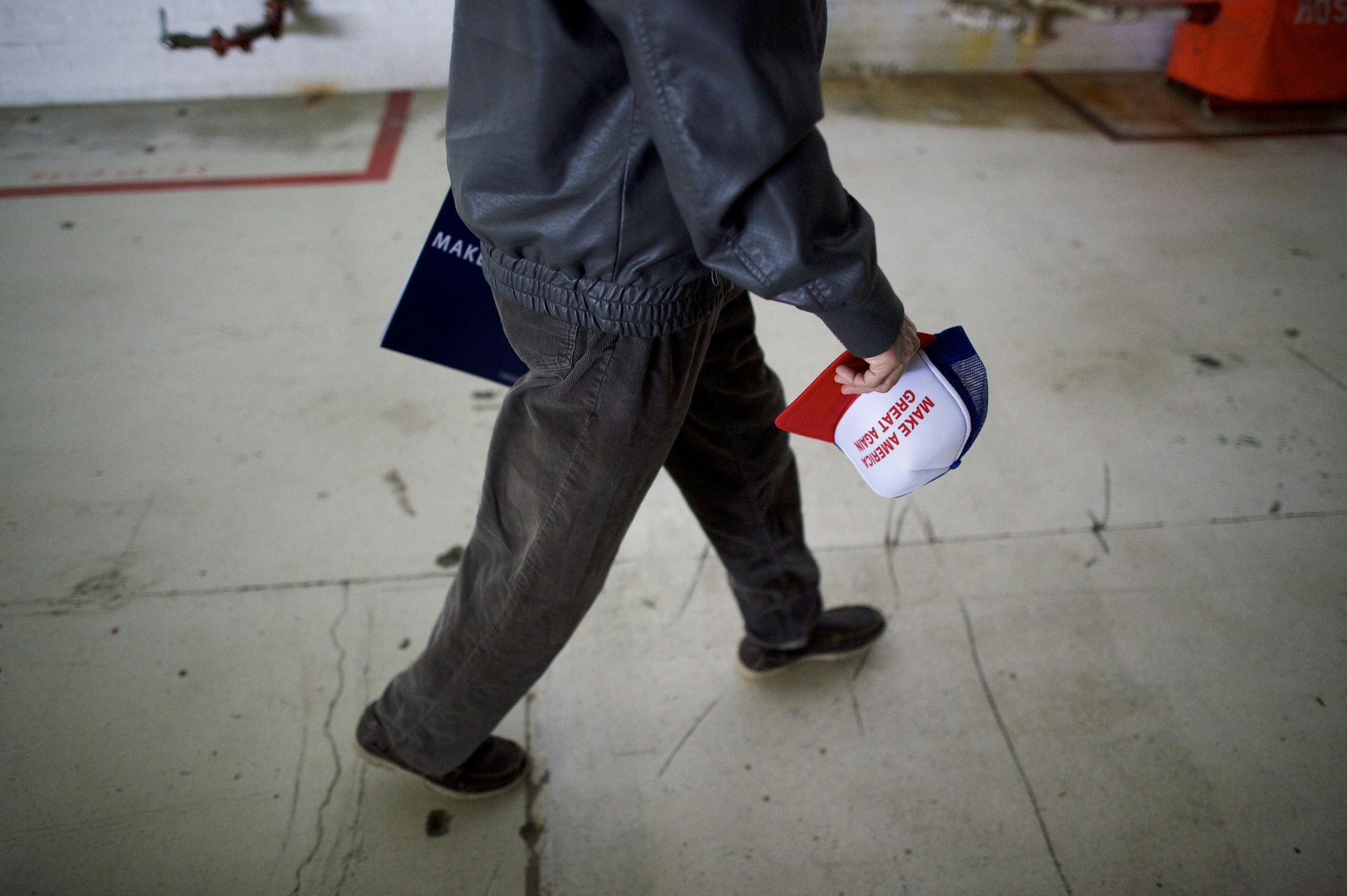
"We don't win anymore," complains billionaire Donald Trump, who has unashamedly picked up Ronald Reagan's 1980 campaign slogan, "Make America Great Again." To him, as a candidate or as a potential leader, the game is zero-sum: If you win, somebody has to lose. Trump talks a lot about negotiating and making deals, but he doesn't mean it in the European or Asian sense of reaching a compromise or consensus: The negotiations he has in mind are power plays, and the deals are victories for the U.S. and defeats for its partners. It's a fundamentally imperialist vision of greatness, in which the U.S. takes what it needs from others, be it oil from Islamic State ("take the oil," Trump keeps saying) or money from Mexico to build a wall that'll keep Mexicans out of the U.S.
America has been great in that way since World War II, and throughout the rest of the world, the opinion that it's capable of taking whatever it wants is at the root of unfavorable perceptions of the U.S. The Russian state propaganda narrative is that President Obama is a bully. Trump and his supporters don't buy this; they want the U.S. to be a bigger, better bully. Even Trump might find that a tall order.
As he declared victory in Iowa, Texas Sen. Ted Cruz spoke of America as "the greatest nation the world has ever known" but said it had strayed from the principles that had made it such: free markets, constitutional liberties and what the conservative candidates keep calling "Judeo-Christian values" — an incomprehensible term to me as a Jew, but a rallying cry to millions of people like those I saw in megachurches in the South who believe their religious liberty is threatened.
Of all the candidates, Cruz has the vision of America's greatness that is the hardest for an outsider to understand. The Constitution, which Cruz keeps vowing to defend, is already more of a sacred cow here than anywhere else. In other countries, constitutions evolve; in the U.S., the document is sacrosanct, a religious artifact. Market freedoms are also in evidence, far more than in Europe: There's less interaction with the government and a distinctly more commercial, entrepreneurial culture. And the religious-freedom issue, which invariably gets Cruz a big boost at rallies, is a mystery. Nowhere have I seen such an impressive variety of forms of Christian worship, or such rich, prosperous churches as in the U.S. It takes an incredibly strong imagination to find any signs of persecution here. The religious culture is vibrant, joyous and open to experimentation; there's no visible need for Christians to be on the defensive.


