

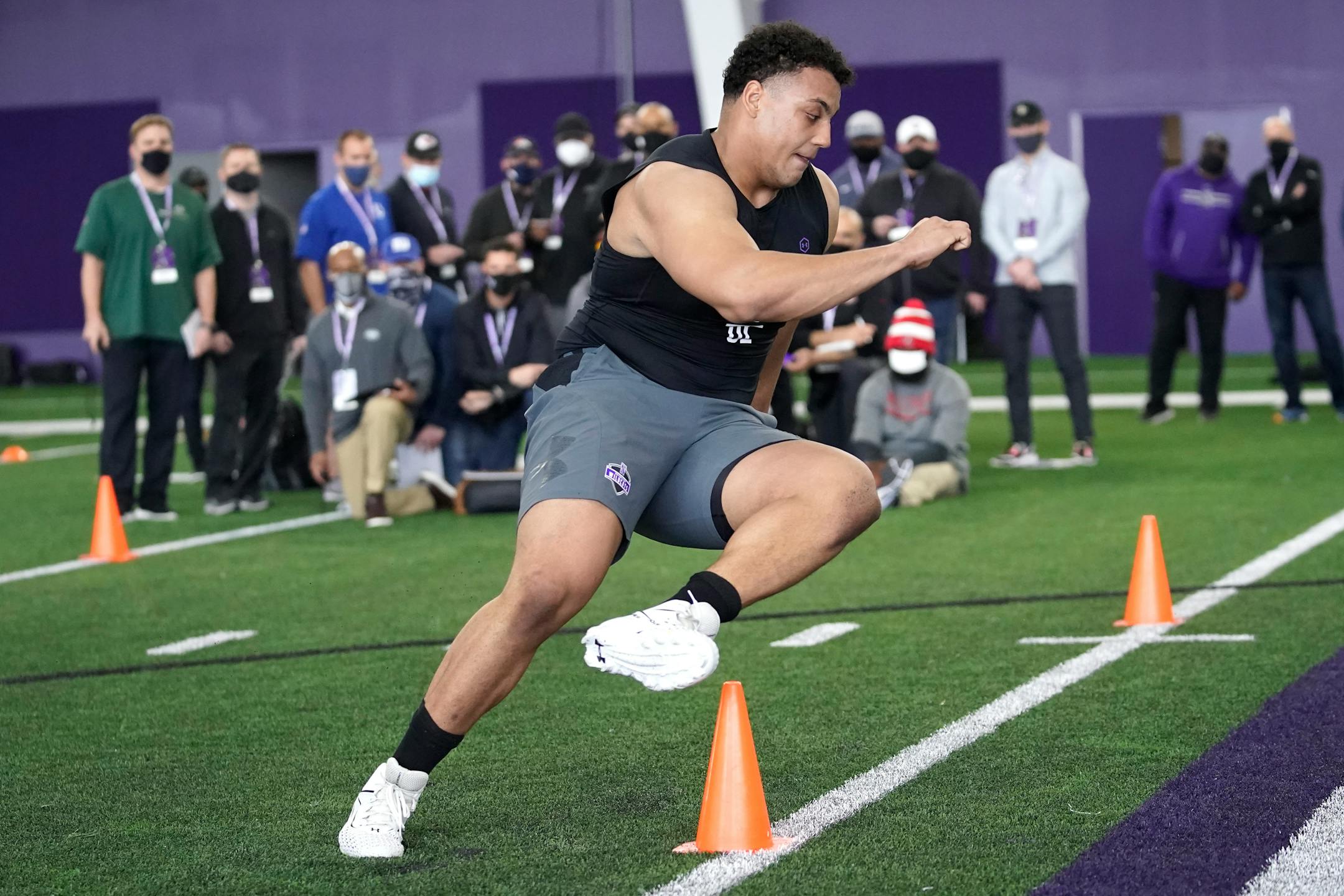
While last year's virtual NFL Draft was wildly different, teams faced a bigger fallout from the pandemic when evaluating the 2021 class, with fewer players than normal available and fewer opportunities to evaluate because of limited access to offseason events and campuses. Former NFL scout Dan Hatman, who heads The Scouting Academy, joined the Access Vikings podcast to discuss. This interview has been edited for length and clarity.
Q: Without as much college football, the opt outs for the guys who did play, the lack of practice and medical access, what are NFL teams potentially missing?
Hatman: The nice part is we still had games. There's still film. There are still things to evaluate. Now, how much we had with players who opted out – there's less exposures. The leagues that didn't play as much, like the Big Ten, there's less exposure. Generally speaking, less football. We had some testing – pro days, not as standardized, but there's a level of testing.
You as a team have less touch points on a player and what makes them tick, what it takes to drive them, because you didn't have people on campus from July, August, all the way through November. You didn't have these opportunities like a combine. You didn't have private workouts. You don't have the 30 [pre-draft] visits. There are some touch points, but instead of having 10, 12 with a player, you may only have four or five. Are you getting the same information out of 40% of a usual year? Are you going to have the same accuracy on who they are and are they a fit for us? I have a hard time believing we're going to have the same hit rate.
It's going to be a really unique opportunity for teams that have scouting staffs with really robust relationships in their area, where they got creative this year in how to acquire information. I do think this is a measure of whether you built scouts or whether you built information gatherers. What I mean is, did you just have a person going in and getting a box checked because they had a [NFL] logo on your shirt? Or did you really hire somebody and train somebody to teach them how to go in and extract [information]?
Q: What do you think is missed most?
Hatman: The medical's tough, because you're going to have players fall through the cracks. We take from a 350-player pool [at the combine] to a 150-player pool [at April's medical-only combine], there's 200 players we didn't get medical checks on. Somewhere in there where a player might be flagged for something, we don't have the opportunity now. We don't know what we missed until we miss it. That's definitely up there. And being able to be the fly on the wall. Bigger schools have [NFL] scouts every day, there's always someone there. Not like smaller schools where, hey, the scout comes, and that might be the news all day long, and you might get the player's best. You go to some big schools, they have scouts every day and it's standard operating procedure. To be a fly on the wall at a place like that, where people may let their guard down a bit because there's always someone there, you get to observe things. It seems cliché, but what does a player do in drills? Are they lagging behind and trying to miss reps? Are they pushing to get better? There's ways to avoid coach's eye. You start to learn about their work habits.
You talk about missing. I've yet to be around the person who says, 'Oh, we thought he was a blue-chip athlete and he really wasn't.' We don't miss on the movement patterns. We miss on the person.


