

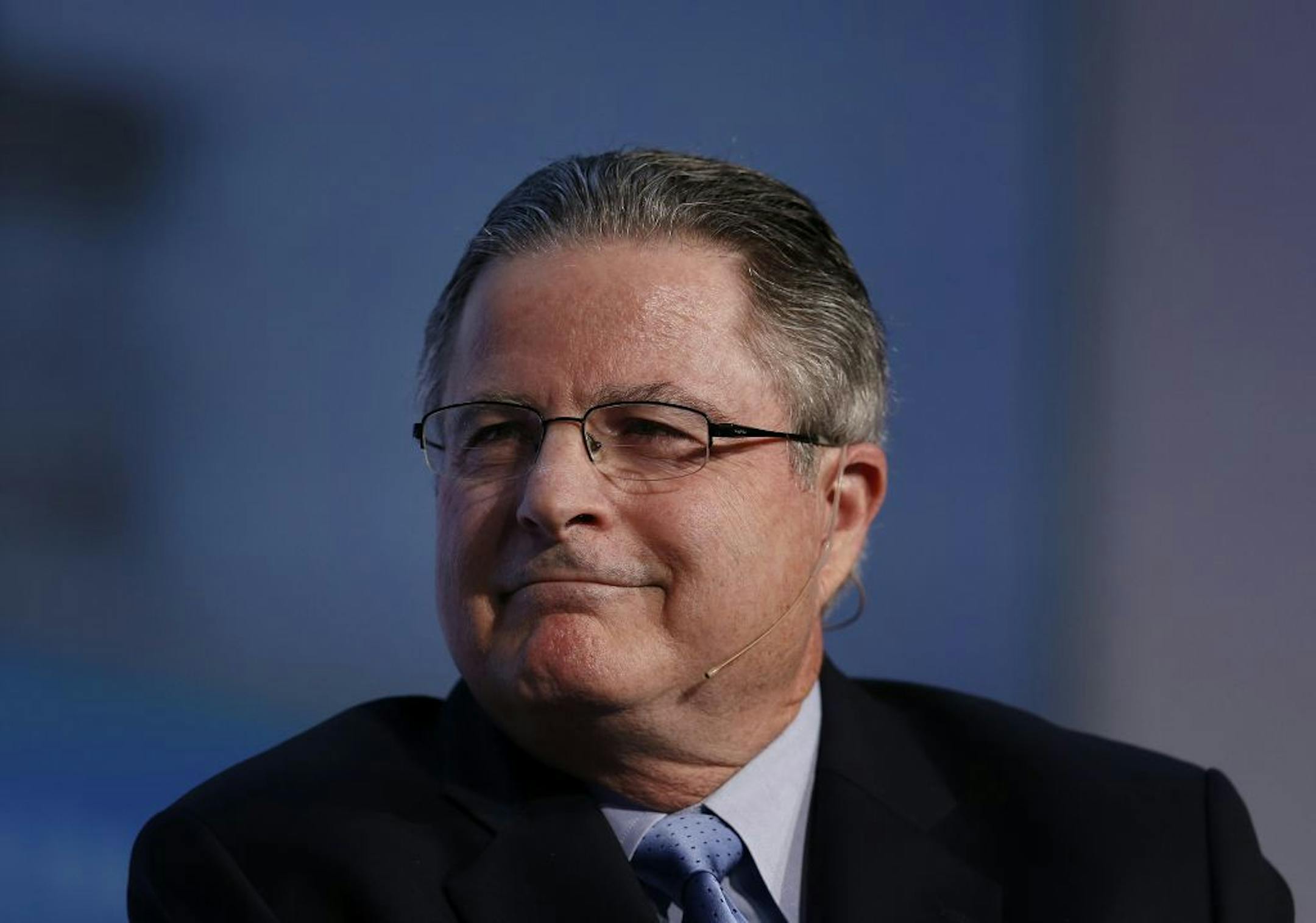
John Watson, CEO of one of the world's largest energy companies, spoke last week in Minneapolis about rising U.S. oil and gas production, the need for new pipelines and the case for allowing U.S. crude oil exports.
Chevron's top executive also took questions from the audience after his speech to the Economic Club of Minnesota, and from reporters in a separate session. Here are some of the questions and answers. A longer version is on the 3D Economics blog:
Q: A question on infrastructure. What do we need to do to continue to build out to where we should be?
A: There's a great deal of effort that's needed locally in the area of gathering lines and major trunk lines. The Keystone pipeline is the most visible example, but Canada has infrastructure requirements that they need to put in place by going east to west. We have issues with natural gas. Think about it this way. We're shutting down nuclear plants in the Northeast. We're shutting down coal-fired plants in the Northeast. Where is the energy going to come from? It's going to come from natural gas that needs to be imported to the area. How's it going to move to the area? We have to have pipelines. And you better have capacity that will be sufficient both at the wellhead and in the pipelines to meet seasonality requirements … The industry has to do its part, whether it's the joint work that's being done with the rail industry on safety, of moving products out of Bakken and elsewhere in this country. We need to keep the trains on the tracks, and over time need to upgrade the rail cars that are being used. We have to have good assurances in place, particularly with some of the aging pipelines.
Q: I'm interested in your projections for oil prices, because there has been downward pressure. What would be the effect of changing oil prices on our economy?
A: My general view is that oil markets are pretty well supplied today. On the other hand, there's relatively little true surplus capacity. The only country that has voluntary spare capacity now is Saudi Arabia. There's some capacity that's been offline because of some of the civil strife around the world … Unlike the typical manufacturer, where you build a plant and then it's online forever and that capacity doesn't go away, in our business there's this thing called the decline curve, and so it requires perpetual reinvestment. Some oil fields have long, slow declines. Some, like those in the unconventional business, the shales, have very rapid declines … The break-even cost for most supplies is in many cases $100 and higher. Some it's lower, but over time... you're going to see prices stay at or near the level they are, or potentially higher.
Q: You mentioned three objectives for good energy policy, one being preserving the environment. Where does curbing greenhouse gas emissions fit into that, and what can Chevron do to help?
A: ...I'm not aware of a company that has done more than my company. It's worth noting that, because I do understand the concerns that are out there, I understand the risks of climate change. My company has the largest carbon storage project in the world in Australia. We and our partners are spending $2 billion. We're a part of a carbon sequestration project in Canada. These are among the very largest in the world. We're the largest renewables producer, thanks to our geothermal business … Here in the United States, we're fortunate. Because of the boom in shale gas, it is naturally displacing coal. Here we have a circumstance where the U.S. is reducing its greenhouse gas emissions without significant intervention in the markets. There's been a great deal of conversation about a carbon tax, or other vehicles, cap and trade. We have one in California. If you think about pollution markets in general, they've been effective when you've had local pollution to deal with, and all emitters could be included. The U.S. is 16 percent of the world's greenhouse gas emissions, and falling. It's estimated that without much change we'll be at 13 percent … You need global engagement on those mechanisms for them to be effective, in my opinion.


