

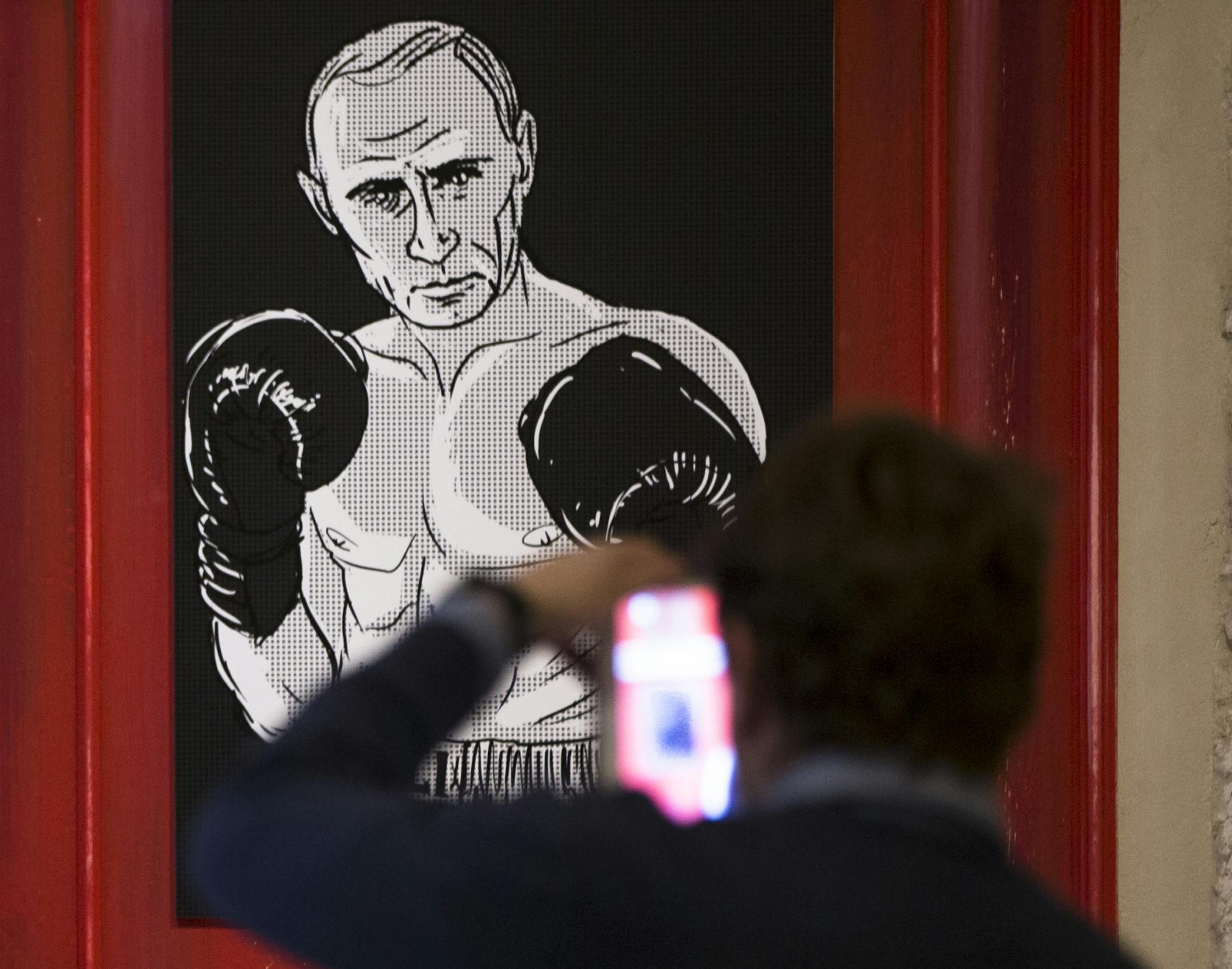
One can hear the disbelief in capitals from Washington to London to Berlin to Ankara and beyond. How can Vladimir Putin, with a sinking economy and a second-rate military, continually dictate the course of geopolitical events? Whether it's in Ukraine or Syria, the Russian president seems always to have the upper hand.
Sometimes the reaction is derision: This is a sign of weakness. Or smugness: He will regret the decision to intervene. Russia cannot possibly succeed. Or alarm: This will make an already bad situation worse. And, finally, resignation: Perhaps the Russians can be brought along to help stabilize the situation, and we could use help fighting the Islamic State.
The fact is that Putin is playing a weak hand extraordinarily well because he knows exactly what he wants to do. He is not stabilizing the situation according to our definition of stability. He is defending Russia's interests by keeping Syrian President Bashar al-Assad in power. This is not about the Islamic State. Any insurgent group that opposes Russian interests is a terrorist organization to Moscow. We saw this behavior in Ukraine, and now we're seeing it even more aggressively - with bombing runs and cruise missile strikes - in Syria.
Putin is not a sentimental man, and if Assad becomes a liability, Putin will gladly move on to a substitute acceptable to Moscow. But for now, the Russians believe that they (and the Iranians) can save Assad. President Obama and Secretary of State John F. Kerry say that there is no military solution to the Syrian crisis. That is true, but Moscow understands that diplomacy follows the facts on the ground, not the other way around. Russia and Iran are creating favorable facts. Once this military intervention has run its course, expect a peace proposal from Moscow that reflects its interests, including securing the Russian military base at Tartus.
We should not forget that Moscow's definition of success is not the same as ours. The Russians have shown a willingness to accept and even encourage the creation of so-called failed states and frozen conflicts from Georgia to Moldova to Ukraine. Why should Syria be any different? If Moscow's "people" can govern only a part of the state but make it impossible for anyone else to govern the rest of it - so be it.
And the well-being of the population is not the issue either. The Russian definition of success contains no element of concern for the dismal situation of the Syrian people. Refugees - that's Europe's problem. Greater sectarianism - well, it's the Middle East! Populations attacked with barrel bombs and Assad's chemicals, supposedly banned in the deal that Moscow itself negotiated - too bad!
Putin's move into Syria is old-fashioned great-power politics. (Yes, people do that in the 21st century.) There is a domestic benefit to him, but he is not externalizing his problems at home. Russian domestic and international policies have always been inextricably linked. Russia feels strong at home when it is strong abroad - this is Putin's plea to his propagandized population - and the Russian people buy it, at least for now. Russia is a great power and derives its self-worth from that. What else is there? When is the last time you bought a Russian product that wasn't petroleum? Moscow matters again in international politics, and Russian armed forces are on the move.
Let us also realize that hectoring Putin about the bad choice he has made sounds weak. The last time the Russians regretted a foreign adventure was Afghanistan. But that didn't happen until Ronald Reagan armed the Afghan mujahideen with Stinger missiles that started blowing Russian warplanes and helicopters out of the sky. Only then did an exhausted Soviet Union led by Mikhail Gorbachev, anxious to make accommodation with the West, decide that the Afghan adventure wasn't worth it.


